Whale Watching in Mauritius at Le Morne Peninsula Boat Trips
Book a private dawn launch from Le Morne beach and reach the sperm whale drop-offs in minutes. Watch dolphins swim beside the reef, see the Brabant from the water, and let an expert guide you in. Board where you stay, not across the island.
"Absolutely amazing! Hosts were top, boat great, activities perfectly varied. Generous BBQ, tastiest table on the island, and we were never rushed, time to enjoy every moment. Recommend!! Recommend!!"
4.6★average rating1,060traveler reviews100%free cancellation37countries travelers came from
Whale watching in Mauritius at Le Morne - which boat trip suits you
Boats from the southwest run two basic formats. Short watch-only trips stay on the water for a couple of hours looking for whales, while dolphin and whale combos get you in the water and often end with a lagoon stop. The choice comes down to how long you want at sea and how much you want to take part.
All four run small or private boats with a licensed skipper. Watch-only outings suit travellers prone to seasickness or travelling with young children; combos suit confident swimmers who want the full morning.
SightingsExpect roughly a 60% chance of whales on a half-day trip; crews use radios and hydrophones to track them and keep searching, but nature gives no guarantee.
Safety gearEveryone on board wears a flotation device outside the lagoon, and swimmers may be asked to keep a vest on in the water.
SeasicknessThe water past the reef gets choppy, so take motion sickness medication about an hour before boarding rather than once you feel unwell.
Meeting timeArrive at least 15 minutes before your confirmed departure, and expect to wade out to the boat, so water shoes help.
WeatherTrips get cancelled when winds pass 25 knots or swells go above 2 metres; operators reschedule when that happens.
FootwearQuick-drying clothes and a light jacket work best on deck, since spray soaks seats and the ride back can be breezy.
BookingReserve a few days ahead for morning slots in high season, and free cancellation up to 24 hours before applies to these tours.
importantSwimming with whales is strictly prohibited by law in Mauritius, and any operator offering it is breaking the rules.
Watch whales from the boat only, keep your swims for the dolphins in the lagoon, and book with a licensed crew that follows the approach rules around Le Morne.
Whale Watching in Le Morne - trip options and prices
Most popular
5 hours·English, French
4.6(760)
Black River: Dolphin Swim and Whale Watching by Speedboat
760 travelers rate it 4.6: dolphins, whales and a reef snorkel in one five-hour Black River speedboat run
Free cancellationSpeedboat excursionProfessional skipper and guide
What your whale watching trip from Le Morne looks like
3 stopsabout 4 h12 places
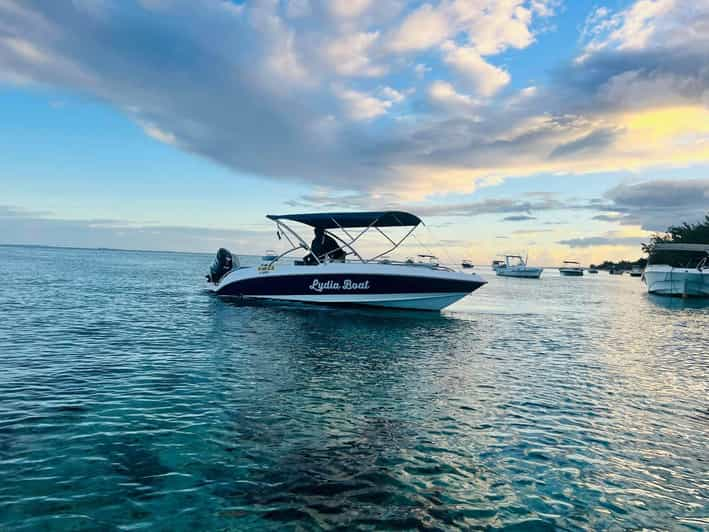
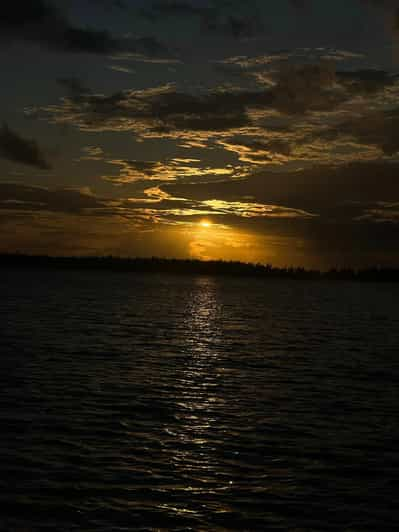
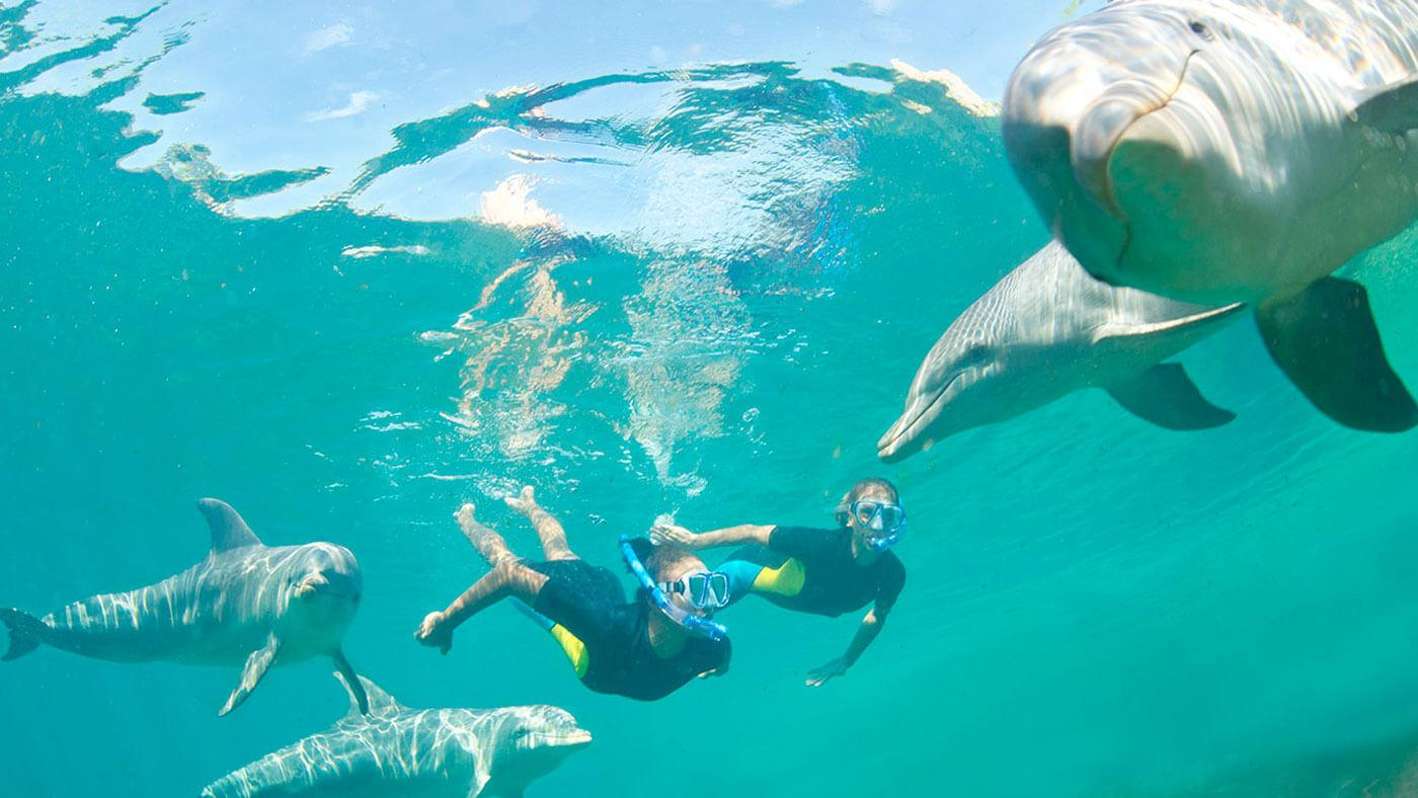
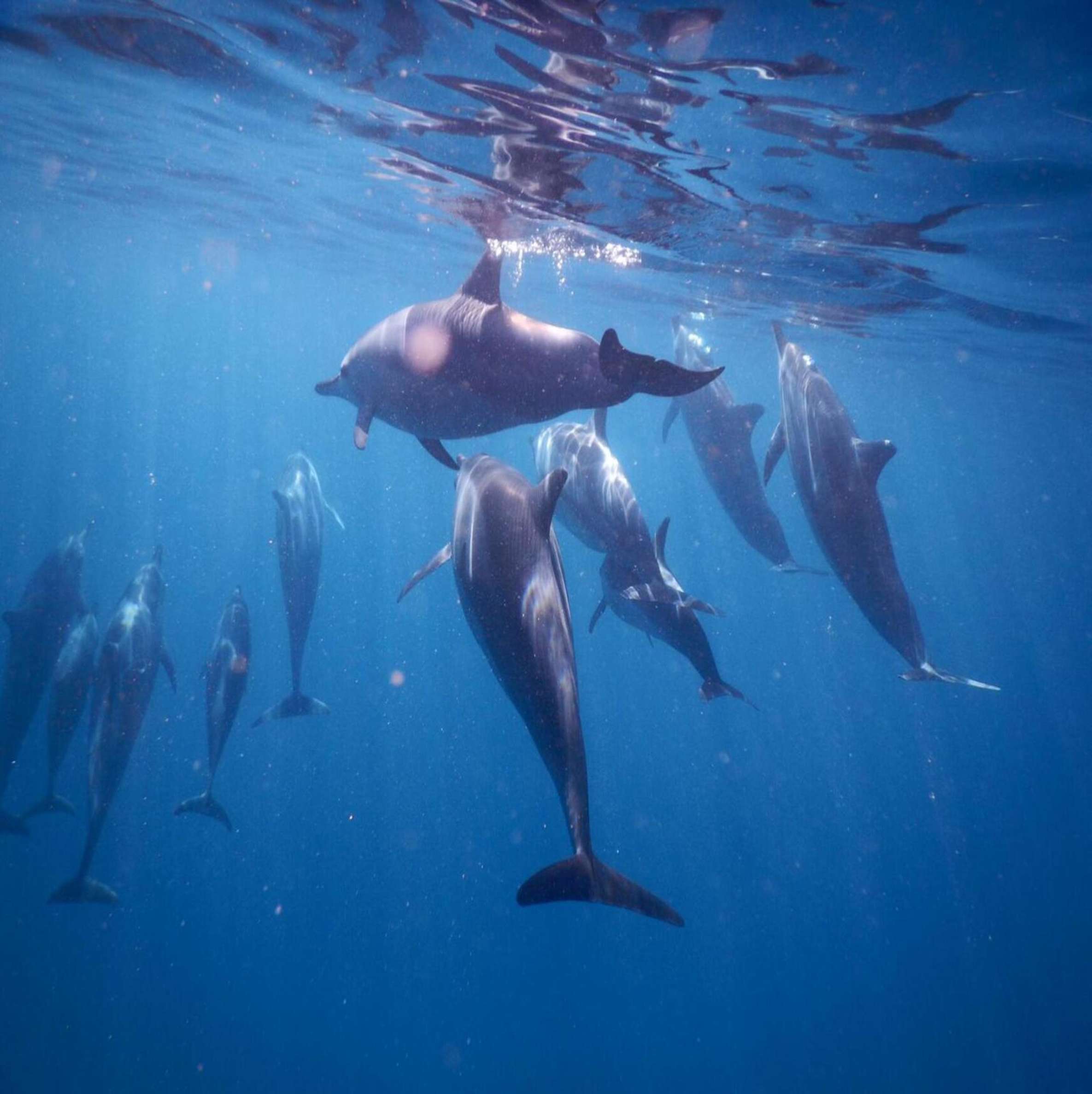
The morning starts at sea, before most of the peninsula is awake. Your skipper runs the boat out of the lagoon at first light, when spinner dolphins are still resting in the sheltered bays, and a guide gets in the water with you to show how the encounter works.
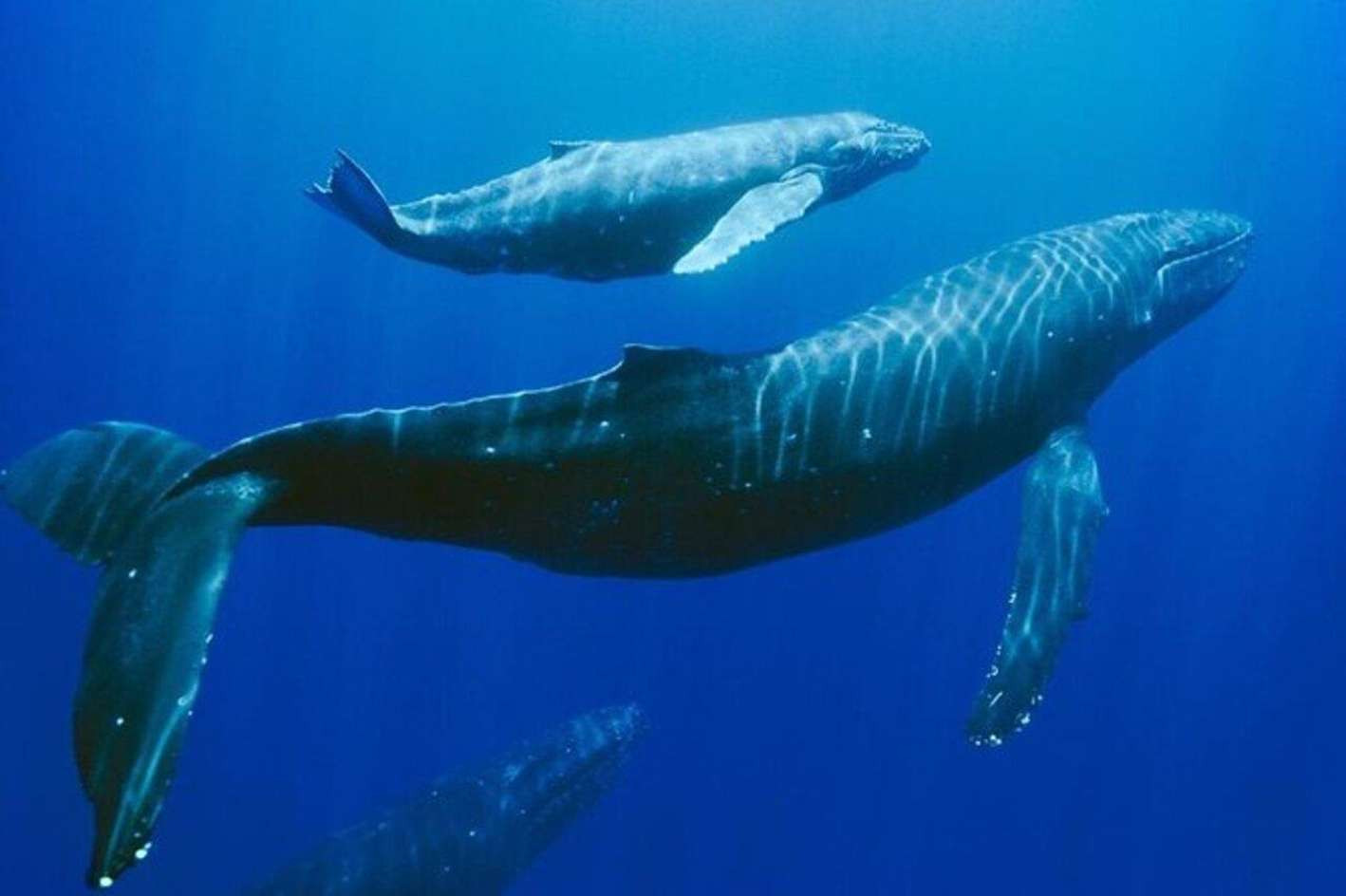
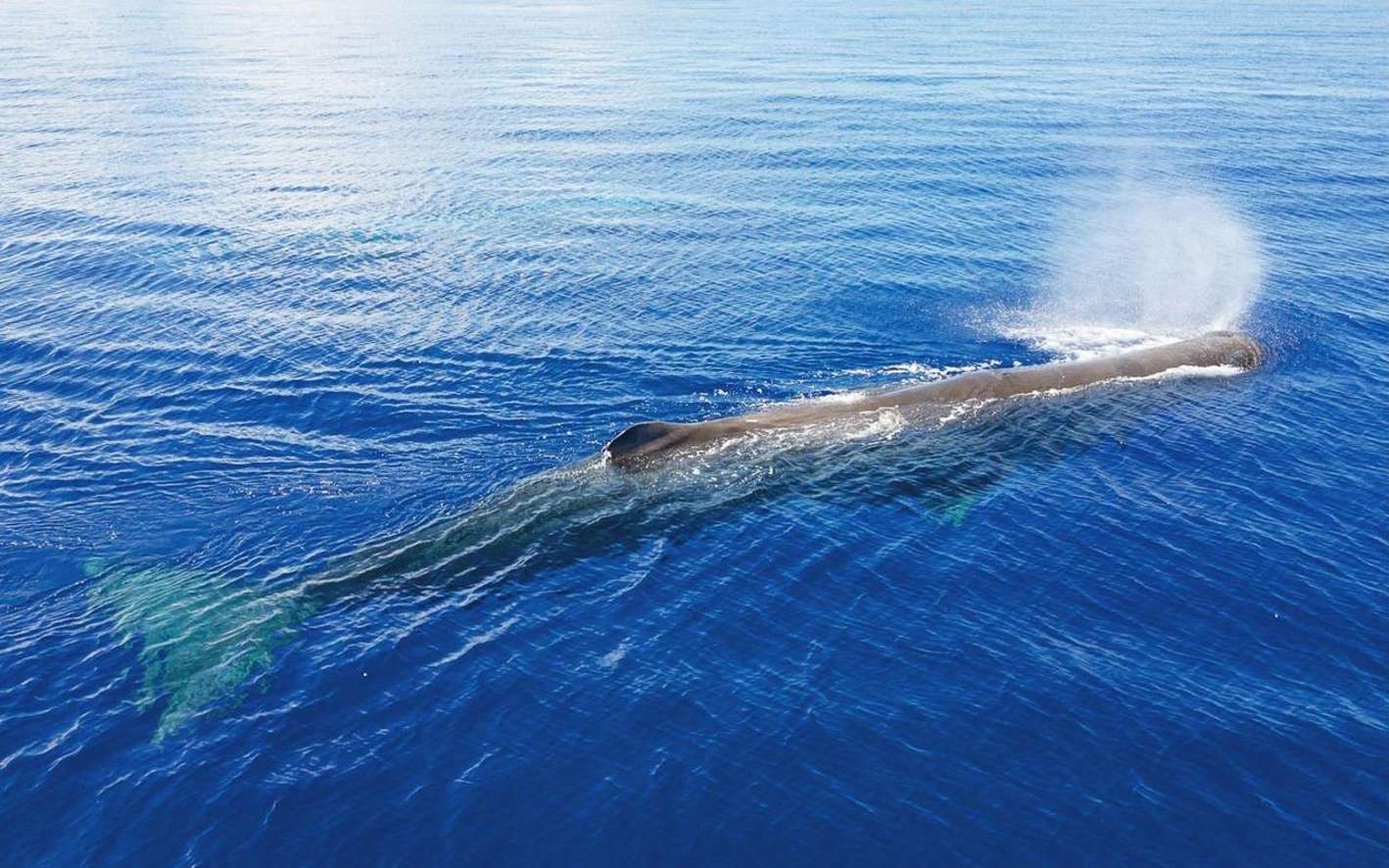
After that the boat heads over the deep drop-off off the southwest coast, where sperm whales feed all year and humpbacks pass through in season.
Whales stay in the water and you stay on deck; that is the rule in Mauritius, and it is all you need for a close sighting from a small private boat. Masks, fins, snorkels and bottled water come with the trip.
Meeting pointEmba Filao RestaurantThe boat sets you back on the same stretch of public beach where you started, steps from the restaurant and the snack stalls along the beach road.Street View2Black River, Mauritius· 240 minFour hours along the southwest coast: dolphins at sunrise in the calm bays, then whales over the offshore drop-off, where the slope pulls in family pods with calves.Drop-offEmba Filao RestaurantThe boat sets you back on the same stretch of public beach where you started, steps from the restaurant and the snack stalls along the beach road.Street View
Experience the ultimate private boat tour!Private boat tour just for youExpert guide joins you in the water for a unique experienceSnorkelling gear provided (mask, fins, and snorkel)Refreshing bottled water on boardCreate unforgettable memories with us!"
Not included
Hotel pickup and drop-off (can be organised for an extra charge), if possibleBreakfast (can be provided for an extra charge)GoPro videos, pictures, and an SD card (can be provided for an extra charge)Towels
Whale Watching in Mauritius at Le Morne - which boat trip fits your day?
Green marks the lowest price. Each price says whether it is per person or per group.
Tour
Price
Duration
Pickup
Languages
Best for
Our pick
Le Morne, Mauritius: Eco-Friendly Whale and Dolphin Tour
5.0★ (5)
from $766per group
4 hours
no
French, English
private dolphin swims with a guide in the water, straight off Le Morne beach
Most reviewers praise the guides for keeping a respectful distance from the whales and dolphins while they swim.
Best surprise
Several were surprised to spot whales even when their boat left later in the morning than the early crowd.
Most common wish
A few wished the day lasted longer, wanting more unhurried time at the island lunch and in the water.
How to book your Le Morne whale watching trip
01
Pick the right date
Book for early in your stay, not the last day, so a rough sea day can be rescheduled. Trips run only in the morning, with departures between 6 am and 7 am when the water is flattest.
Pro tipSunrise falls as early as 5:23 am in November, so set two alarms
Common mistakeBooking your last morning, when a swell warning means no second chance
02
Choose shared or private
Pick a private charter if you want the boat to yourselves, a flexible pace and a crew to watch over anyone who feels seasick. Shared speedboats from Black River cost far less and follow a fixed 5-hour route.
Pro tipA private charter can turn back early if someone gets seasick
Common mistakeAssuming private means empty water, since other boats share the sighting zone
03
Check the cancellation terms
Every tour on this page lets you cancel up to 24 hours in advance for a full refund, so pick your slot with confidence. Swells above 2 metres or winds over 25 knots cancel trips, and operators reschedule rather than sail.
ImportantCancel at least 24 hours before departure to get the full refund
Common mistakeSkipping motion sickness pills, which must be taken about an hour before boarding
04
Find the meeting point
Le Morne tours meet on the public beach, where skippers anchor just inside the reef across from the casuarina trees. One tour asks you to arrive 15 minutes before the confirmed departure time. Boarding means wading out, so wear water shoes.
Pro tipPark free at the public beach car park and walk straight to the skipper
RecommendedCarry your towel and a dry change of clothes in a waterproof bag
05
Plan the day itself
Full-day charters pair offshore whale time with lagoon stops at Crystal Rock and a barbecue lunch on Île aux Bénitiers. The return run is fast and breezy, so keep a windbreaker handy even under a tropical sun.
RecommendedBring cash for the souvenir vendors on Île aux Bénitiers
Pro tipA small tip in Mauritian rupees for the crew is customary, never required
What to know before you book a whale watching trip at Le Morne
Can stop the dayGood to knowGood news
01
ChoosingWhat it is, who it suits, when to go
9
Meeting point
Boats launching from Le Morne meet passengers directly on Le Morne Public Beach, in the stretch in front of the beachfront restaurant next to the big resort on the peninsula. Skipper and boat wait just inside the reef, so boarding means a short wade through shallow water.
Early start
Departures from Le Morne fall between 6:00 and 7:00 in the morning, and paid whale and dolphin watching may only run until noon under Mauritian law. At dawn the coastal water is at its flattest, dolphins are active near the reef passes, and your boat reaches the animals before the crowds.
Whale swimmingCan stop the day
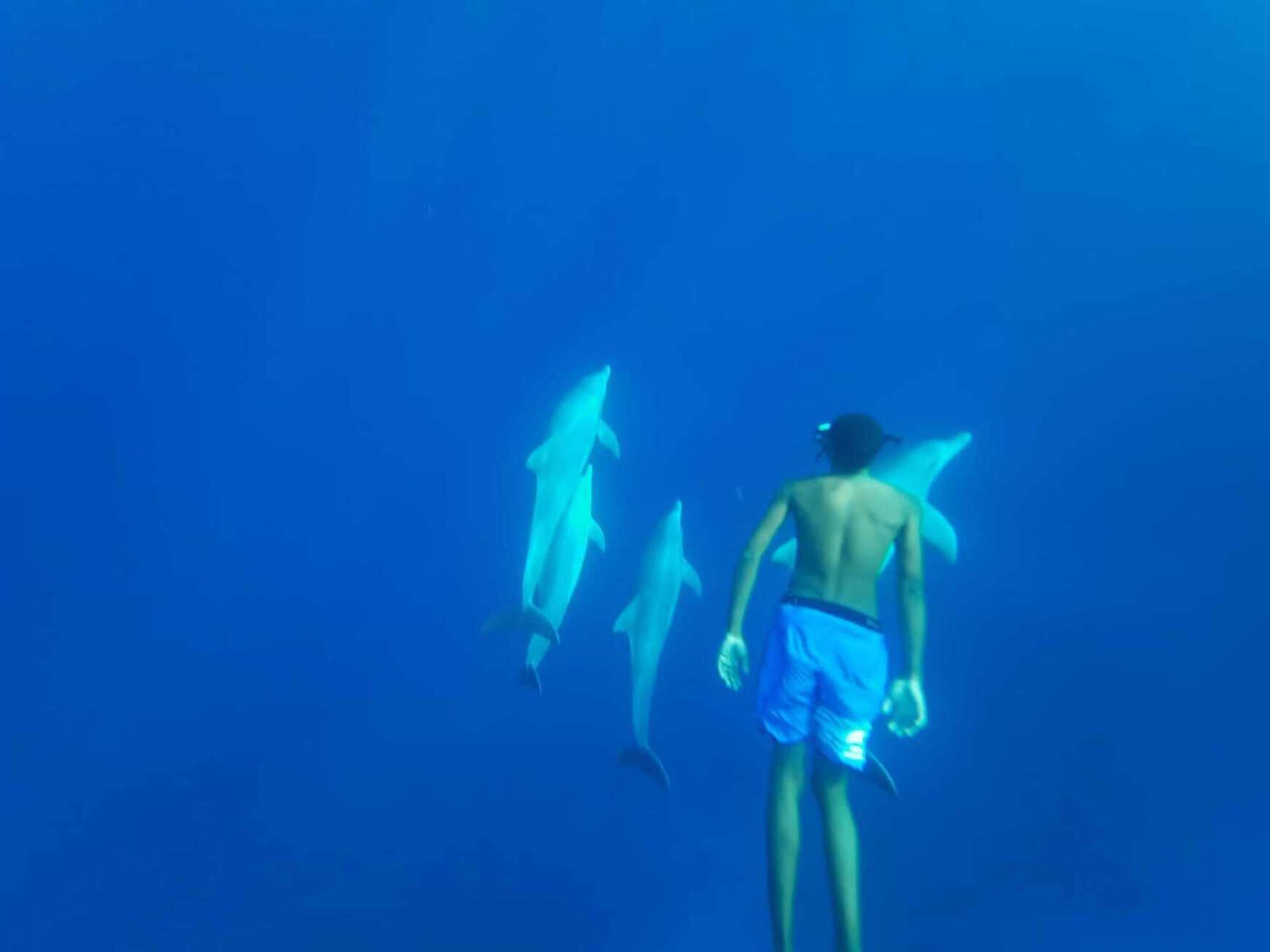
Swimming with whales is against the law in Mauritian waters, and every boat here follows it. Whales are watched from the deck only. Dolphins are different: a legal, guided swim with them is part of several tours out of Le Morne.
Getting wet
Beyond the southwest reef the swells and spray soak seat cushions and passengers alike. Swimwear under quick-drying clothes works best, with a windbreaker for the faster ride back, a towel, and a dry bag or phone pouch for anything that must stay dry.
Seasickness
The open ocean leg rolls, especially with a swell running. Take motion sickness tablets about 45 to 60 minutes before boarding so they are already working. On a private charter the crew can keep more attention on you, and the group can even turn back early.
Health limits
Several Le Morne tours are not suitable for pregnant women, people with back problems, or those prone to seasickness. If any of these apply to your group, read the details for the specific trip you want before booking.
What is included
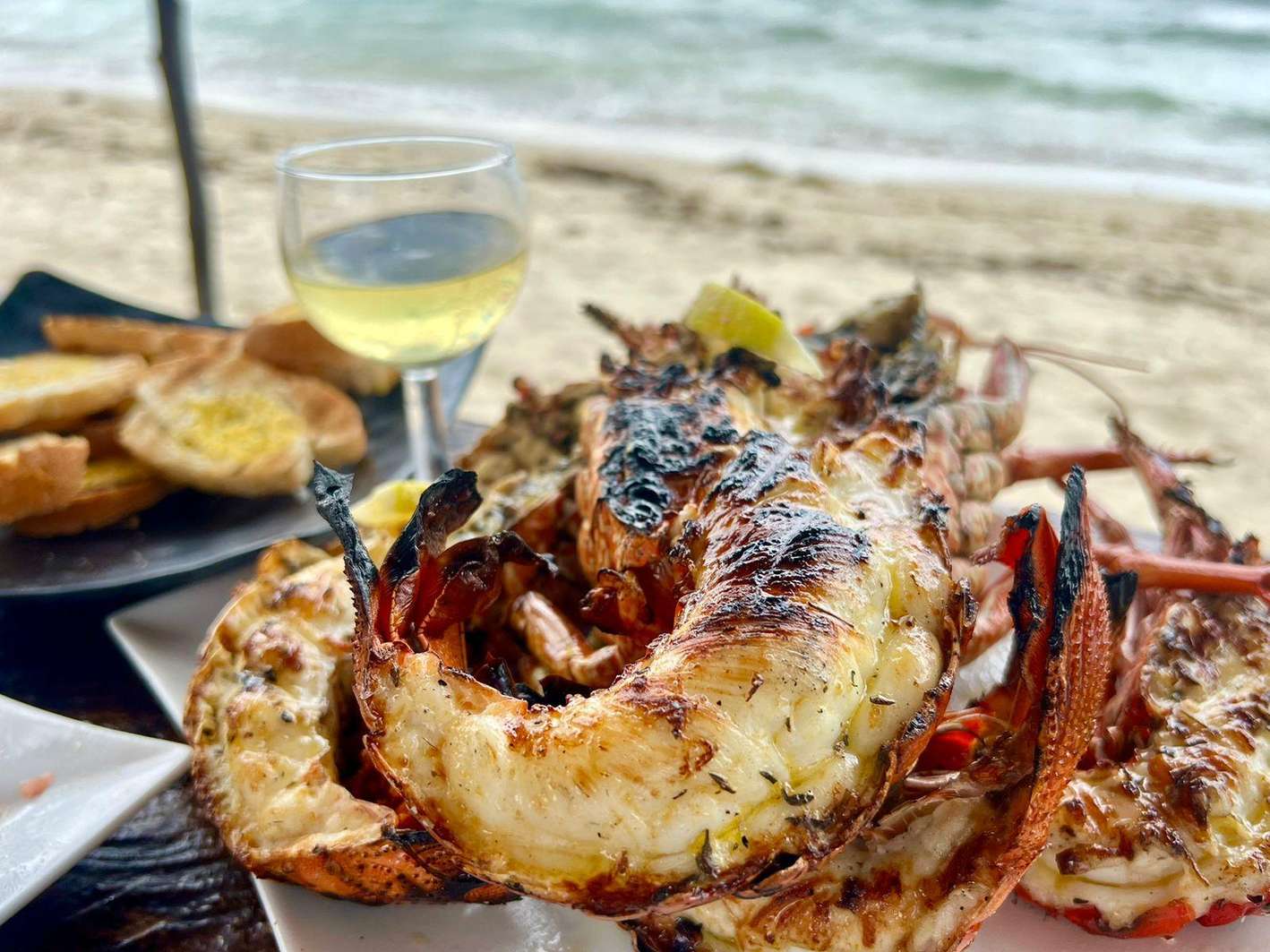
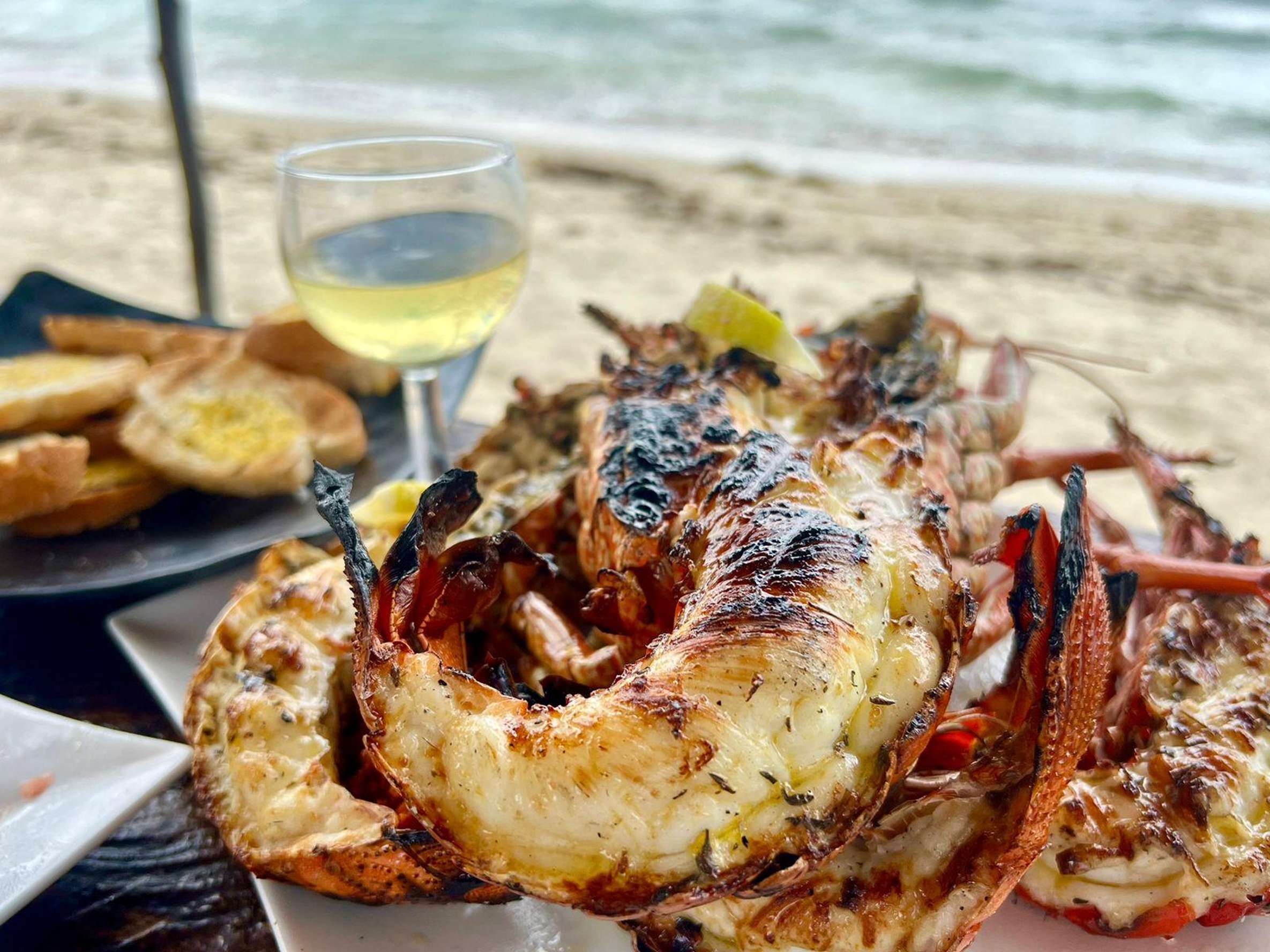
Snorkeling gear and bottled water come on board, and the full-day private trips add a seafood barbecue lunch with drinks on Île aux Bénitiers. Pickup, towels, photos, and breakfast sit outside the standard fare, though some crews arrange them for an extra charge.
Private or shared
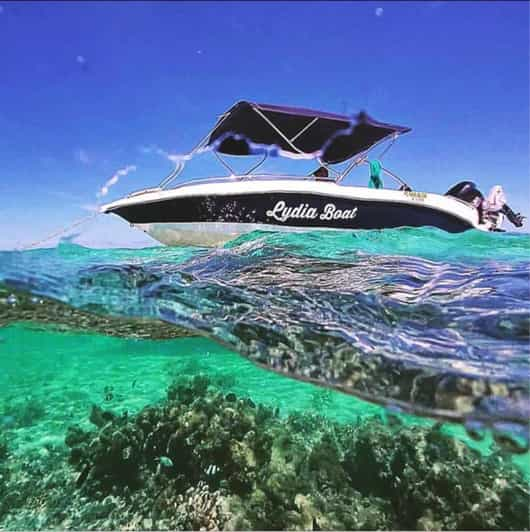
A private charter reserves the whole boat for your group, so the pace, the route, and the snorkeling spots follow what your party wants. The Le Morne departures on this page are all private, with some boats small enough to hug the peninsula's cliffs and coves.
On board rules
Touching marine life is off limits, and swimmers enter the water quietly without splashing. During dolphin swims a guide stays with you in the water, and small rotations keep the group of swimmers tiny so the pod is not crowded.
02
BookingHow far ahead, and what happens if plans change
1
Cancellation
You can cancel up to 24 hours before departure for a full refund on these tours. Weather also protects you: if open-sea swells top two metres or winds pass 25 knots, the trip is cancelled or rerouted inside the calm lagoon rather than risking the pass.
03
During the tourWhat is expected of you
2
Lagoon stops
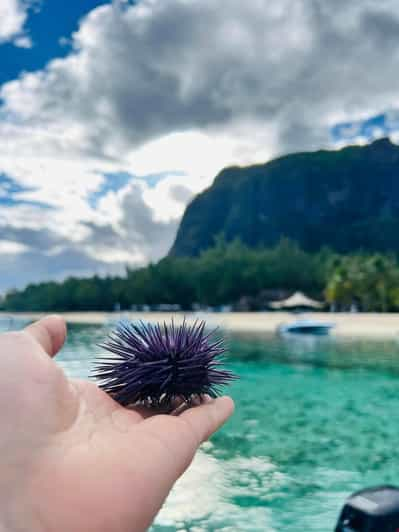
The day splits in two: open ocean first, while the permitted hours hold, then the sheltered lagoon. Crystal Rock, a fossilized coral formation standing in the shallows, is the photo stop, and snorkeling happens in calm water near the Le Morne reef.
Tipping
A tip for the skipper and crew after a good day out is welcome and customary in Mauritius, and it is handed over at your discretion. If you give one, Mauritian rupees are the practical choice over foreign notes.
The Le Morne whale watching guide - from dawn boat to island lunch
Sperm whales feed in the deep water off this peninsula all year, and the boats that find them board minutes from your resort. What decides the day is timing, sea state and knowing the rules before you book.
Le Morne· 20.45° S, 57.31° E
If you only remember three things
1
Boats leave between 6 and 8 am, when the sea is flattest and the law allows paid trips; paid whale watching ends at noon.
2
Sperm whales are a year-round sight; humpbacks join them only from June to October.
3
Swimming with whales is banned by law; watch them from the boat, always.
Is Le Morne the right base for whale watching?
A deep channel runs along this coast, from Tamarin Bay down to Le Morne, and whales pass unusually close to the reef because of it.
That single piece of geography is why the peninsula works as a base: the boats do not need a long run to find deep water, and the animals sometimes come to you.
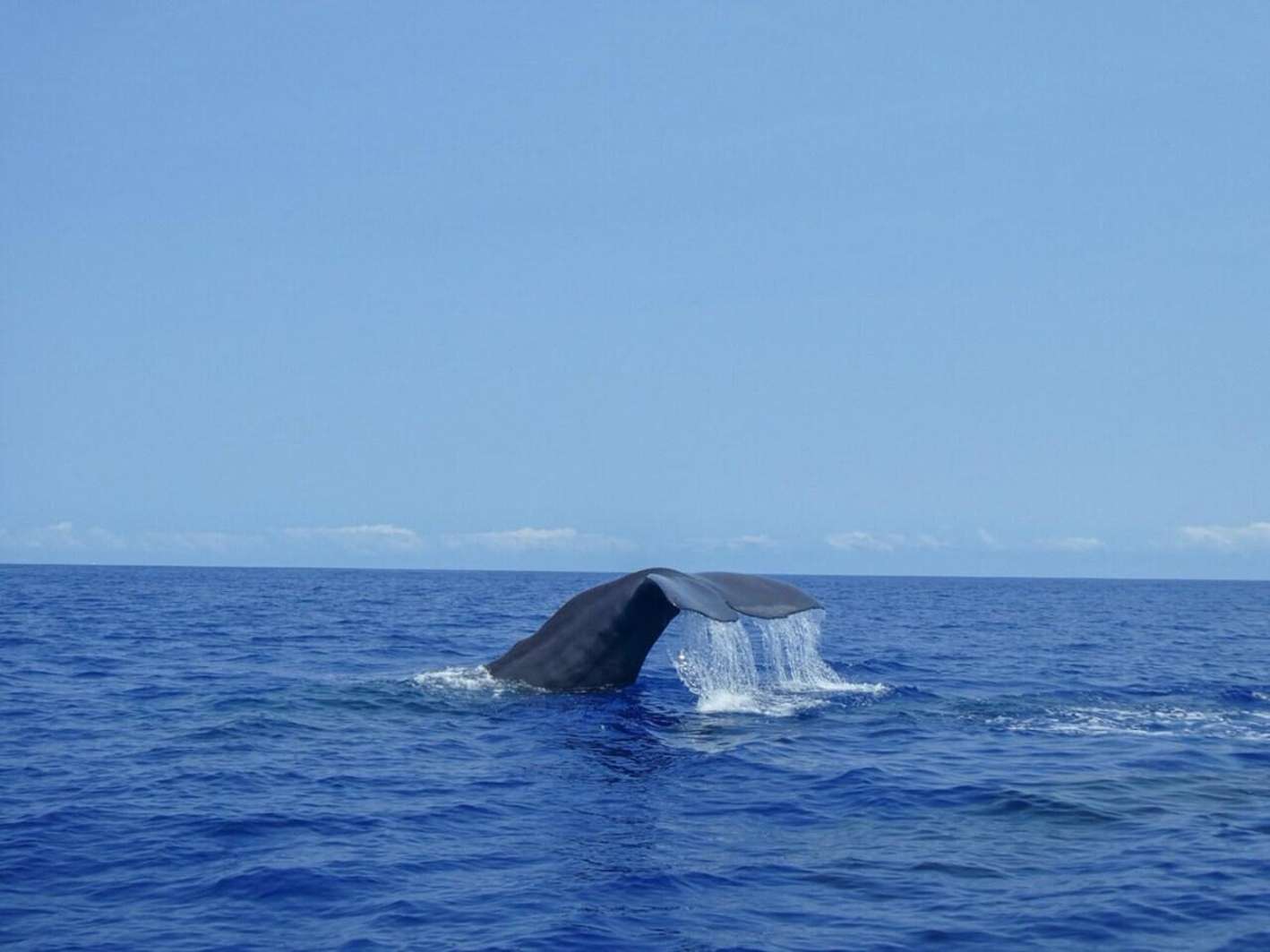
Off the southwest tip, the sea floor drops away sharply, and that drop-off is where sperm whale family pods, mostly females with calves, feed through the year. Upwelling along the slope brings the food they hunt. Boats leaving Le Morne reach it in minutes.
Compare that with the main hub further north. Tamarin Bay and Black River host most of the island's whale watching operators, and the marina there launches the majority of serious trips.
But staying in Le Morne, Tamarin or Black River keeps you within a short drive of departure points either way. Le Morne trades hub status for a shorter ride to the whales and no pre-dawn cross-island drive.
The trip that shows this coast at its best is the Le Morne, Mauritius: Eco-Friendly Whale and Dolphin Tour, a four-hour private outing that starts from the public beach and pairs whale watching with a guided dolphin swim.
The boat leaves the reef behind and the crew starts listening. A directional hydrophone goes into the water, and sperm whales give themselves away by clicking, hunting calls the probe picks up from several kilometres away. The sound says which direction to head.
Radios do the rest. Skippers talk to each other across the water all morning, sharing positions as whales surface and dive. By the time you reach a sighting, the crew has often tracked it for an hour.
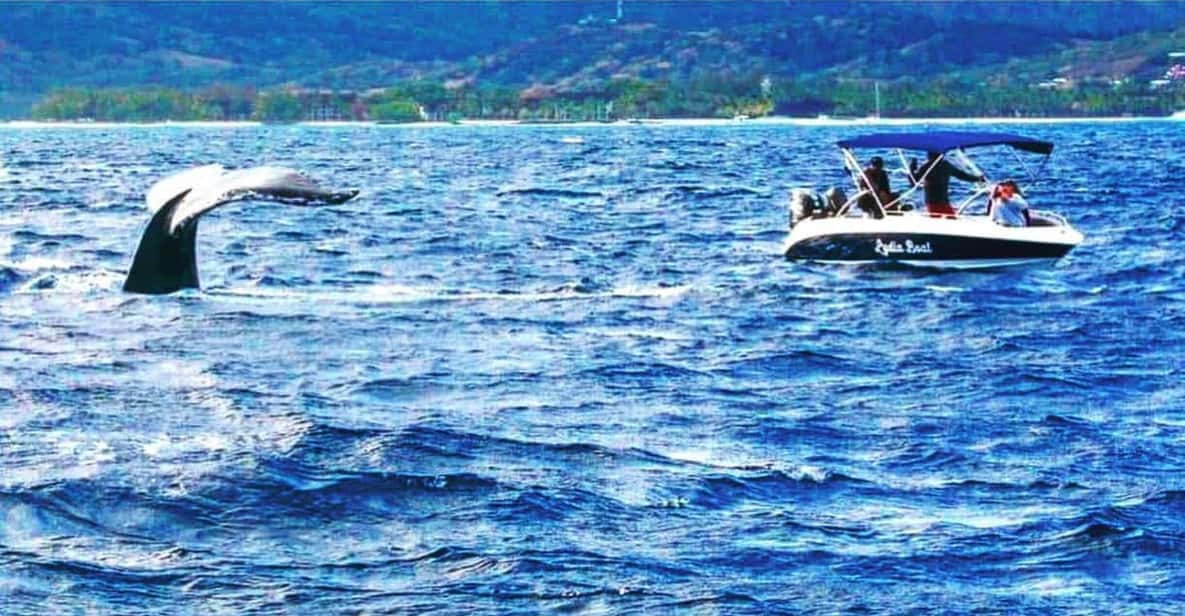
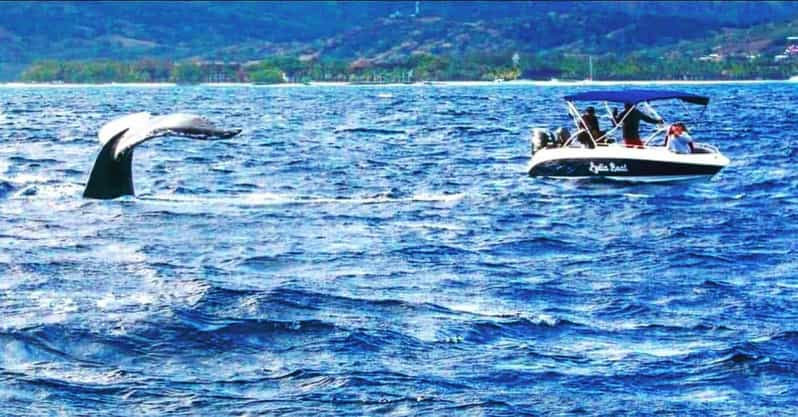
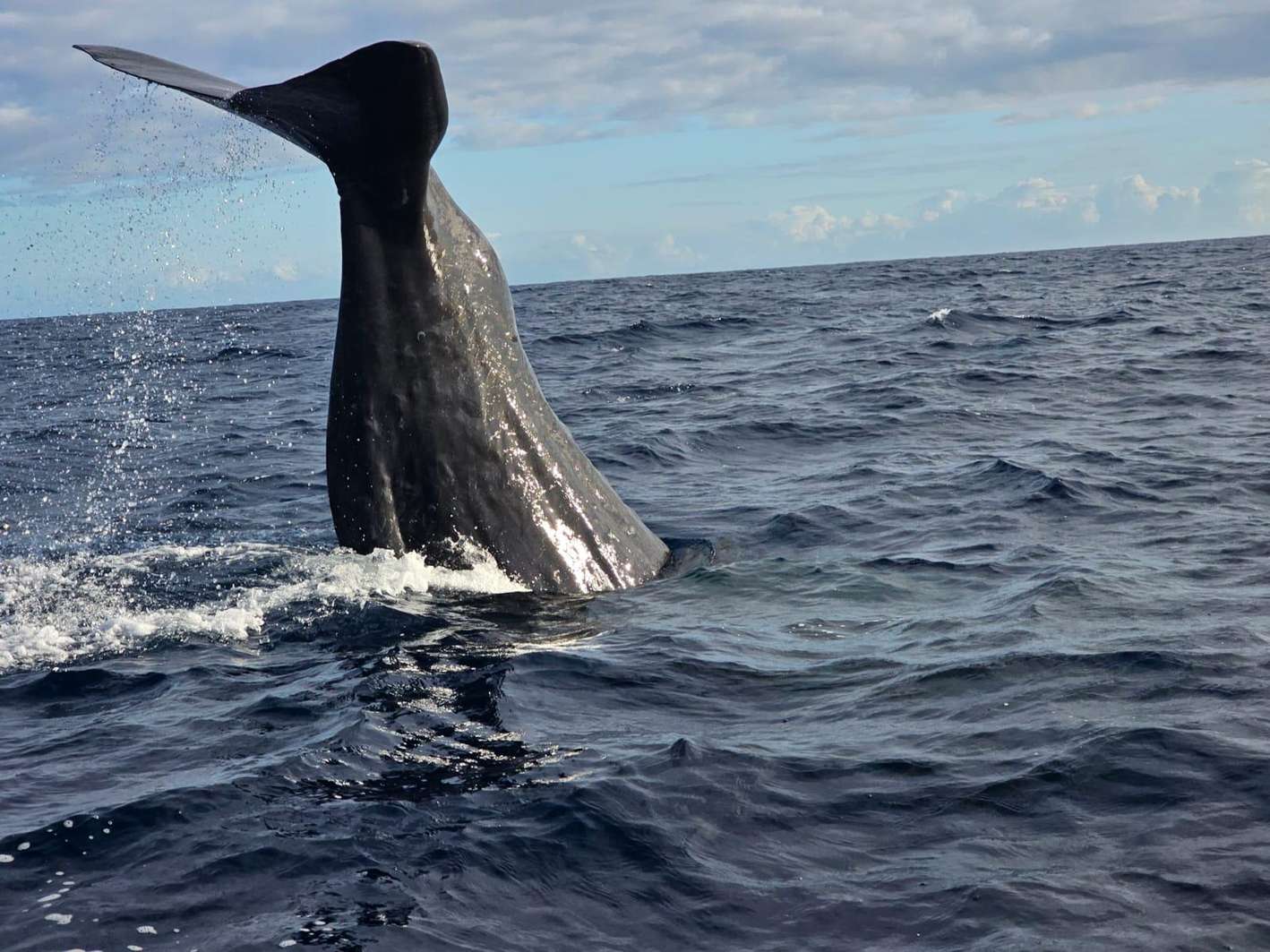
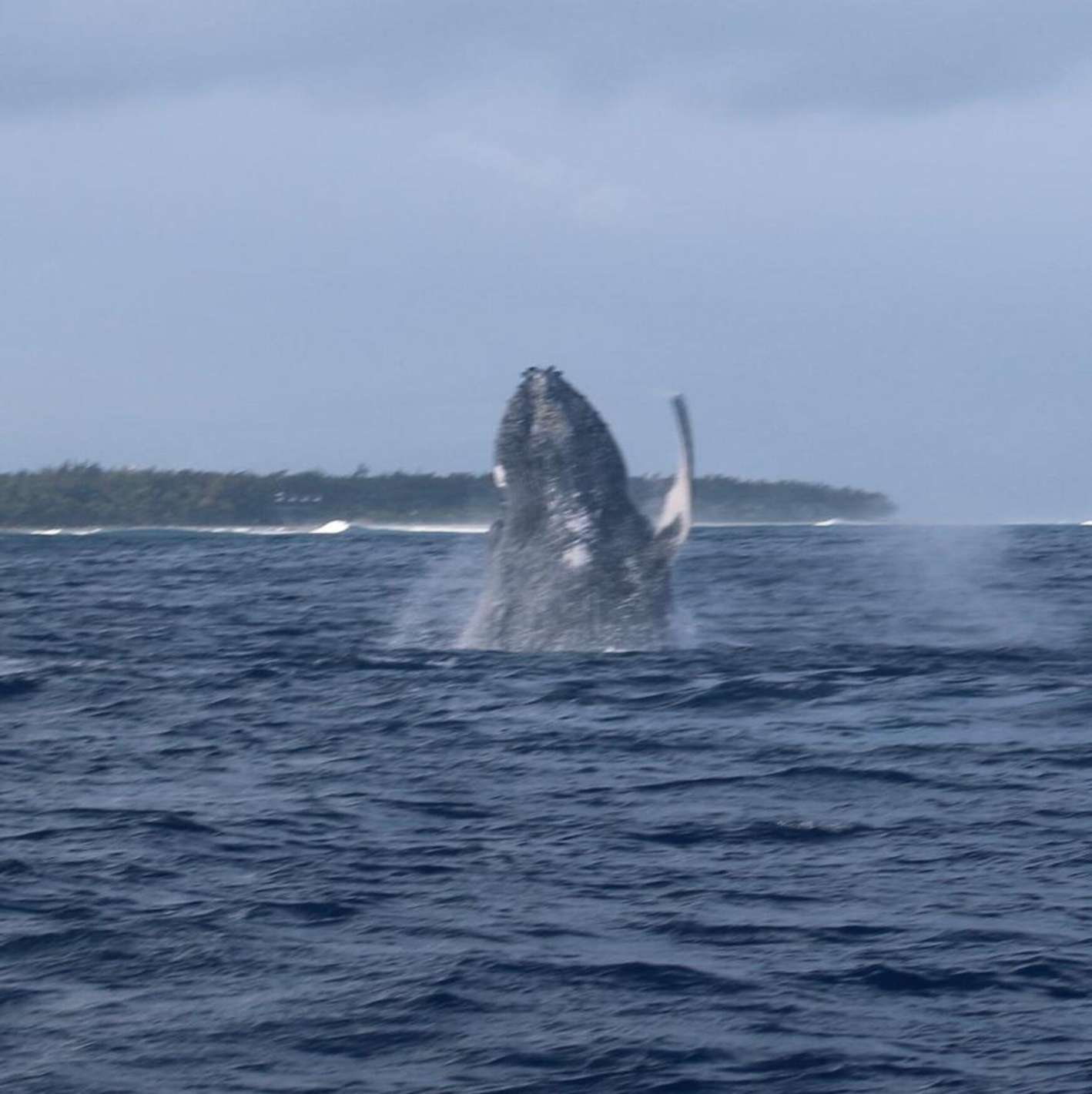
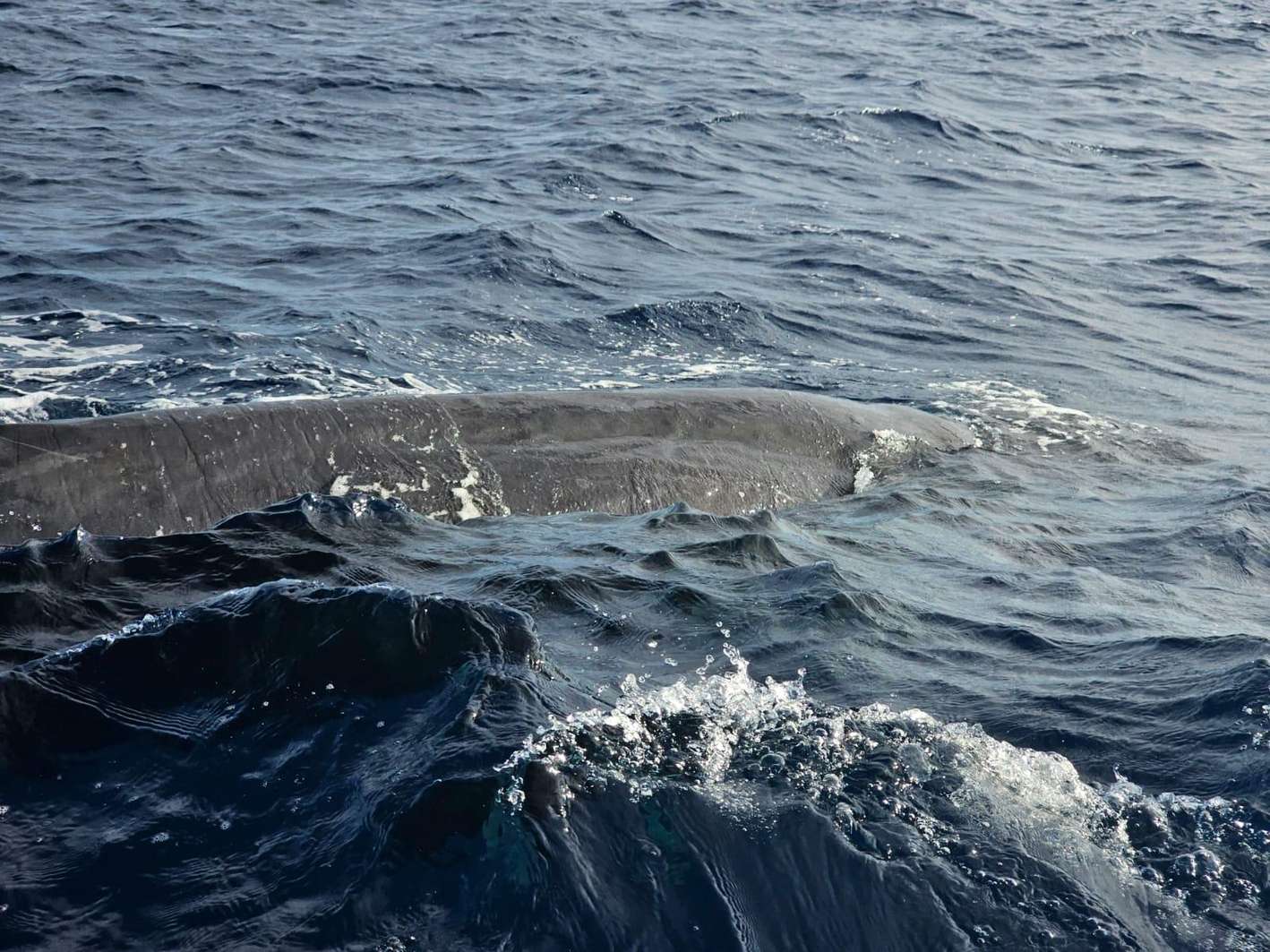
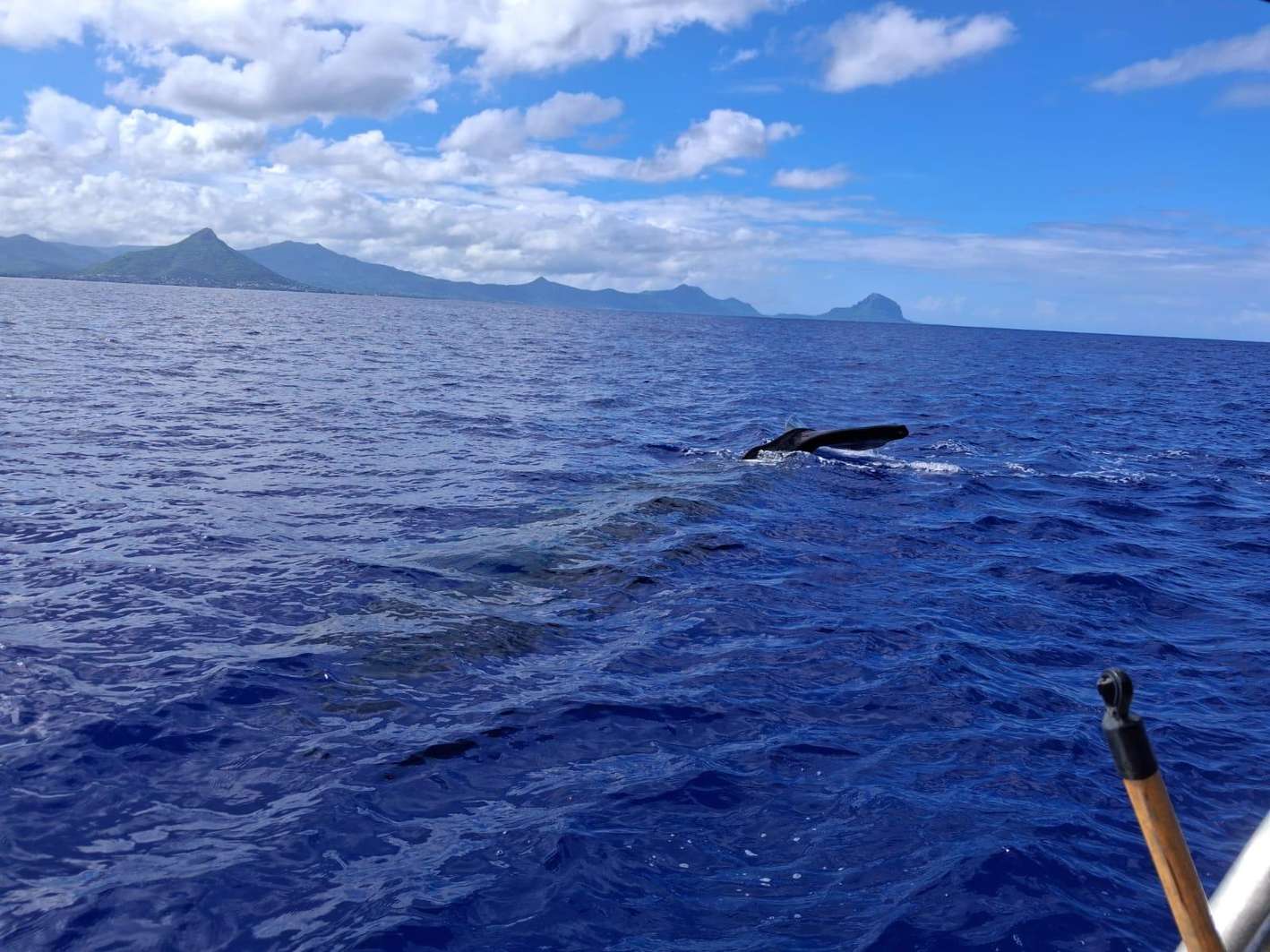
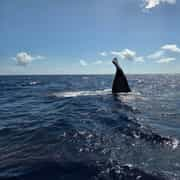
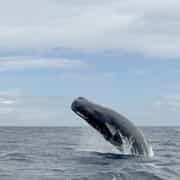
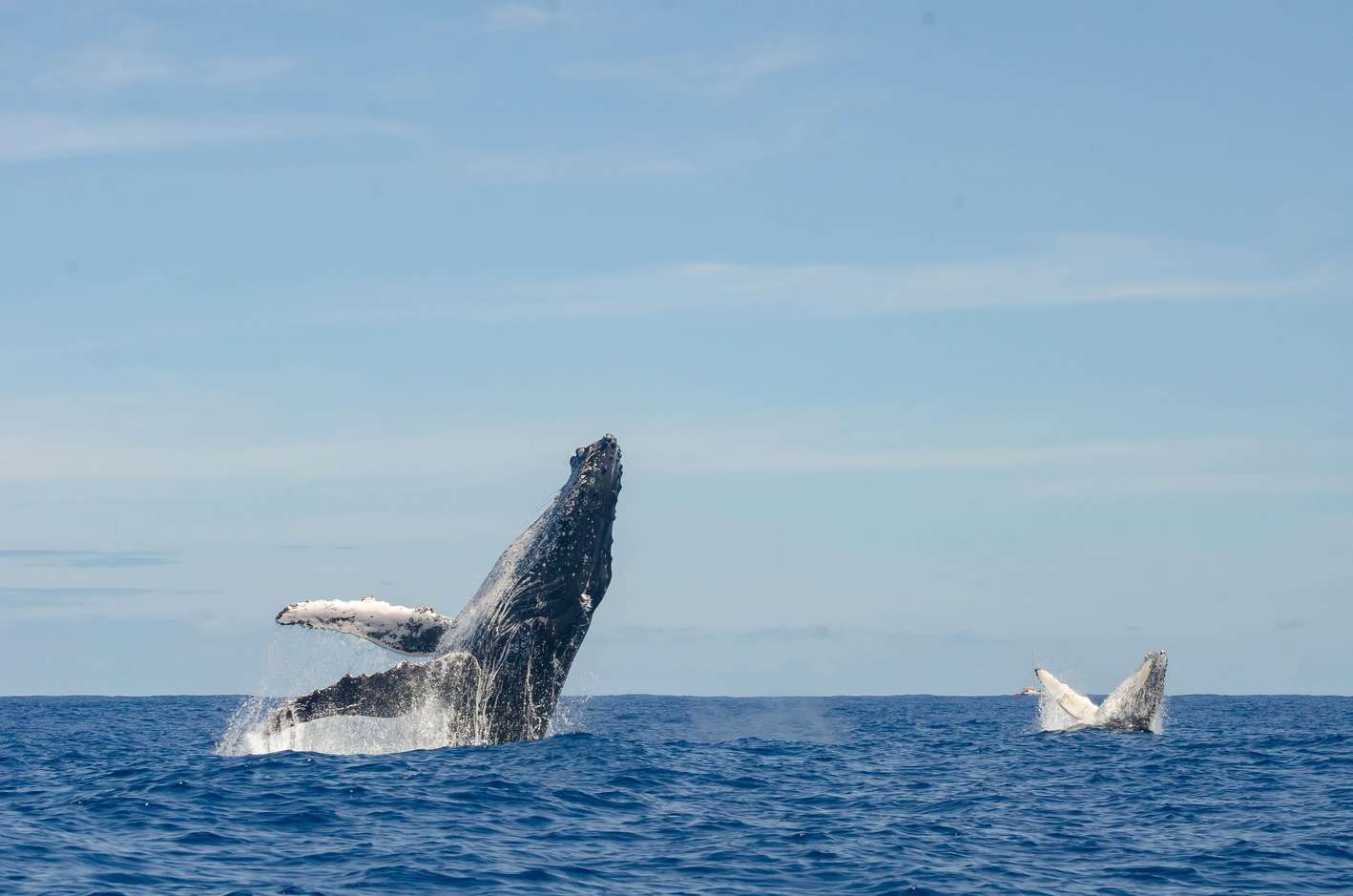
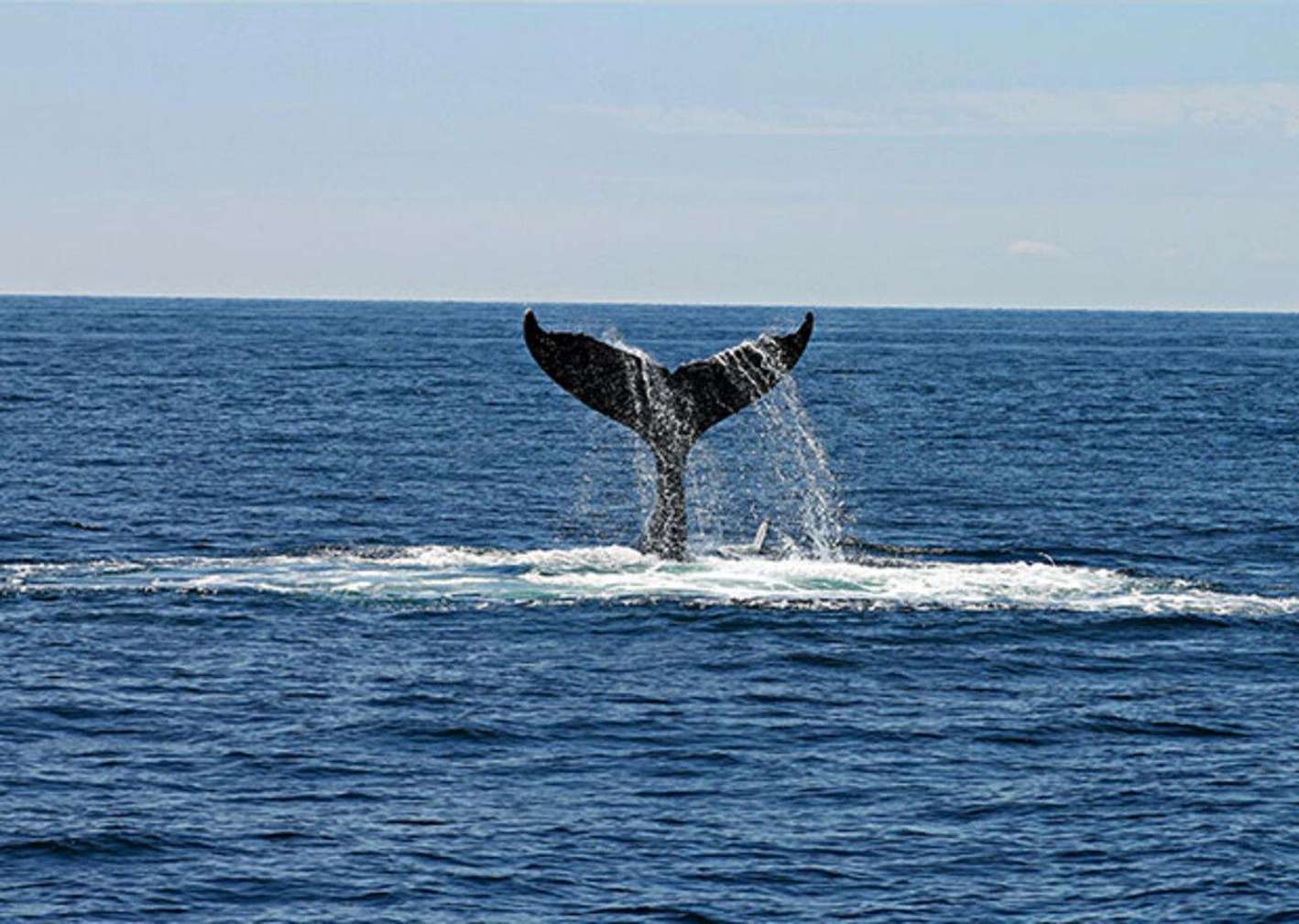
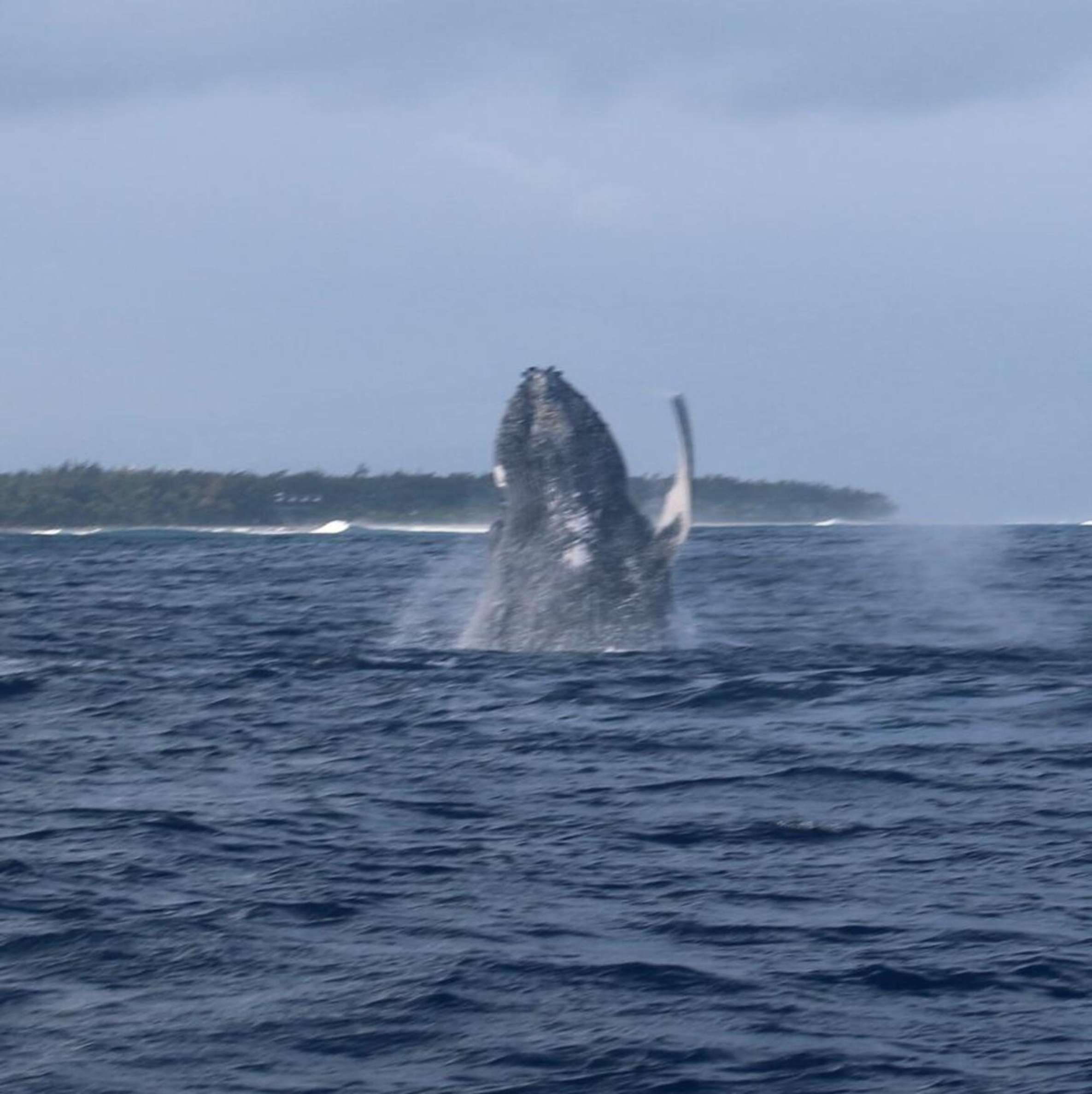
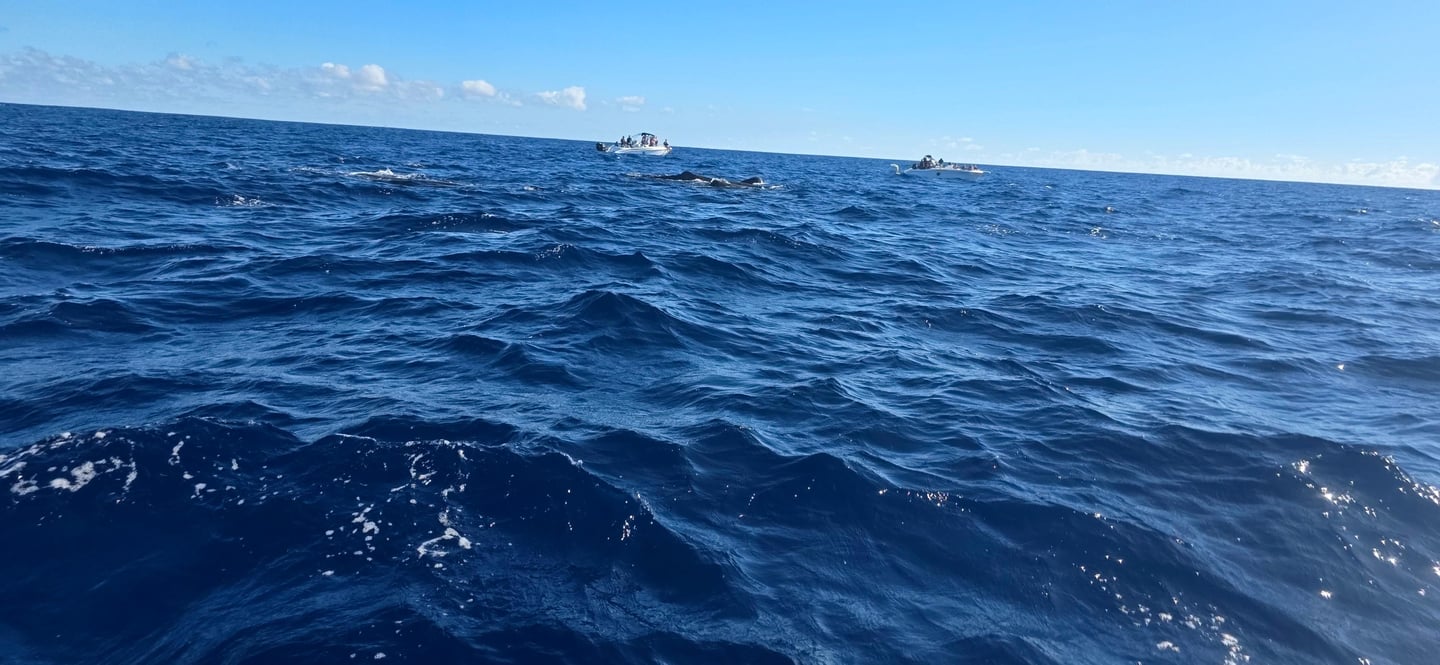
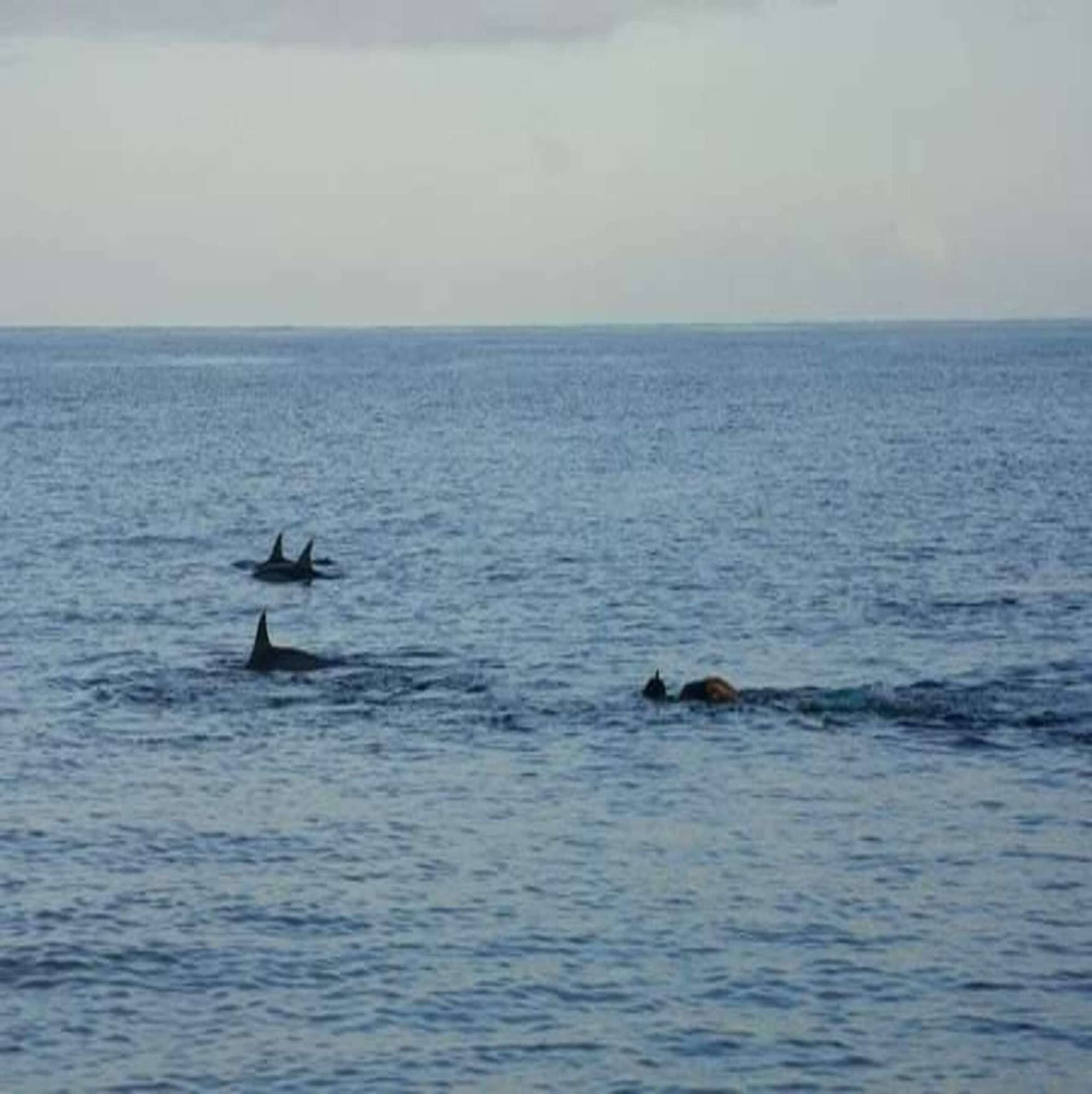
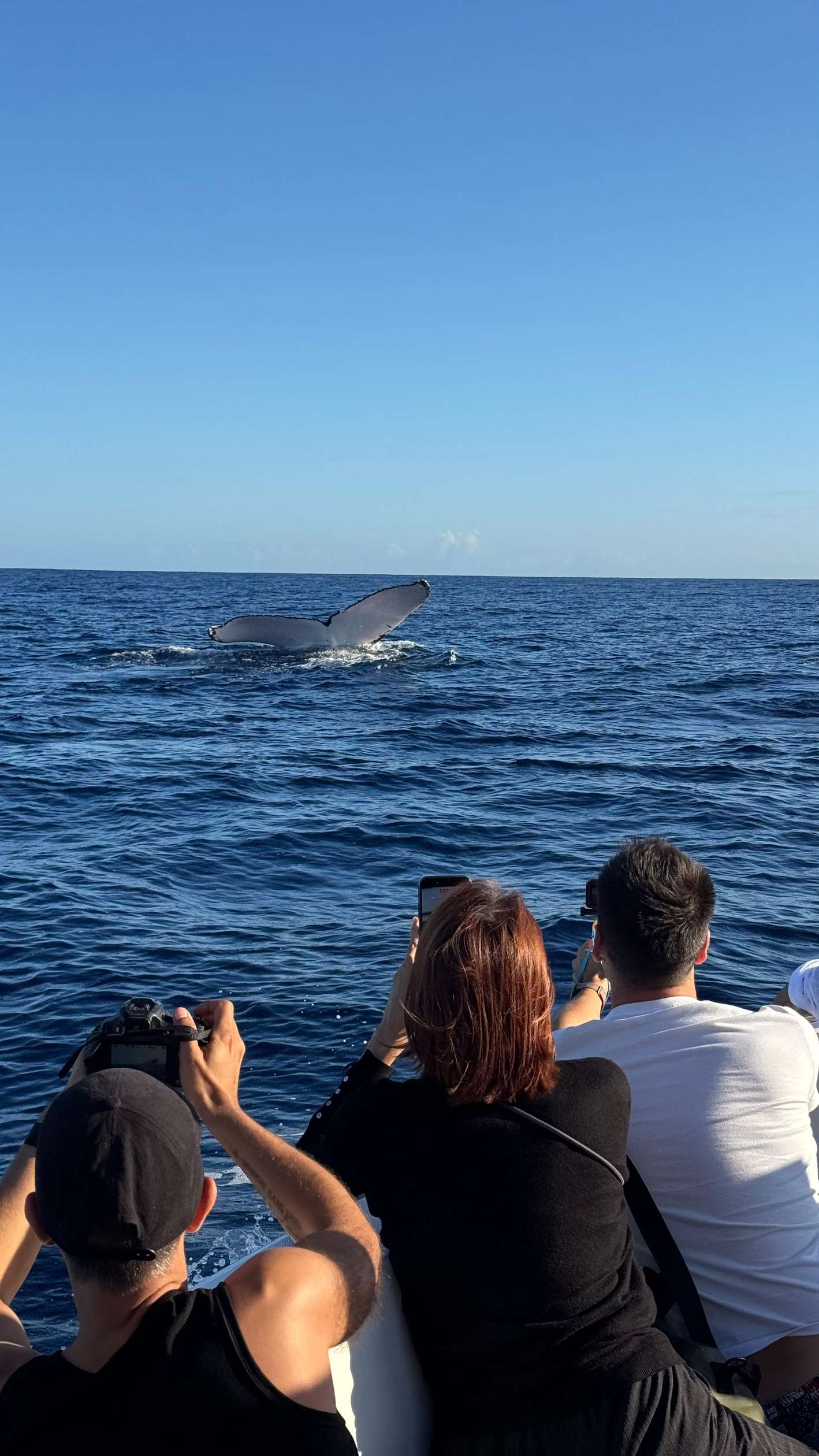
What a sighting looks like: a blow on the horizon, a dark back, the slow raise of flukes before a dive that can last half an hour. Regulars say the searching itself is half the experience.
A traveler's note
Absolutely amazing! Hosts top, boat great, activity variety perfect. BBQ generous and tasty, our island table the neatest of all. Never rushed, enjoyed every moment. Recommend, recommend, recommend!
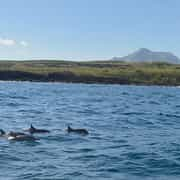
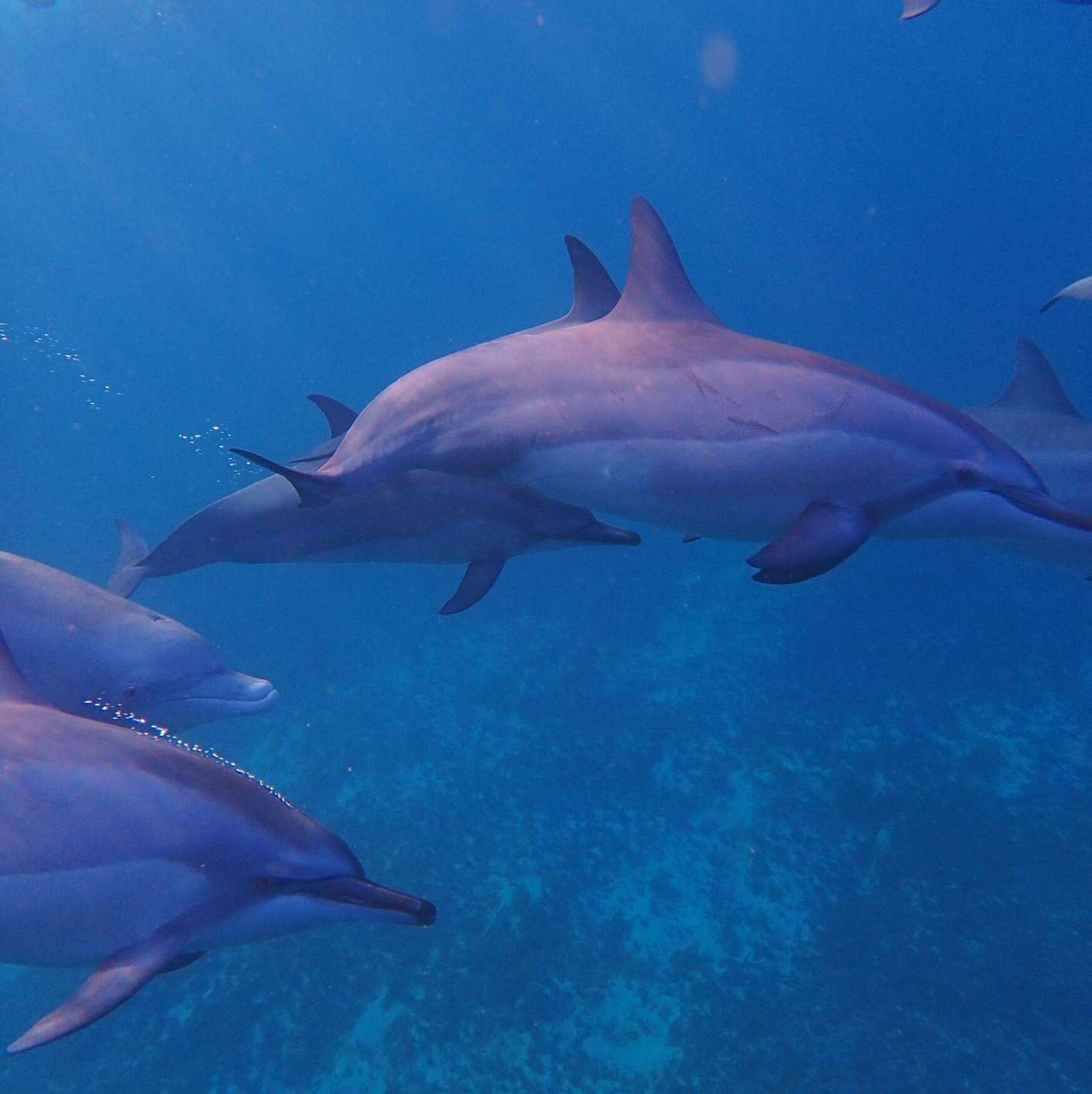
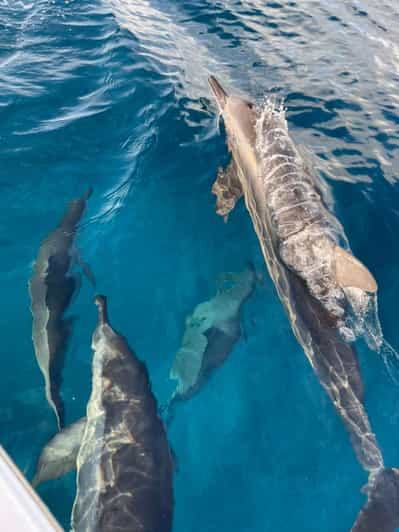
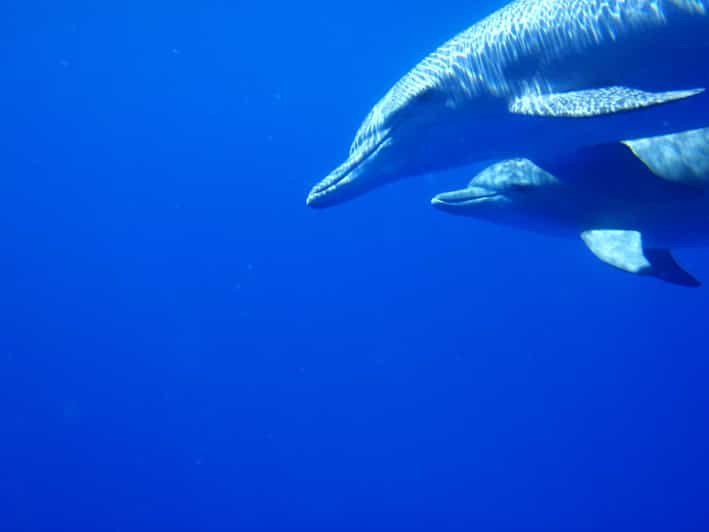
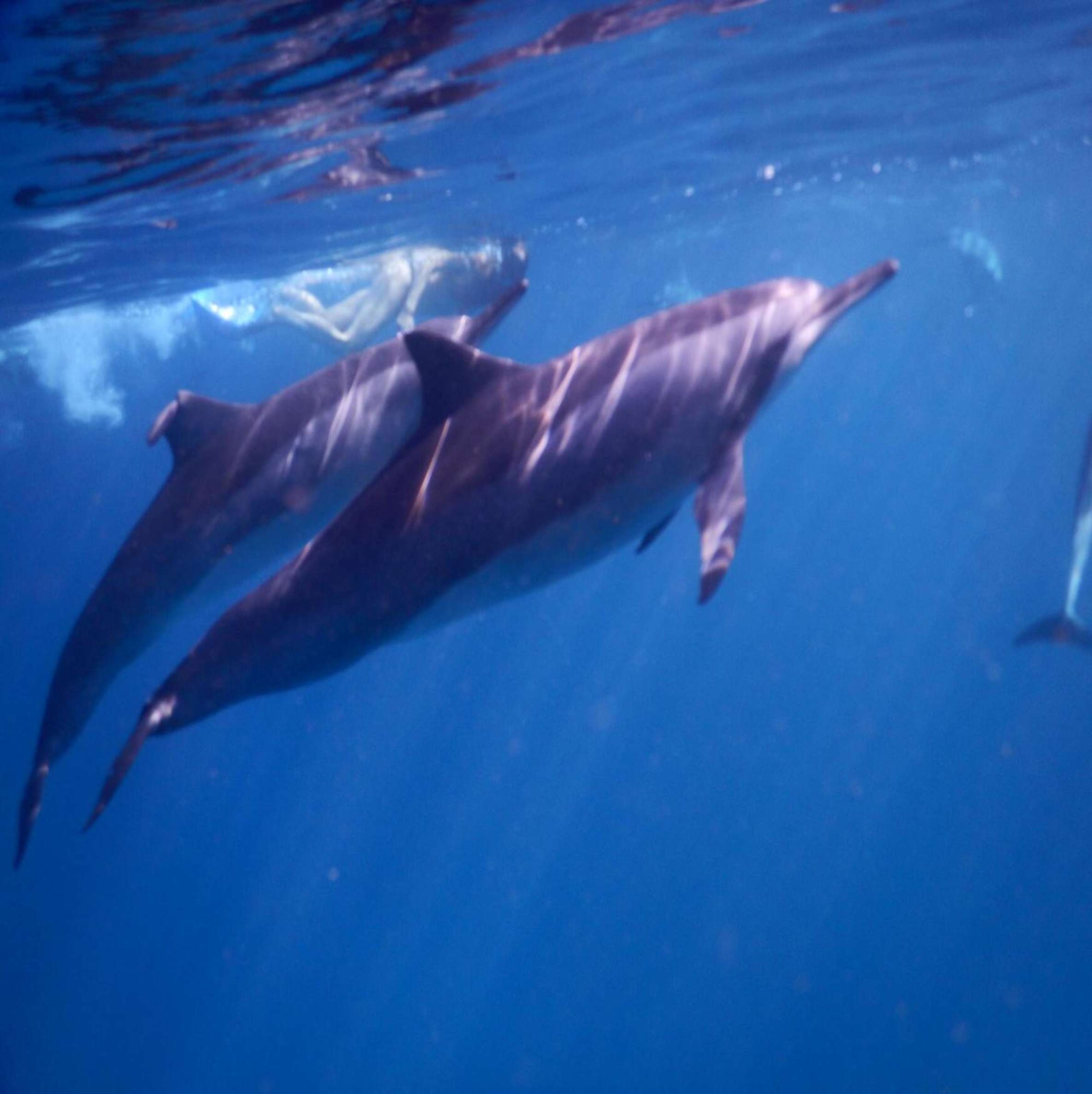
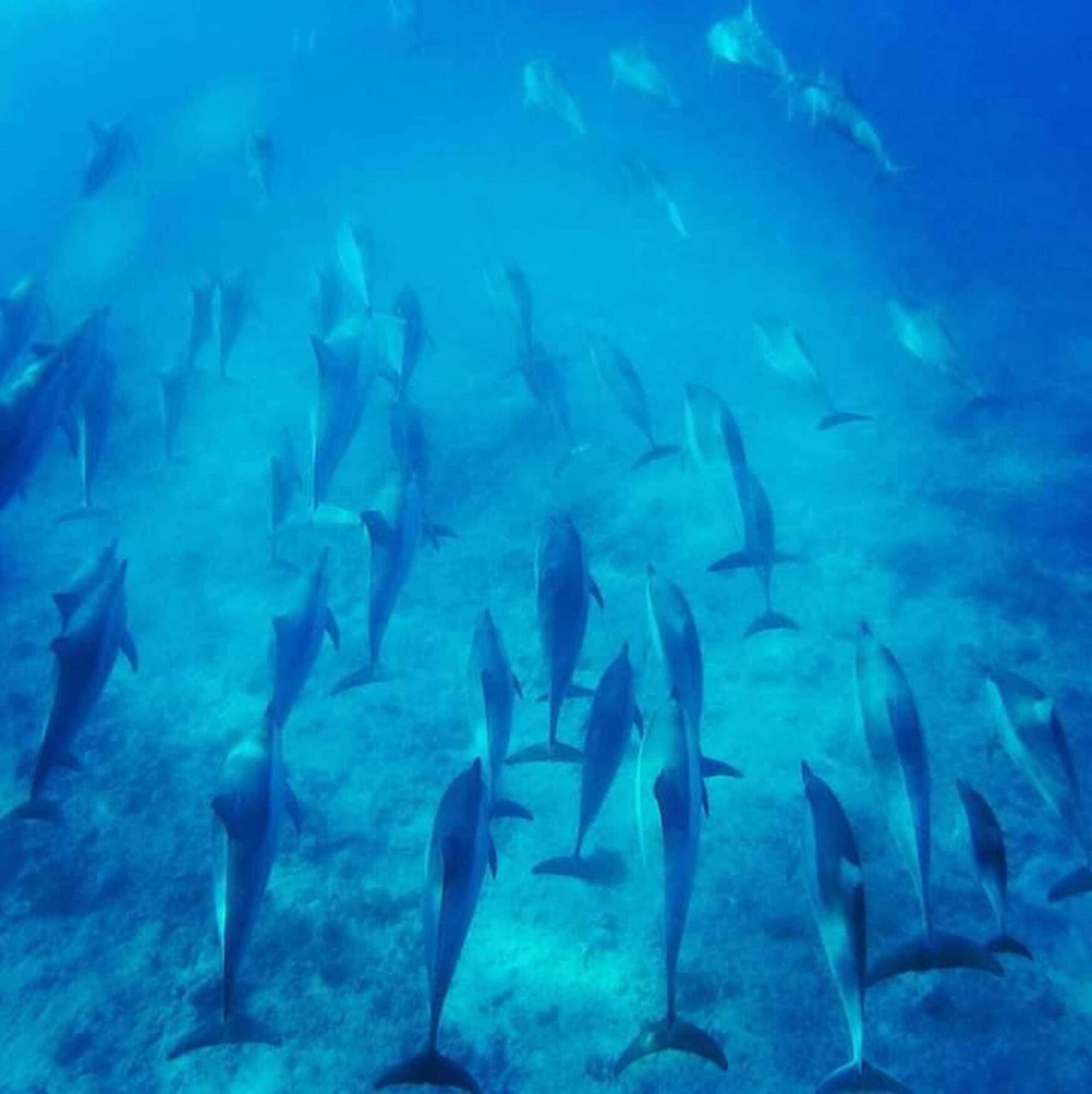
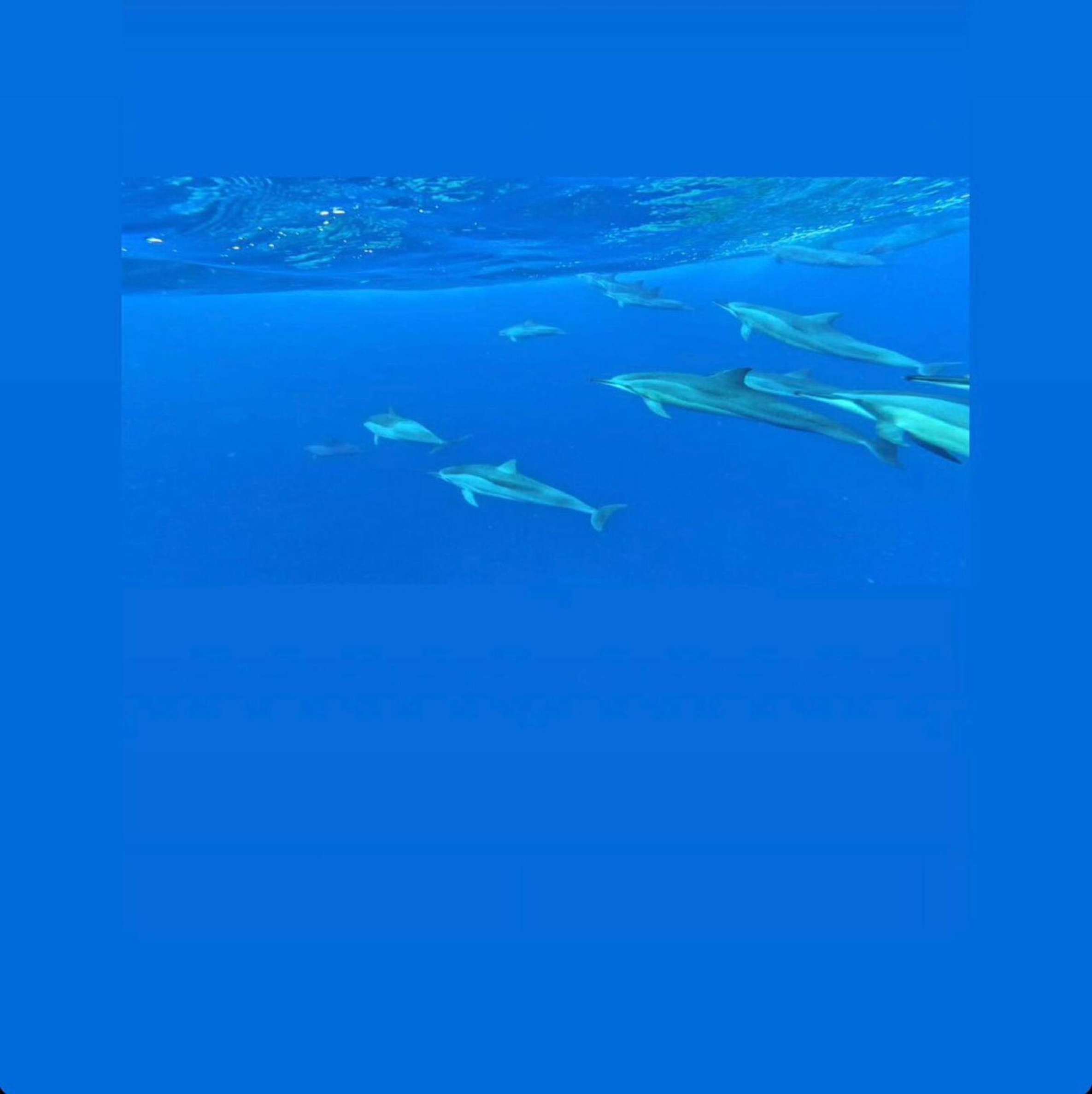
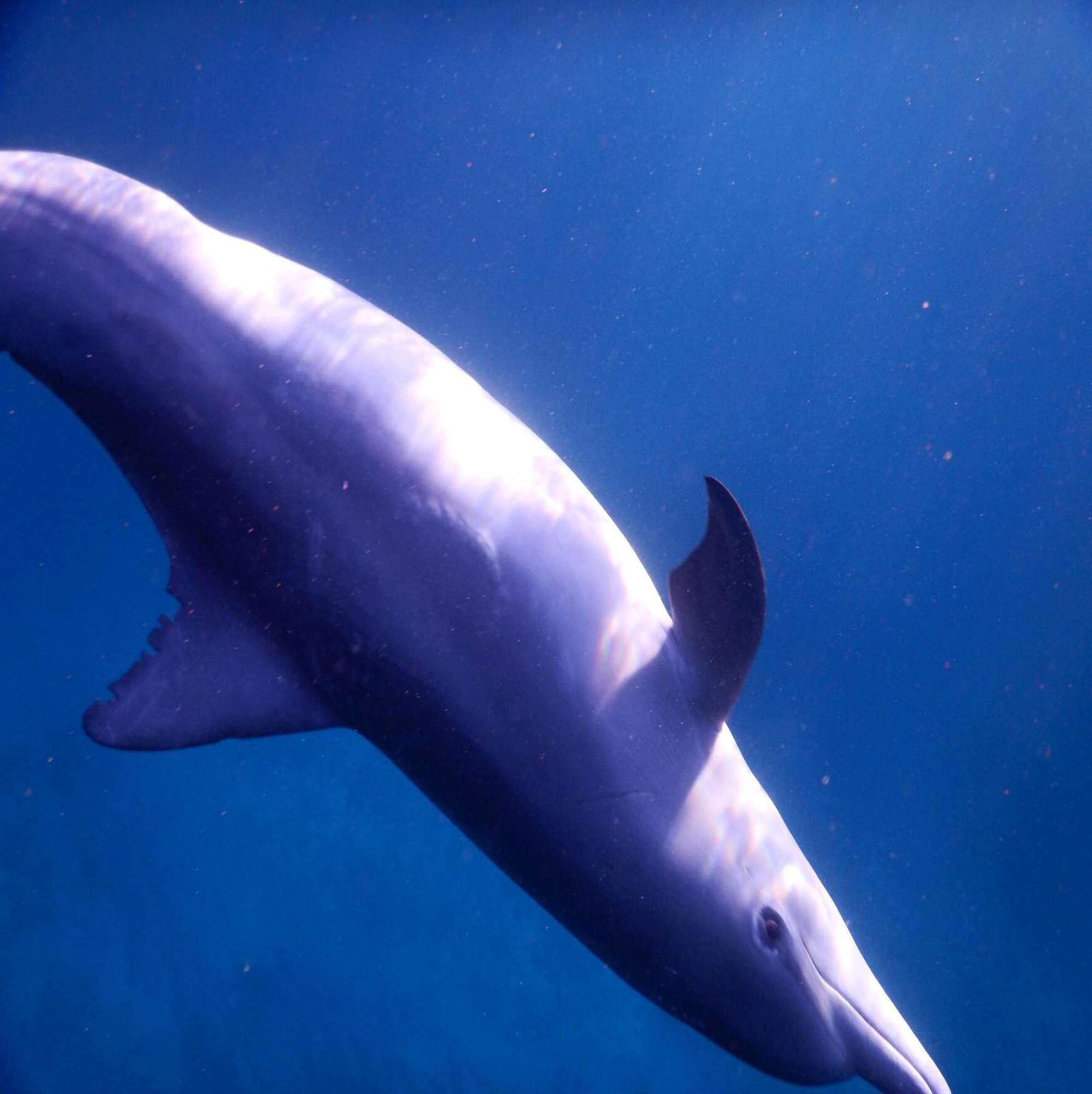
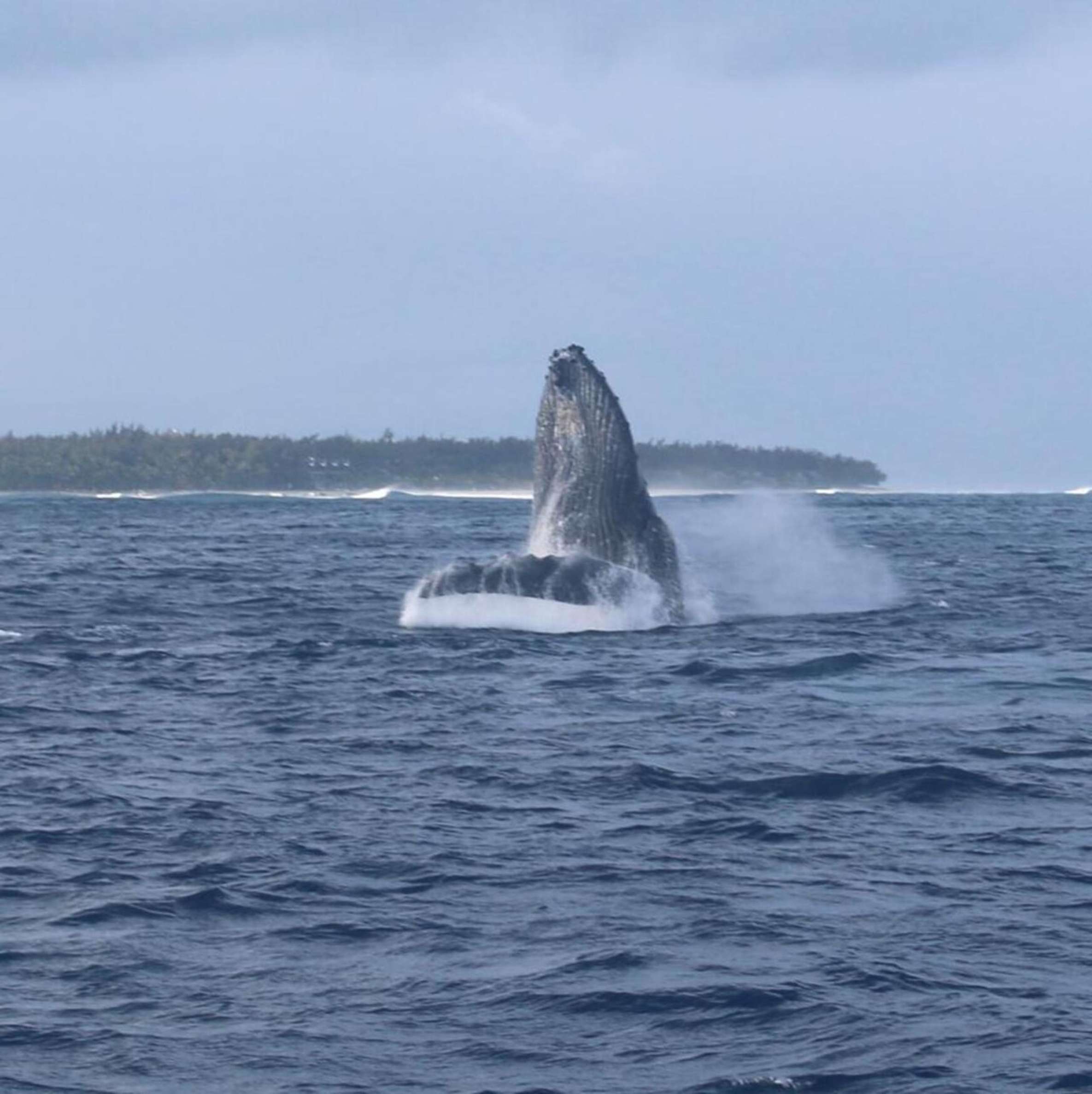
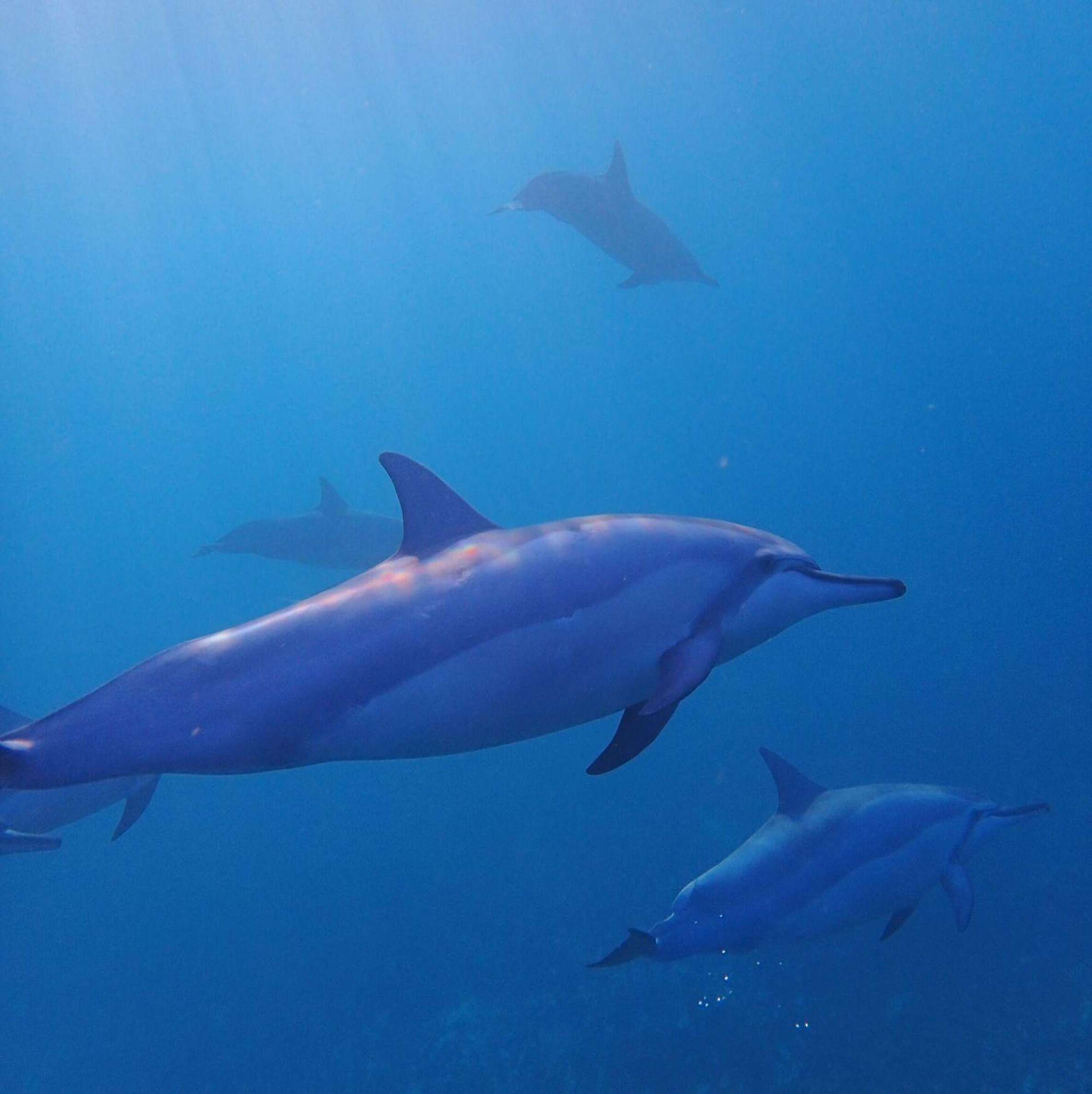
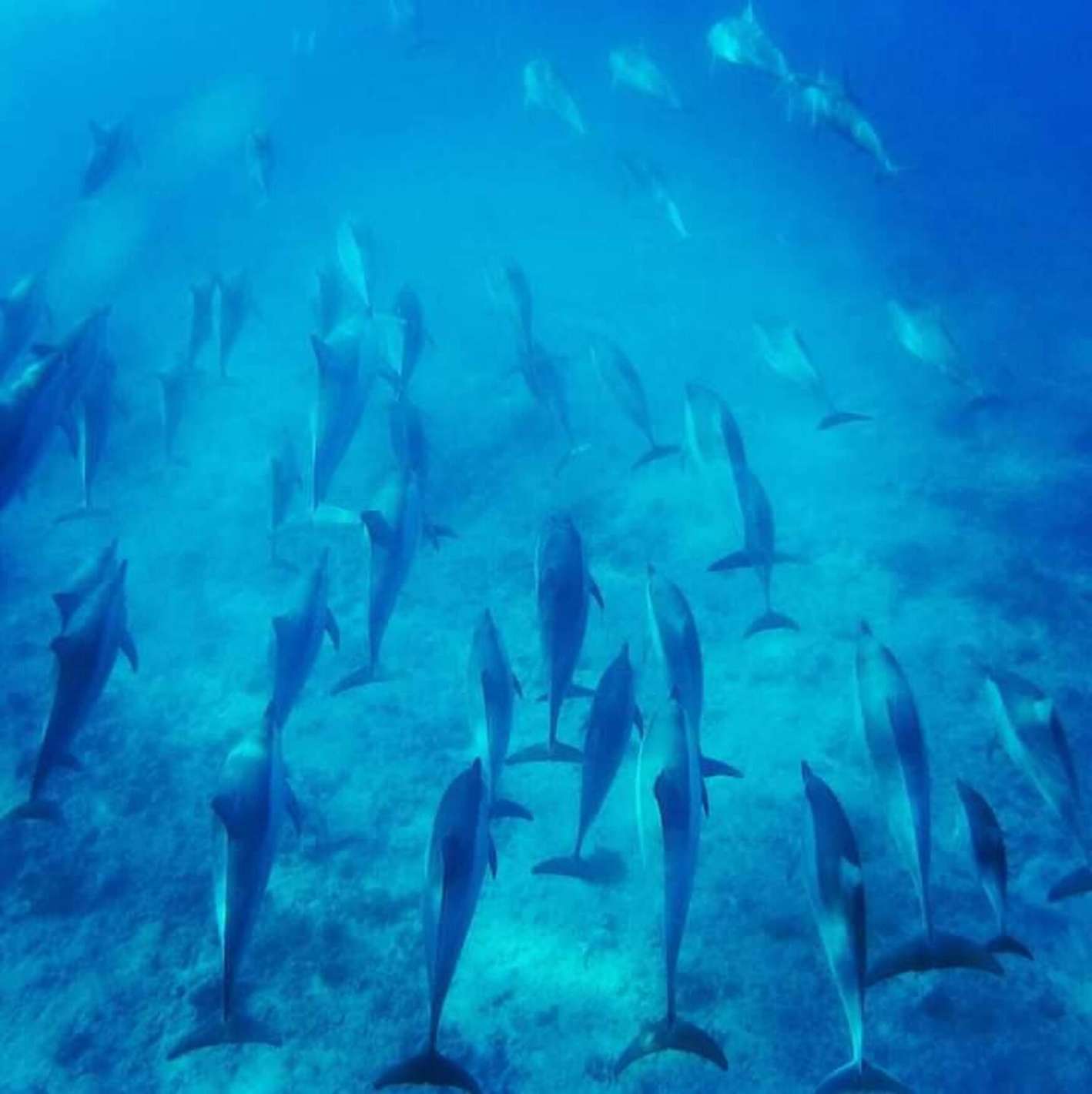
Dolphins are a separate, livelier show near the reef passes, where spinner and bottlenose pods rest in the morning. Humpbacks, when the season is right, announce themselves with breaches you can hear before you see.
Roughly six outings in ten come back with whales, on the figures west coast crews work with; one operator states a 60% chance on its own dolphin and whale combos, which sits inside that range. So count on a whale morning more often than not, and treat the whale as the bonus it is.
Tour for this
Black River: Dolphin Swim and Whale Watching by Speedboat4.6★ (760) · 5 hours · Free cancellation
Any month works for whales, but the cast changes. Sperm whales hold their ground off the west coast all year, and the dolphins do too, gathering in sheltered bays each summer morning before moving offshore.
Humpbacks are the seasonal guests. They arrive from Antarctic feeding grounds between June and October, with the strongest passing traffic from August to October. Book a winter trip and you may see two whale species in one morning; book in February and it is sperm whales only, still a genuine sighting.
The sea, more than the animals, is what winter changes. From June to September the southeast trade winds blow across the open water off Le Morne, and the share of calm days falls to about four or five in ten.
Summer runs much calmer, with December the flattest month of all. Whale species decide the season; calm days decide how pleasant the ride is.
The practical reading: come any month and the whales are there. Come in winter and build flexibility into your plans, so a rough day costs you a day, and the holiday keeps its whale morning.
Mauritian law sets the schedule. Paid whale watching runs only between 6 am and noon, so the whole commercial day fits inside a single morning.
Within that window, the first two hours are the good ones. Seas are flattest and winds lowest at dawn, which makes whale blows and surfacings easier to spot.
Around 8 am the trade wind starts to build, and the open sea grows choppier from there on. Regulars know the wind that picks up around 11 am is the real deadline, even before the legal one.
Early boats also reach the animals first. Departures between 6 and 7 am coincide with sunrise, somewhere between about 5:30 and 6:45 am depending on the month, and catch the dolphins at their most active near the reef passes before other boats arrive.
On the dolphin swim, legal paid encounters stop at 9 am, another reason the schedule compresses into the morning.
Take the early start as the price of the ticket. Flat water, first in the bay, and the full legal window to find whales: that is what the alarm buys.
Tour for this
Le Morne, Mauritius: Eco-Friendly Whale and Dolphin Tour5.0★ (5) · 4 hours · Free cancellation
A combined day splits into two halves. The morning belongs to the open ocean: boats run out through the reef passes early to find whales inside the permitted hours between 6 am and noon, with dolphins usually first at the passes.
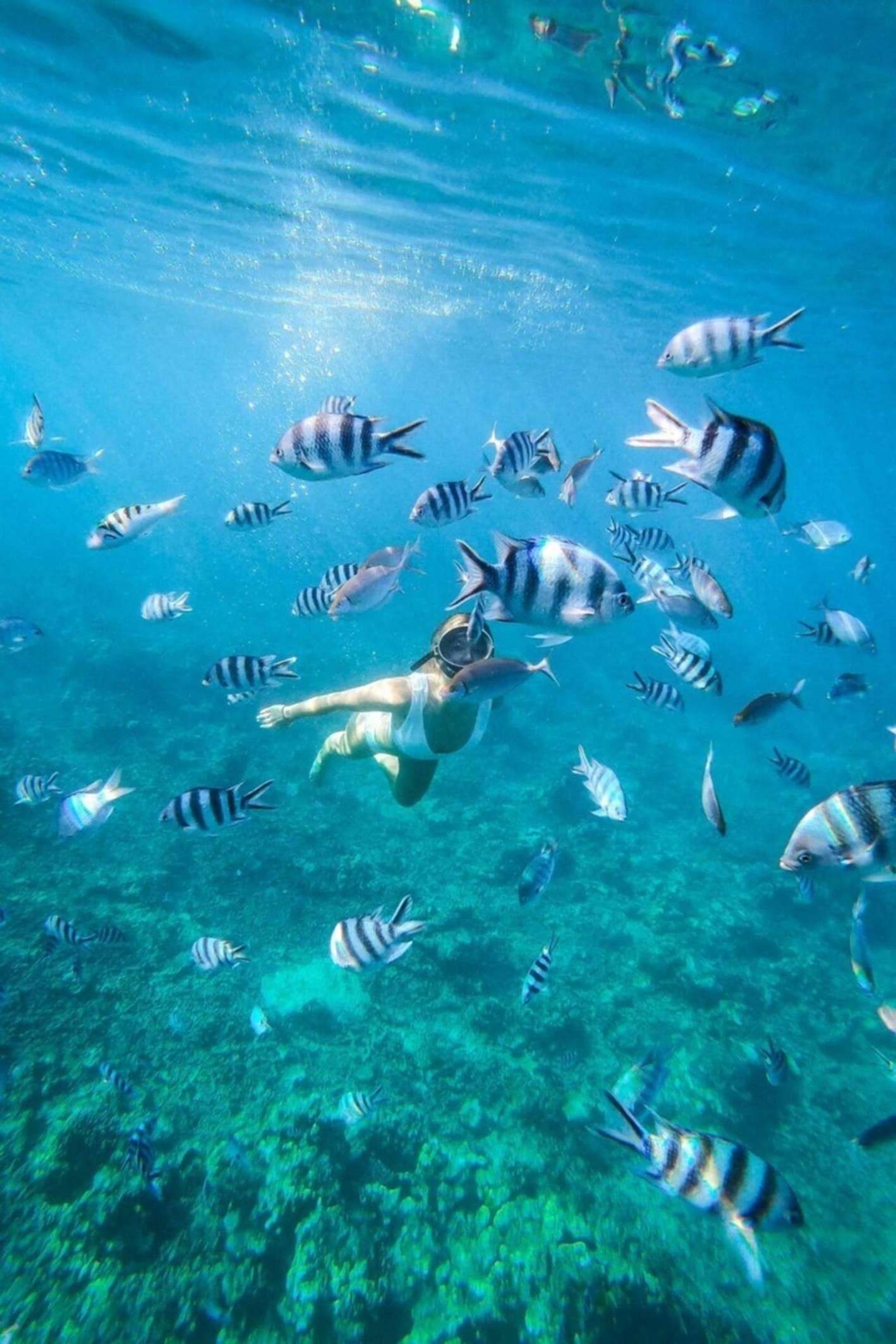
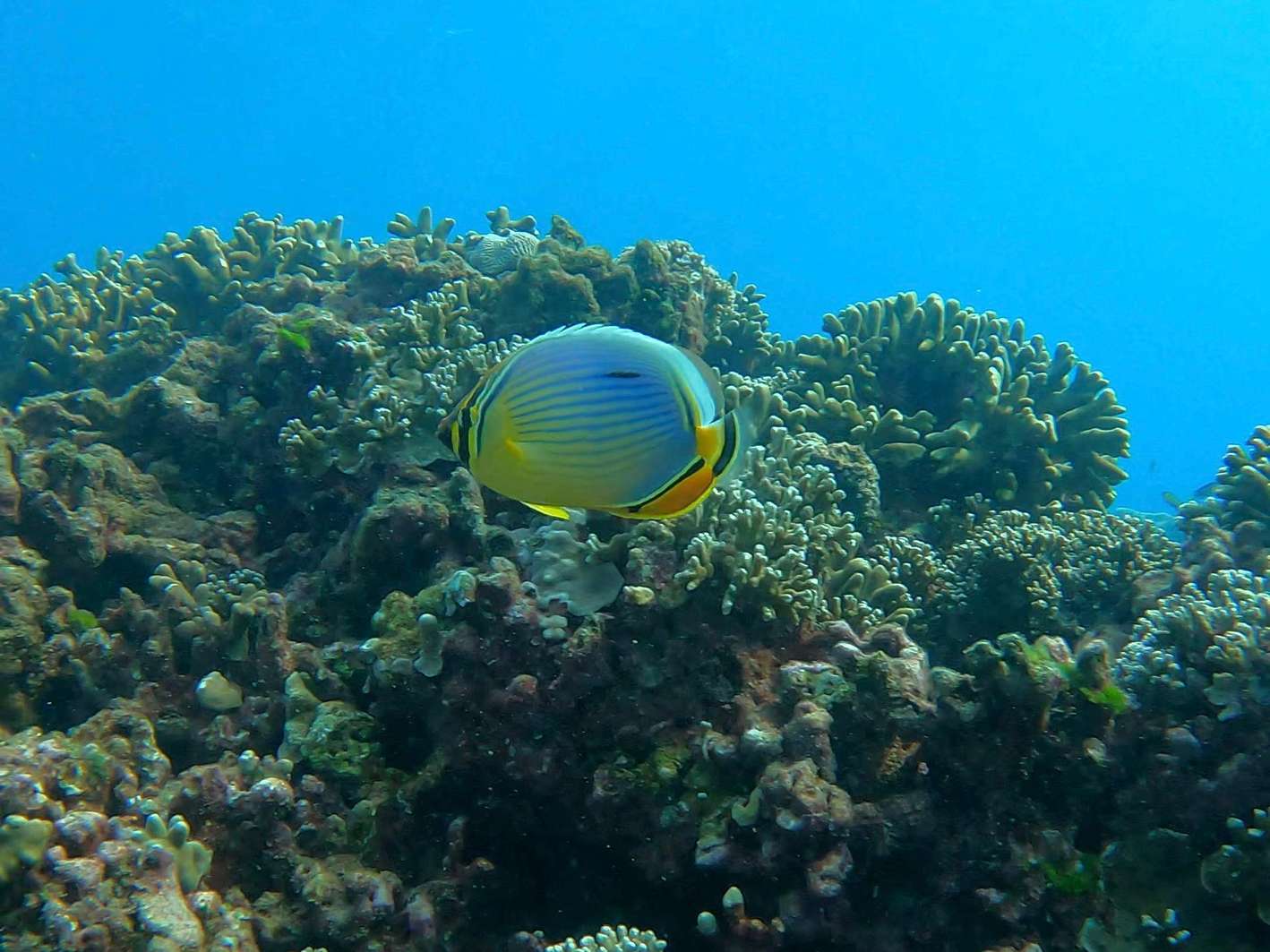
Then the day softens. The boat comes back inside the lagoon, where the water turns glassy and shallow, and anchors at Crystal Rock, a lone lump of fossilised coral rising from the sea floor, good for photographs at water level and a snorkel over the reef around its base.
Lunch decides the format. Dedicated whale outings run about 2.5 to 3 hours; combined dolphin and whale trips take 3.5 to 4 on the water.
Add the island stop and you are out for most of the day: a full excursion with whale watching, dolphins, snorkeling and a barbecue lunch on Île aux Bénitiers takes about 8.5 hours from Le Morne.
How the combined day unfolds
1
Sunrise boarding
You wade out to the boat at Le Morne Public Beach
The crew briefs you on the water rules before the engine starts
2
Early morning
Dolphins at the reef passes
Spinner and bottlnose pods rest in the bay at first light
3
Mid-morning
The boat runs offshore for whales
Hydrophone and skipper radios track the animals before the noon curfew
4
Around midday
Snorkel stop at Crystal Rock
Photograph the rock from water level, then swim the coral around its base
5
Early afternoon
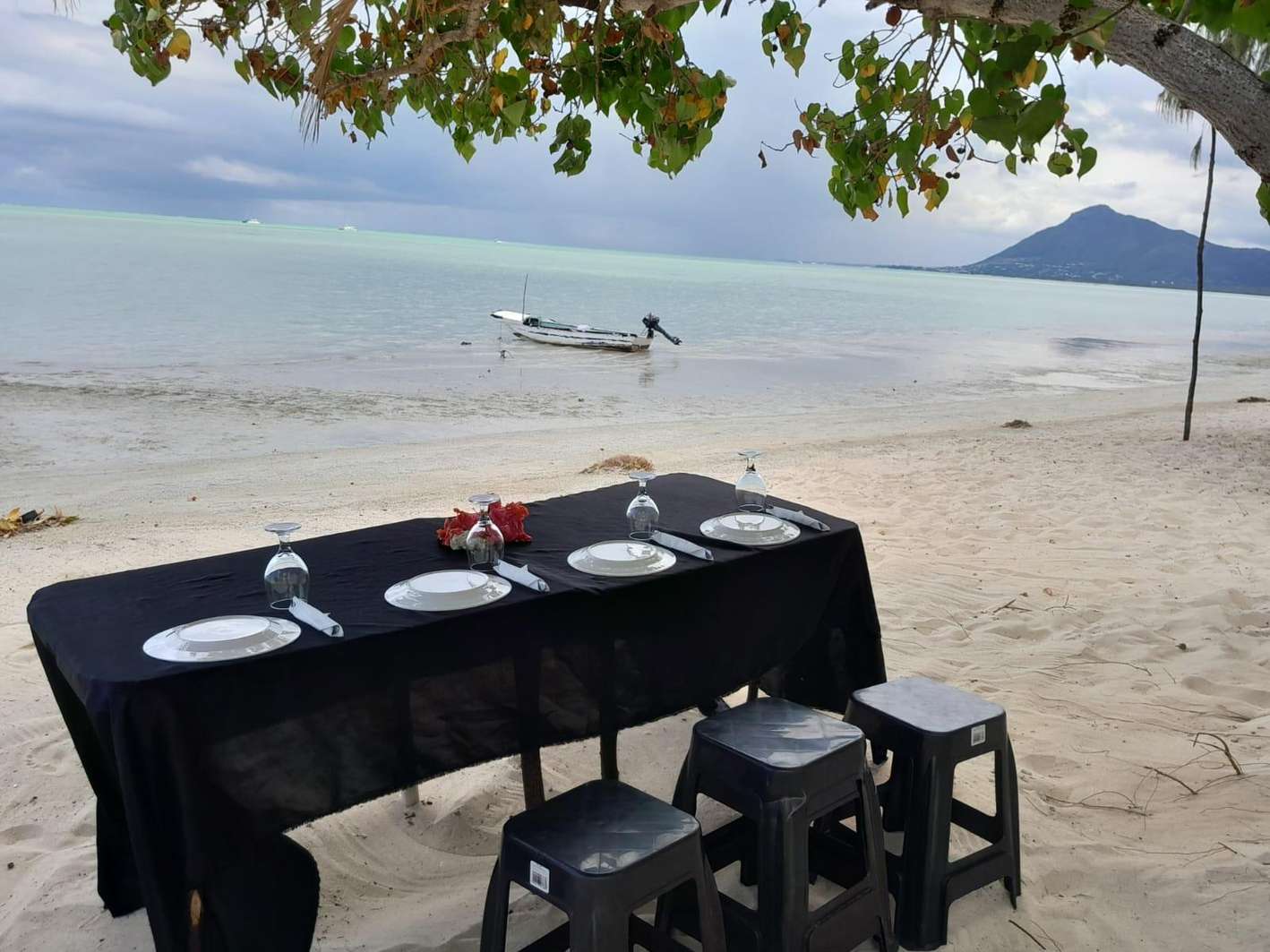
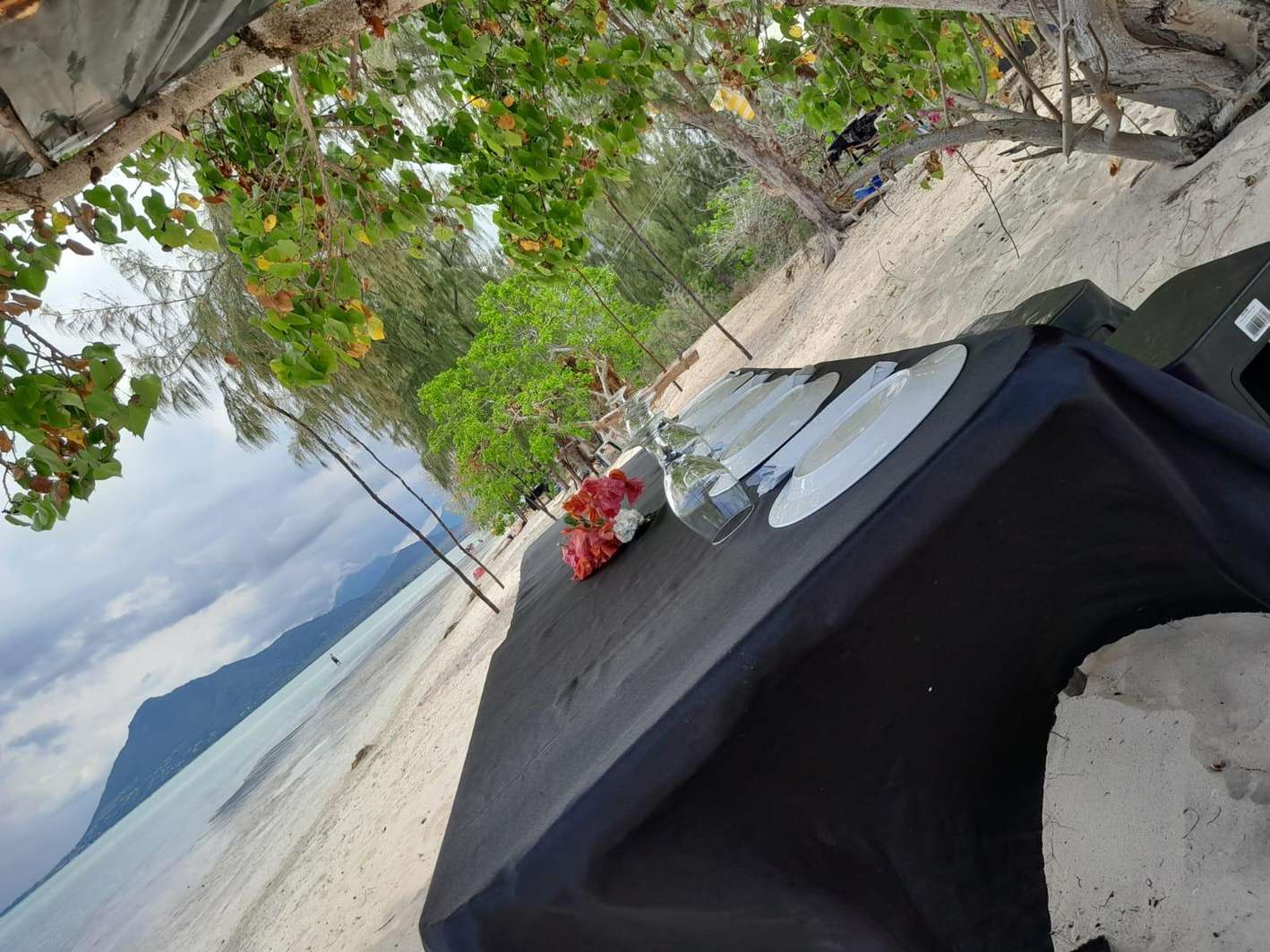
Barbecue lunch on Île aux Bénitiers
Seafood, chicken or lamb on the grill, with the lagoon cruise home after
The Private Boat Whales & Dolphins Encounter BBQ on Benitier Island is that full version: nine hours, a private speedboat, snorkeling at Crystal Rock, and a seafood barbecue with drinks on the island before the cruise home.
Pick by appetite. Short on time, take the half day. Want the lagoon as much as the whales, take the full day.
Tour for this
Ocean Symphony: The Dolphin & Whale Encounter Experience3.9★ (114) · 7.5 hours · Hotel pickup · Free cancellation
The two formats differ on four things, and only one of them is money. On a shared speedboat you ride with strangers on a fixed route.
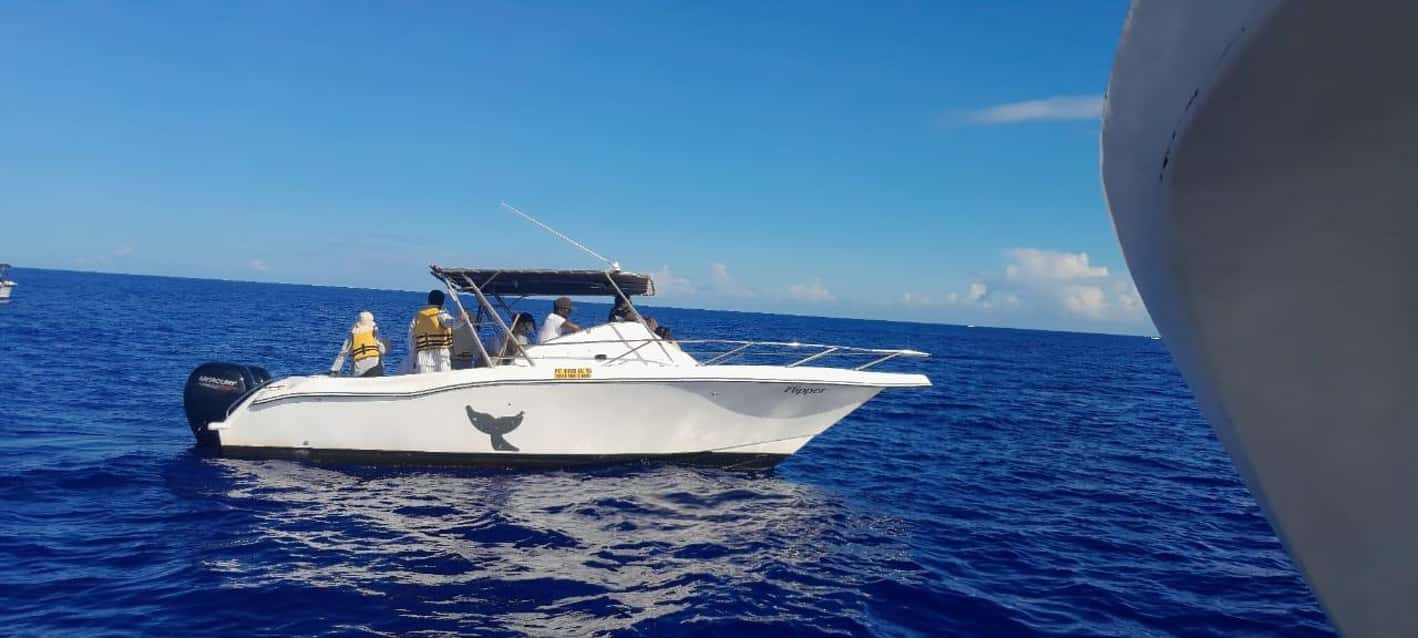
A private charter reserves the whole boat for your party: the crew can adjust departure time, change the route with the morning's sea state, skip a crowded sandbank for a quieter anchor spot, and turn back early if someone turns green.
Crew attention is the second difference. On a private boat someone is watching your seasickness, your snorkel technique and your kids. On a full shared boat, the crew manages dozens at once.
Either way, the boat should be properly papered: a licensed skipper certified by the Tourism Authority, a licensed craft, an approved propeller guard, and the official label that authorises dolphin and whale watching. Any operator you book through needs all of it.
West coast whale trips land sightings on about 60 to 70% of outings, and one operator puts its own combo trips at a 60% chance, which sits inside that band. Private boats do not raise those odds; they raise your comfort while you wait.
Shared speedboat or private charter
Shared speedboat
Private charter
Who is on board
You ride with strangers
The whole boat is yours alone
Route and timing
Fixed itinerary the crew must keep
Departure time, route and anchor spots adjusted to your group
Crew attention
One crew managing dozens of passengers
Someone watching your seasickness, snorkel gear and kids
If someone feels ill
The boat keeps its schedule
You can turn back early
Cost per person
The budget end of the market
A premium price for the whole vessel
Shared speedboat
Who is on board
You ride with strangers
Route and timing
Fixed itinerary the crew must keep
Crew attention
One crew managing dozens of passengers
If someone feels ill
The boat keeps its schedule
Cost per person
The budget end of the market
Private charter
Who is on board
The whole boat is yours alone
Route and timing
Departure time, route and anchor spots adjusted to your group
Crew attention
Someone watching your seasickness, snorkel gear and kids
If someone feels ill
You can turn back early
Cost per person
A premium price for the whole vessel
The Mauritius: Private Whale Watching Tour is the private benchmark here: four hours, a licensed Mauritian skipper and crew, out through the lagoon into the deep water where sperm whales feed. For the money side, the tour cards on this page carry the exact figures for both formats.
No marina drive, no shuttle van. Boarding happens on Le Morne Public Beach and at the public jetty in Le Morne village, both of which serve as departure points for local boats and lagoon excursions, minutes from the resorts on the peninsula.
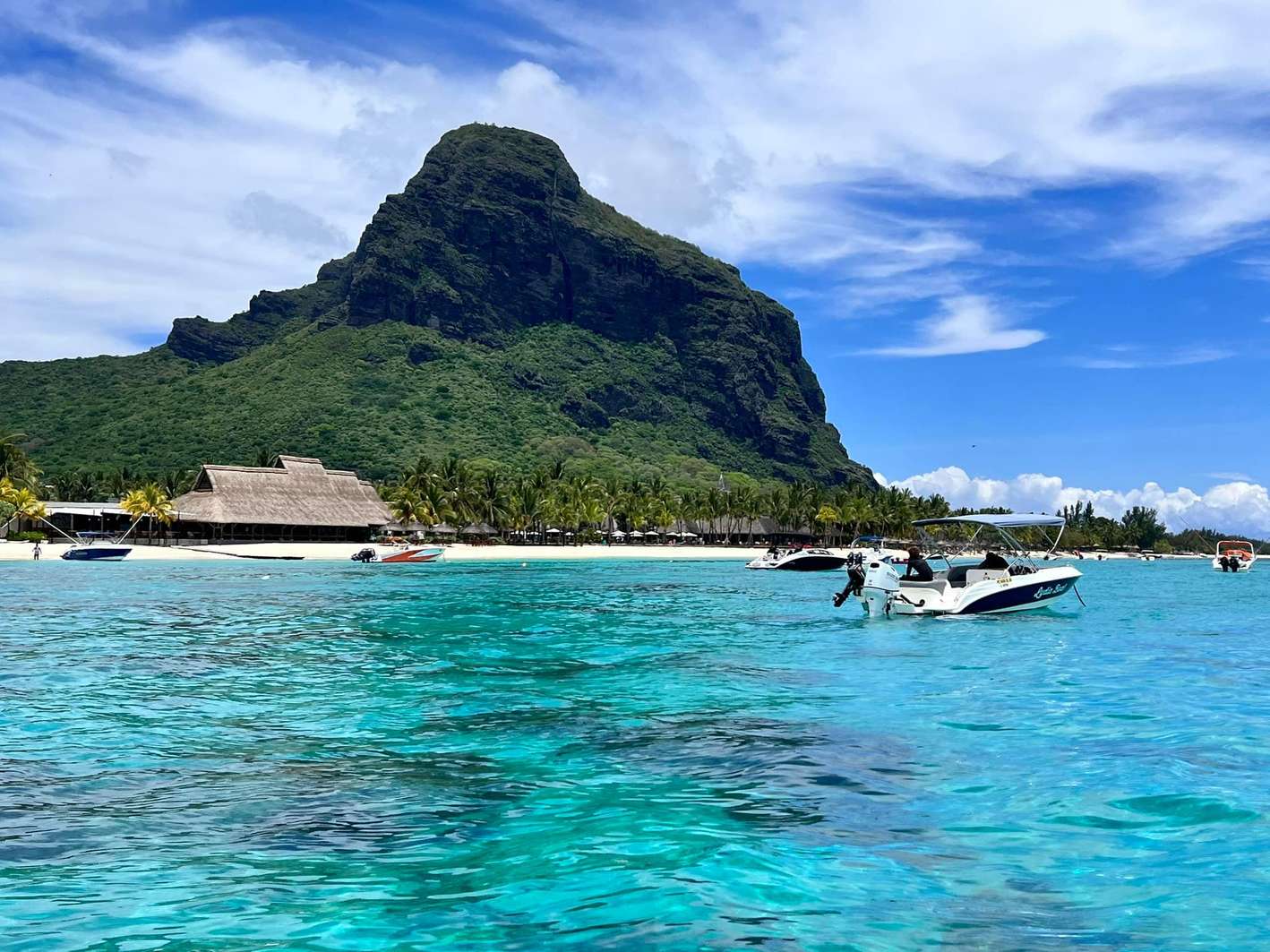
The skipper does not wait at the waterline. Boats sit just inside the reef, across from the casuarina trees and the picnic areas, and you meet them directly on the sand. You wade out, usually barefoot by then; water shoes earn their keep for the wade itself.
Parking is the easiest part of the morning. Every stretch of the public beach has large free car parks, with compact sand parking under shade trees and flat access from the road.
Glass bottom boats leave from the northern end of the beach and the lagoon-side channels, so arrive with time to find your crew's spot.
One thing worth knowing: every beach in Mauritius, including the sand in front of the luxury resorts here, is public by law. The best morning boarding spots belong to everyone.
Morning boat trips leave around 6:30 to 7 am, and the public bus network simply does not run early enough or without transfers to get you to the sand by then. So you are choosing between a rental car and a pre-booked taxi.
A rental car is the most forgiving. You set off when you like, the southwest coast roads are quiet at that hour, and the free car parks along Le Morne Public Beach take you straight to the meeting point.
For anyone spending several days around the peninsula, the car pays for itself in early mornings alone.
A pre-booked taxi works just as well, with one condition: arrange it the night before. Taxis are the standard option for pre-dawn departures precisely because you cannot hail one at 6 am on the off-chance.
Getting to the 6:30 am boat
Rental carQuiet pre-dawn roads and free car parks at the beach; best if you stay several days
Easy
Pre-booked taxiReliable only if arranged the night before; no one hails a taxi at 6 am
Moderate
Public busRoutes need transfers and start too late for a 6:30 to 7 am departure
No access
If you stay right on the peninsula, the whole problem shrinks: the boarding beach is a short walk from most Le Morne resorts. Relying on walking only works when your accommodation is close; from further along the southwest coast, without pre-arranged transport you can find yourself stranded after dark as well as before dawn.
Driving yourself
Rent a car for the driveCompare cars from the rental companies in one search, then pick yours.
The run outside the reef is wet, bright and rolly, and the boats have little shade. Sea spray soaks passengers and seat cushions routinely, so swimwear under quick-drying clothes is the base layer from the start.
Seasickness is the part to take seriously. The water past the reef can throw real swells, and medication only works if it is in your system before the rolling starts.
Take meclizine or dimenhydrinate 45 to 60 minutes before boarding, longer for some formulations, and a scopolamine patch at least 8 hours ahead, which means applying it the night before. Once symptoms begin, tablets absorb poorly.
The sun is the other opponent, reflected off the water at close range through a cloudless morning. Reef-safe sunscreen, a hat that stays on at speed, and polarized sunglasses do the work.
Two small items people forget: reef shoes for the wade out and for sharp coral rubble at lagoon stops, and a dry bag, because phones and cameras live in the open on a speedboat. A windbreaker earns its place on the fast ride back, when wind chill sets in on wet skin.
The rules - what you can and cannot do in the water
One law frames the whole trip: swimming with whales is strictly prohibited in Mauritius, by statute and by marine wildlife regulations alike. Every responsible operator watches whales from the boat only, at a legal distance.
The distances are set in law. Boats stay at least 100 metres from whales and 50 metres from dolphins, with regulated buffer zones stretching to 200 metres. Inside those zones the engine runs at no-wake speed and sits in neutral when the boat holds position.
Skippers approach from the side, run parallel to the animal, and never circle, chase or drive through a pod. Breaking the approach rules costs skippers fines and, in serious cases, their licence.
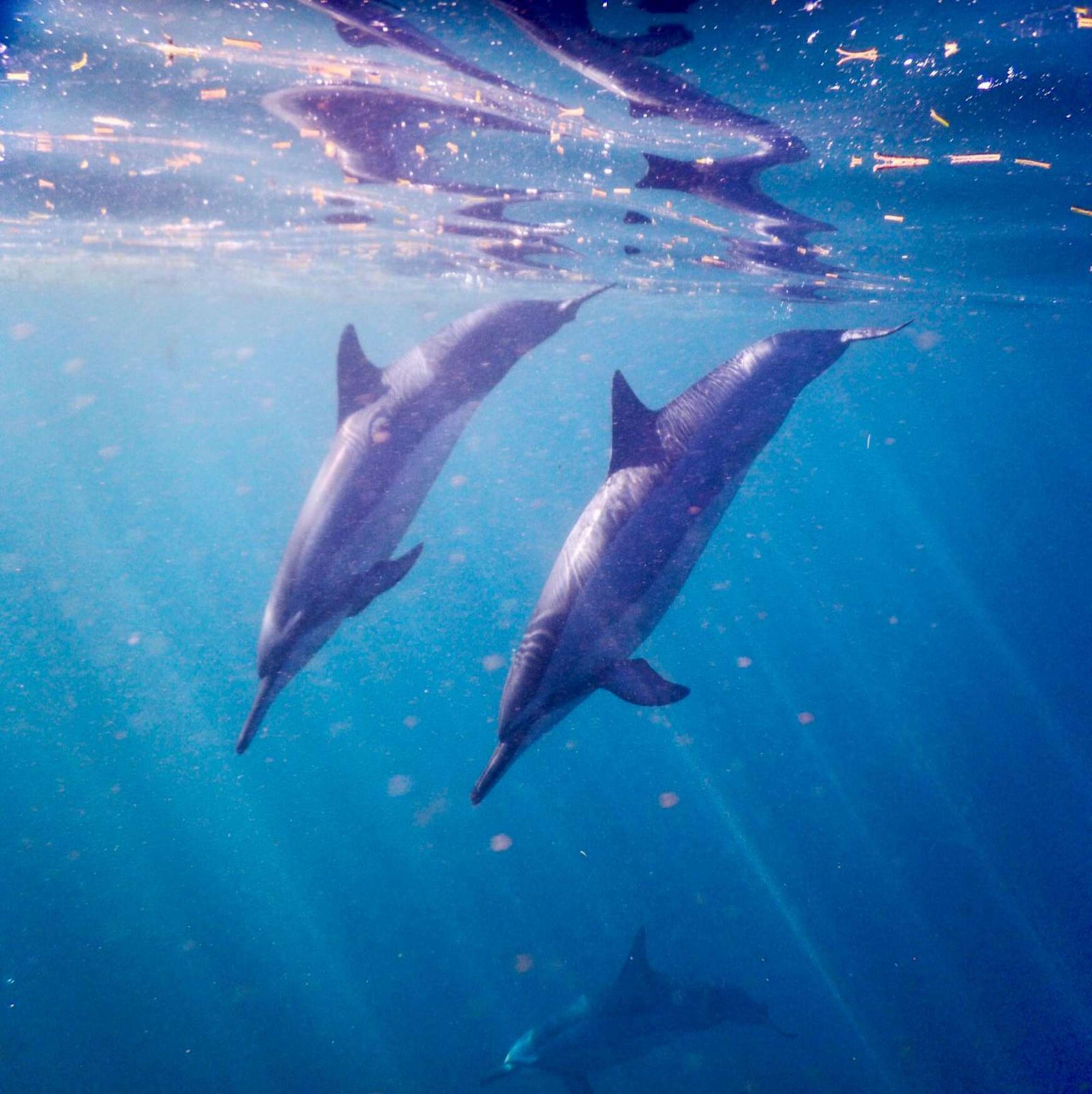
Dolphin swims are legal and tightly boxed: paid encounters run only between 6 and 9 am, no more than three swimmers plus a life-saver enter the water at once, and swimmers slip in without splashing.
Touching, feeding or any attempt to touch marine life is off-limits everywhere, and swimming with or chasing sea turtles in the lagoons is banned outright.
What people wrongly assume
MythIf an operator offers a whale swim, it must be allowed
Reality
Swimming, diving or snorkeling with whales is banned by law, whatever anyone sells
MythTouching a curious dolphin that comes alongside is harmless
Reality
Touching or attempting to touch marine life is prohibited on every boat tour
MythMore boats around a pod means a better sighting
Reality
Crowding and chasing is forbidden, boats must hold back, and staying on board is the advised move when the bay is jammed
The upshot for booking: a good operator explains these rules before you board. One that promises a whale swim is not offering you a better trip.
Can you swim with the dolphins, and who should stay on board?
A dolphin swim is more sport than float. Wild pods move fast, so swimmers jump in and out of the boat in quick succession to reach the dive spots before the animals descend, and encounters are brief pass-bys, because nobody outswims a dolphin.
You need basic open-water comfort more than strength: deep water out of your depth, sometimes a current, a clean entry without splashing. If that is not you, the deck is a fully good seat.
Younger or less confident swimmers can watch the whole encounter from the boat, and most crews treat that as a normal choice any day.
The restrictions are firm and worth reading before you book. Several tours carry age minimums, from under 3 to under 6, and many rule out pregnant women entirely; dolphin swimming is specifically not recommended in pregnancy.
People with back problems or low fitness are also screened out on some boats, since the open water outside the reef is no place for a frail passenger on a rough day.
Before you book
Many of these boats rule out pregnant women, babies and low-fitness travelers, and dolphin swimming is not recommended in pregnancy Read the restrictions on each tour before booking, and plan to stay on deck or pick another day if any apply to your group
One more note for anyone with limited mobility: full-day trips that end with a wet landing on a sandy islet are better taken from the deck than attempted on foot.
Two honest risks shape the booking, and both have answers. The first is weather.
Inside the lagoon, waves stay under half a metre, but whale trips must cross the reef passes, and open-ocean swells above 2 metres or sustained winds over 25 knots cancel the offshore run. In a full warning, the Coast Guard can order boats ashore outright.
Cancellation is not the end of the day. Tours can be rescheduled when the sea turns rough, and some crews reroute instead, keeping the boat inside the calm lagoon for sheltered snorkeling and dolphin viewing until conditions allow the deep water run.
Book with a free cancellation window, which the tours here carry up to 24 hours before departure, and a changeable forecast costs you nothing.
The second risk is silence. Sightings are never guaranteed, even on a private charter. With west coast trips finding whales on about 60 to 70% of outings, roughly one in three still comes back blank, crew and hydrophone working all the while. Nature signs no contract.
When the day changes
If this happens
What happens then
Heavy swell or a Coast Guard warning
The offshore trip is cancelled and can be rescheduled for another day
Rough seas short of a full cancellation
The crew keeps the boat inside the calm lagoon for sheltered snorkeling and dolphin viewing
Free cancellation window
Tours here can be cancelled up to 24 hours before departure for a full refund
A day with no whale sightings
The trip stands as run; sightings are never guaranteed and no refund follows
Go with realistic hopes and a flexible schedule. The dolphins and the lagoon carry the day; the whale is the gift on top.
Le Morne is a genuinely good whale watching base, not a compromise: the deep water with its resident sperm whales sits minutes offshore, and boarding happens on your beach. Take a 6 to 7 am departure, pack for spray and sun, and read the restrictions before you book.
The morning that works: dolphins at the passes, whales in the deep, and if the schedule allows, a lagoon lunch to finish.
Go ifYou are staying on the peninsula or in the southwest and want to skip the pre-dawn driveYou can take a 6 to 7 am start and tolerate some swell outside the reefYou want resident sperm whales, which feed off this coast in any month
Skip ifYou are pregnant or travelling with a baby or toddler; several boats rule you out and open water is unsuitable for the littlest onesYou cannot face an early start or a rolly boat, and would rather watch the coast from landYou need a guaranteed whale sighting; with the 60 to 70% sighting rate, roughly one trip in three comes up blank
Our pick to book
Le Morne, Mauritius: Eco-Friendly Whale and Dolphin Tour5.0★ (5) · 4 hours · Free cancellation
The questions travelers ask before booking a whale or dolphin boat trip from the peninsula.
Le Morne2026
The sperm whale clicks came through the hydrophone before we saw a single blow. Bring a windbreaker for the fast ride back.
Can I swim with whales on a Le Morne boat tour?
No. Swimming, diving or snorkeling with whales is prohibited by law in Mauritius. Whales are watched from the boat only, at a respectful distance.
Can I swim with dolphins on a dolphin tour in Mauritius?
Yes, swimming with dolphins is legal. You enter the water smoothly, without splashing, and touching or feeding them is strictly off limits.
Where do boats depart near Le Morne?
The northern section of Le Morne Public Beach and the public jetty in Le Morne village both serve as boarding points, so you can often walk to your boat rather than drive to a marina.
What time do whale watching boats leave?
Most crews leave between 6 am and 7 am, when the sea is at its calmest and the dolphins are still near the reef passes. Paid whale watching is only permitted between 6 am and noon anyway.
When can I see humpback whales off the southwest coast?
Humpbacks pass through between June and October. Sperm whales, by contrast, stay in these waters year round, so any month works for a whale trip.
How close can the boat get to whales and dolphins?
By law skippers stay at least 50 meters from dolphins and 100 meters from whales, with buffer zones reaching up to 200 meters. They approach from the side at no-wake speed and never circle a pod.
What happens on a combined whale and dolphin trip?
The day splits in two. The boat heads into open ocean early in the morning to find whales during the permitted hours, then moves into the sheltered lagoon for dolphin swimming, snorkeling near Crystal Rock and a barbecue lunch on Île aux Bénitiers.
Do I have to wear a life jacket?
Everyone on board a commercial boat outside the lagoon must wear a flotation device. Some operators also require a life vest in the water while swimming with dolphins.
Can I swim with turtles in the lagoon?
No. Swimming with or pursuing wild sea turtles is prohibited under marine protection laws. Enjoy them from the boat or the shallows.
Is Le Morne a good base compared with Tamarin or Black River?
Tamarin and Black River are the busiest whale watching hubs, but staying at Le Morne still puts you minutes from departure points, and it pairs the trip with lagoon stops and views of the mountain rather than an early cross-island drive.
Will Île aux Bénitiers be crowded at lunch?
It can be. Midday brings several tour boats to the island at once, so the barbecue becomes a shared affair with souvenir stalls nearby. Private charters can time the stop differently.
Swim with dolphins and watch whales from Le Morne beach
Board your private eco-friendly boat straight from Le Morne Public Beach at sunrise, with snorkeling gear included and free cancellation up to 24 hours before you sail.