
Cheapest
3.5 hours·Arabic, English
4.4(2)
Mauritius: Dolphin Snorkeling & Whale-Watching Speedboat Tour
Free cancellationExperienced Skipper/GuideAll dolphin snorkeling and whale watching

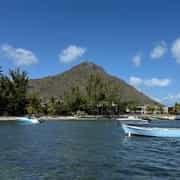 1.1k
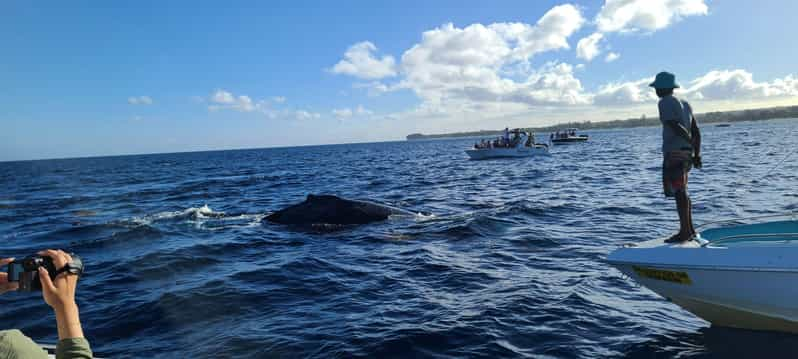
Watch whales and swim with dolphins where the deep water starts. Board in Tamarin Bay and reach the sperm whale drop-off in about 20 minutes, with 2 to 3 swimmers in the water at a time and a guide beside you. Pick a shared speedboat seat or a private charter and lock in your morning.
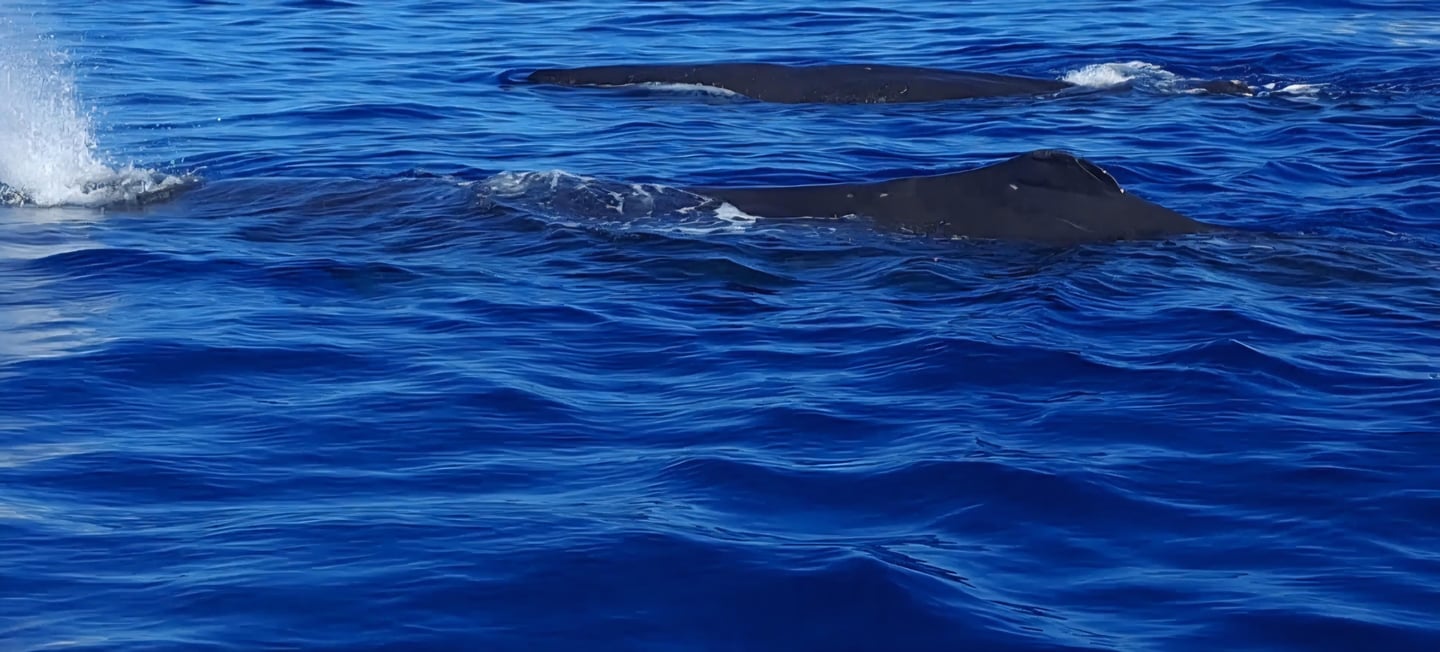
Tamarin boats come in two shapes: shorter trips that stay out to watch whales from the deck, and longer combos that add dolphin swimming and snorkeling. The one difference that decides is how much time you want in the water, since swimming with whales is off limits but dolphins are fair game.

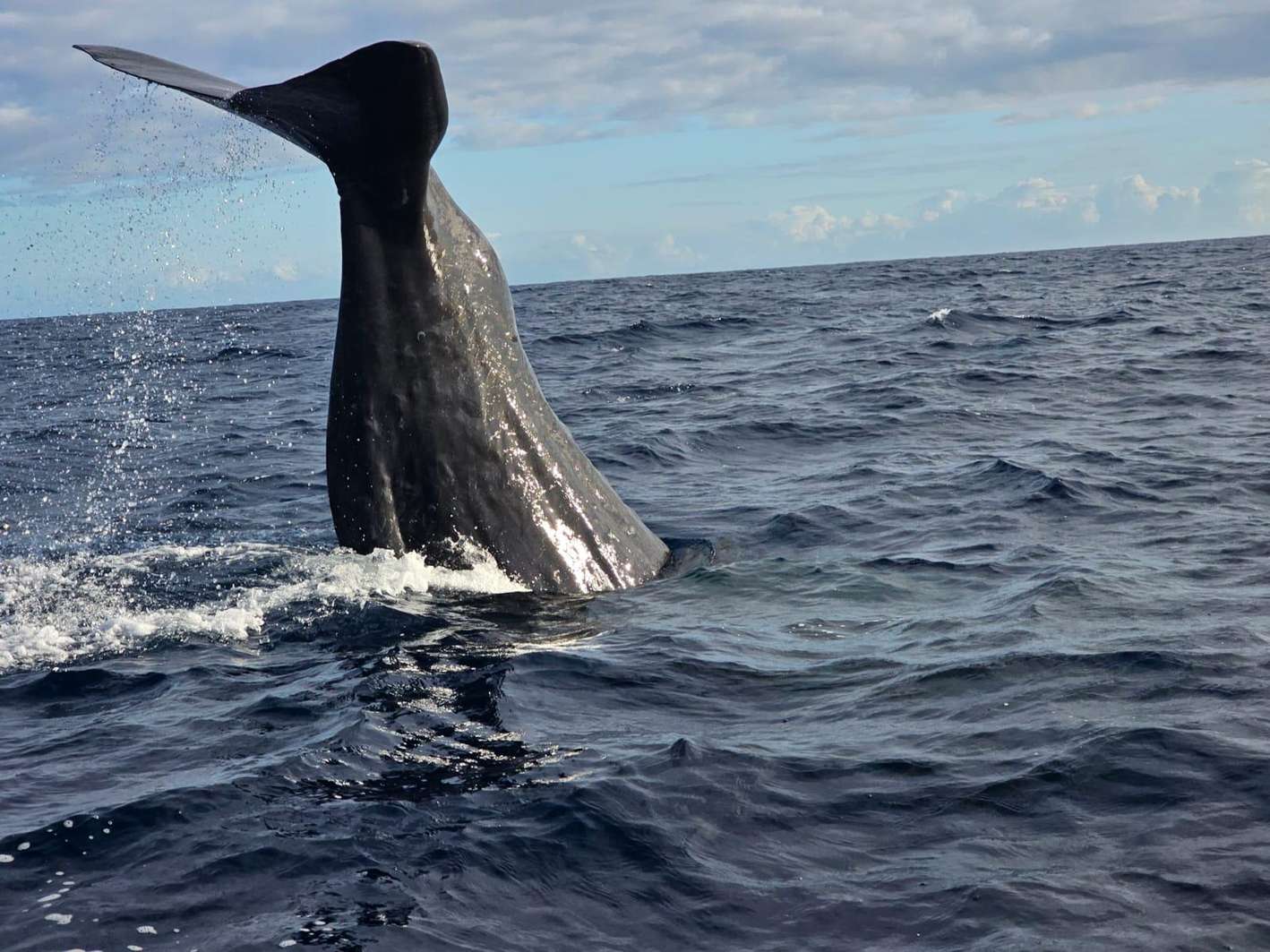
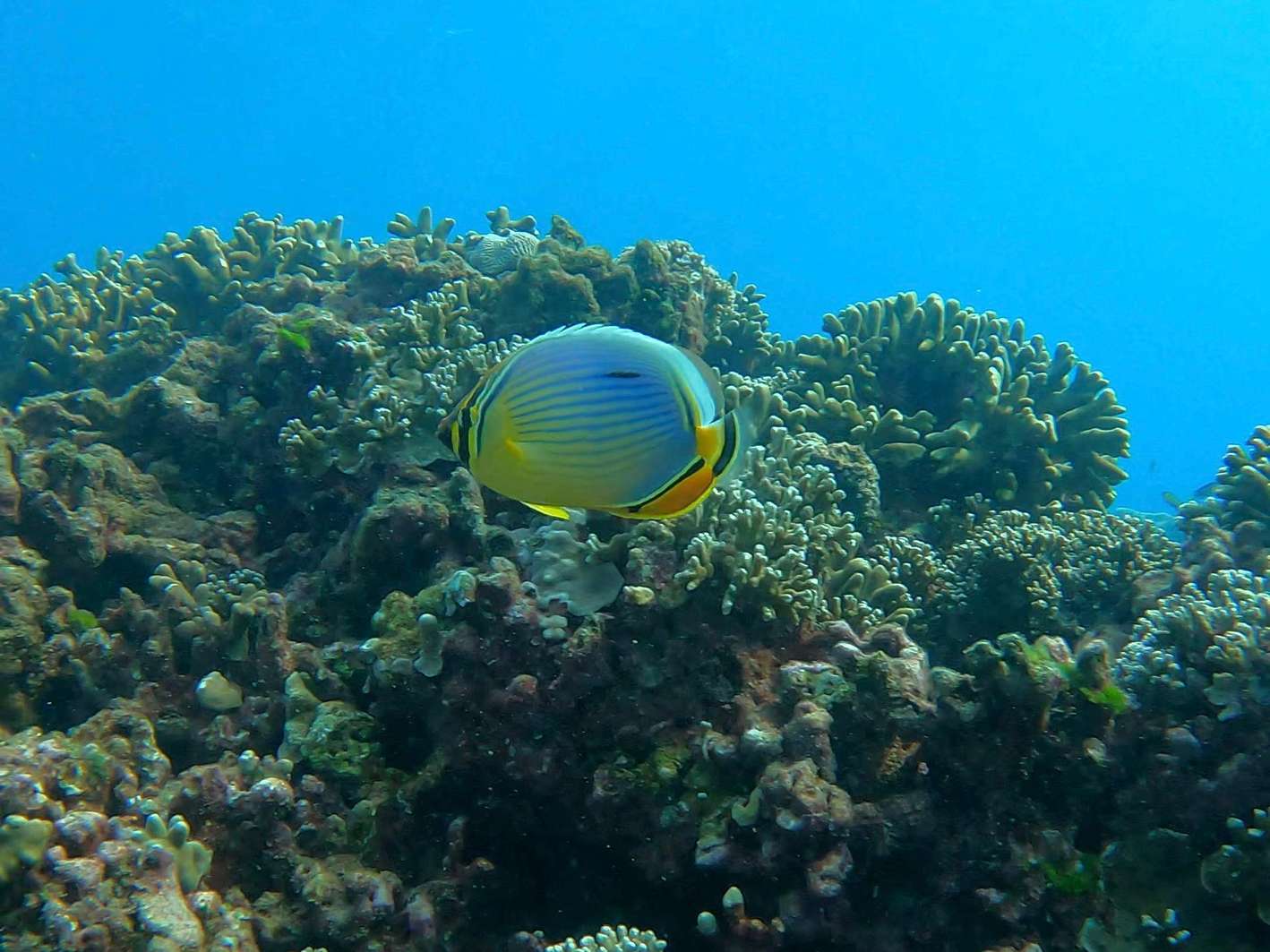
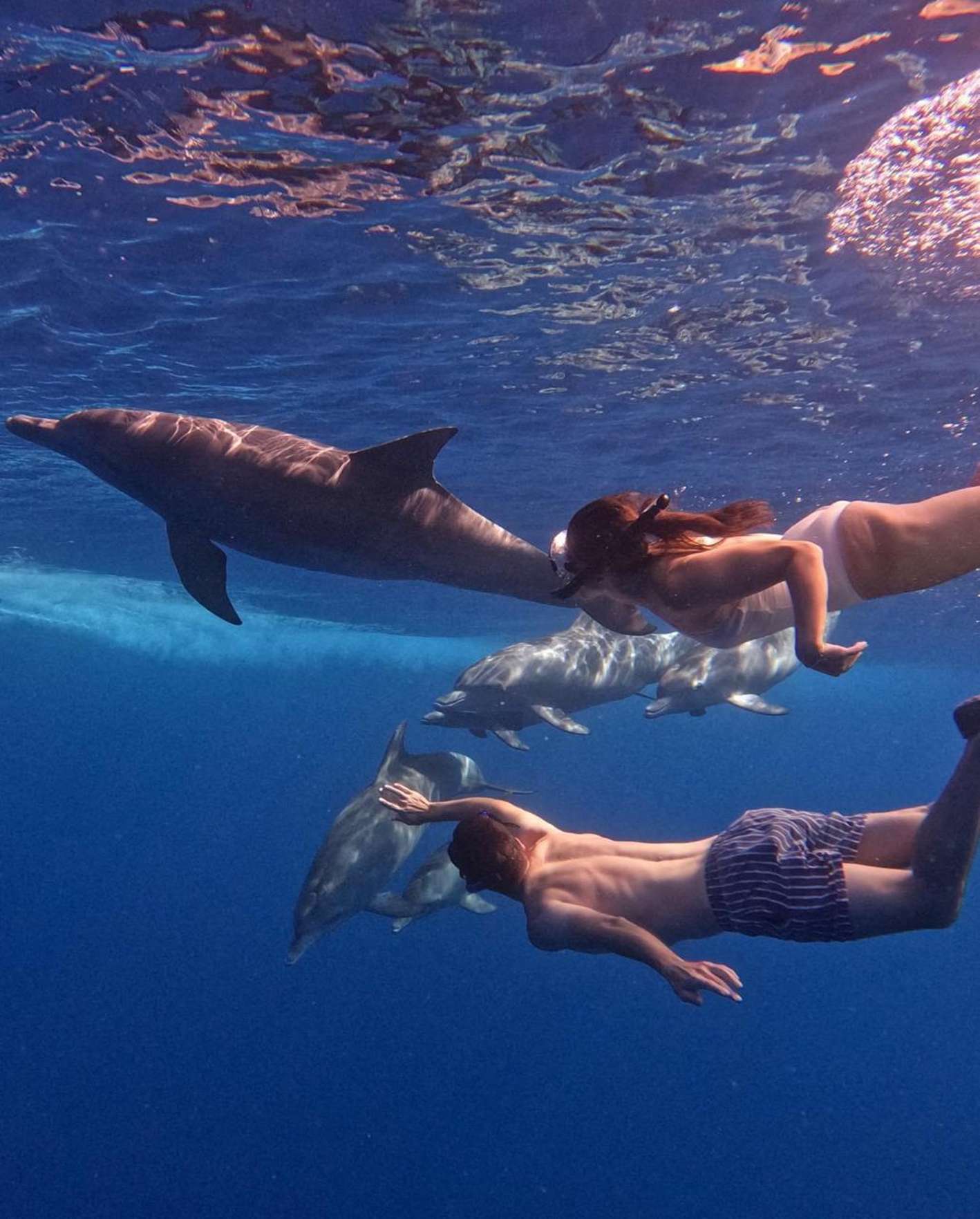
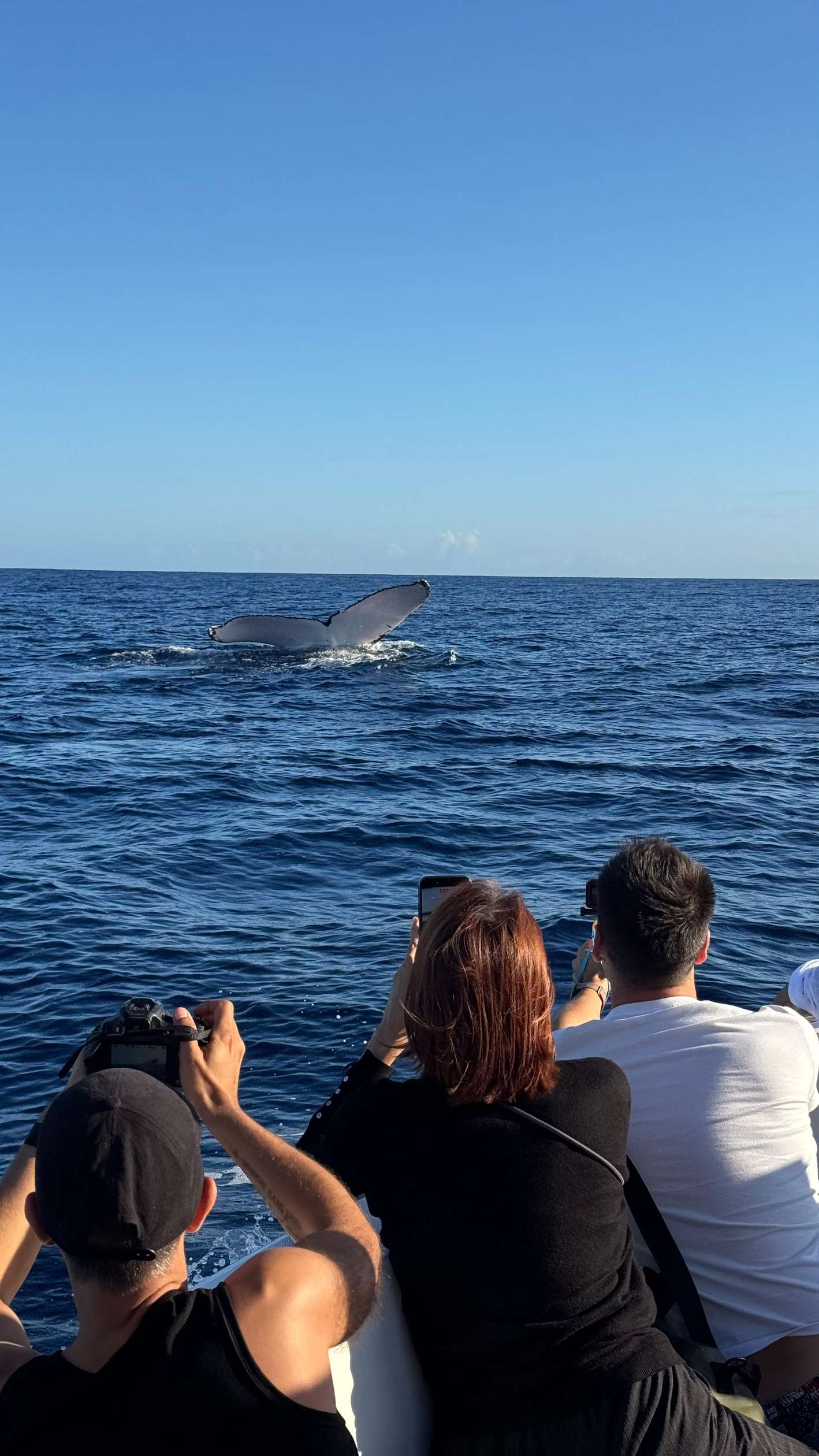
Watch whales from the deck, where every whale tour keeps you. If you plan to join the dolphin swim, be honest with yourself about your swimming: you enter and leave the boat several times as the pod moves, and the water is deep with currents. Anyone less confident can stay on board and still see everything.


760 reviews back this 5-hour speedboat trip, the most booked of the four, with a 60% chance of whale sightings.
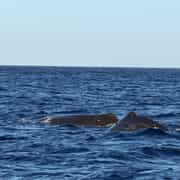
One 26-foot boat for up to 6 guests departs between 4:45 am and 6:15 am depending on season, timed for sunrise and a 4.9 rating.
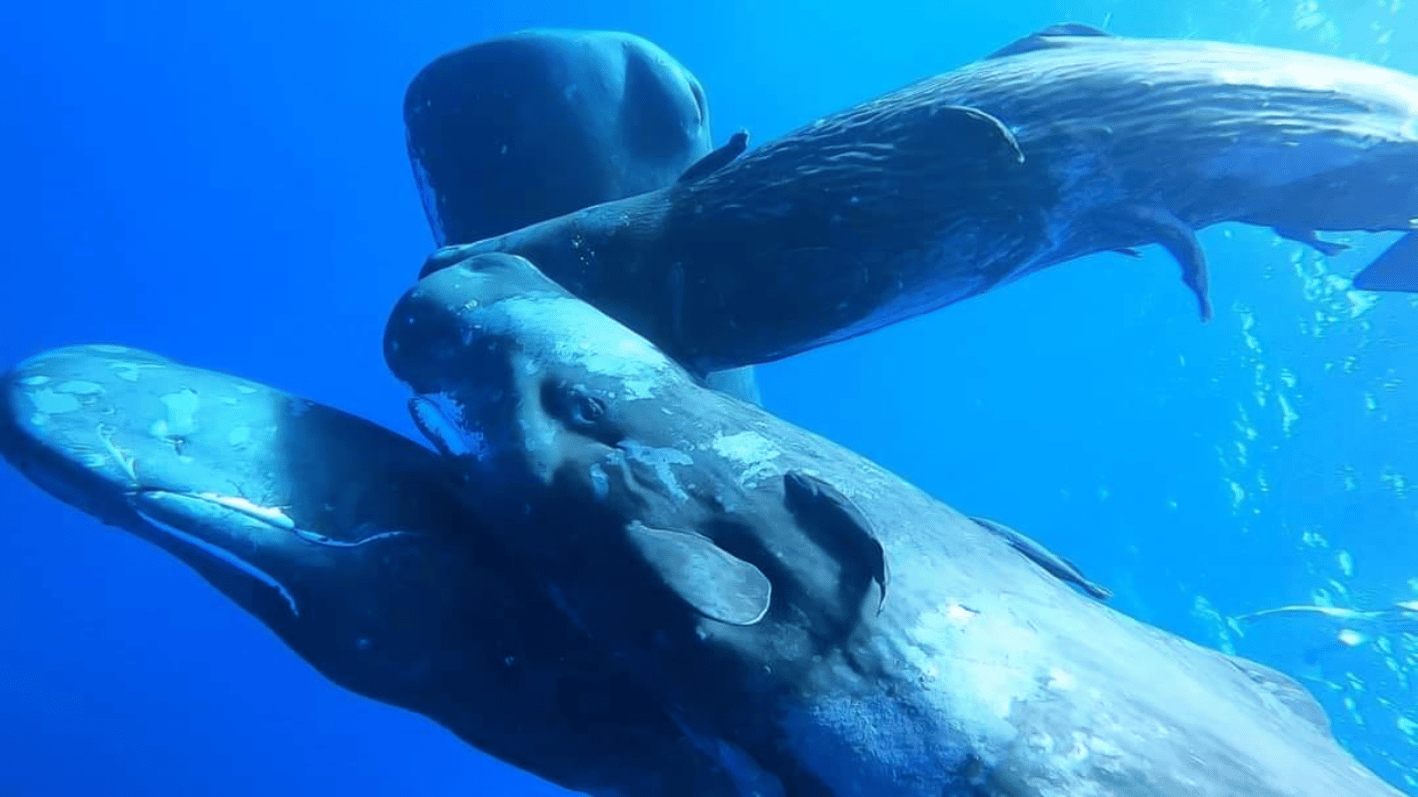
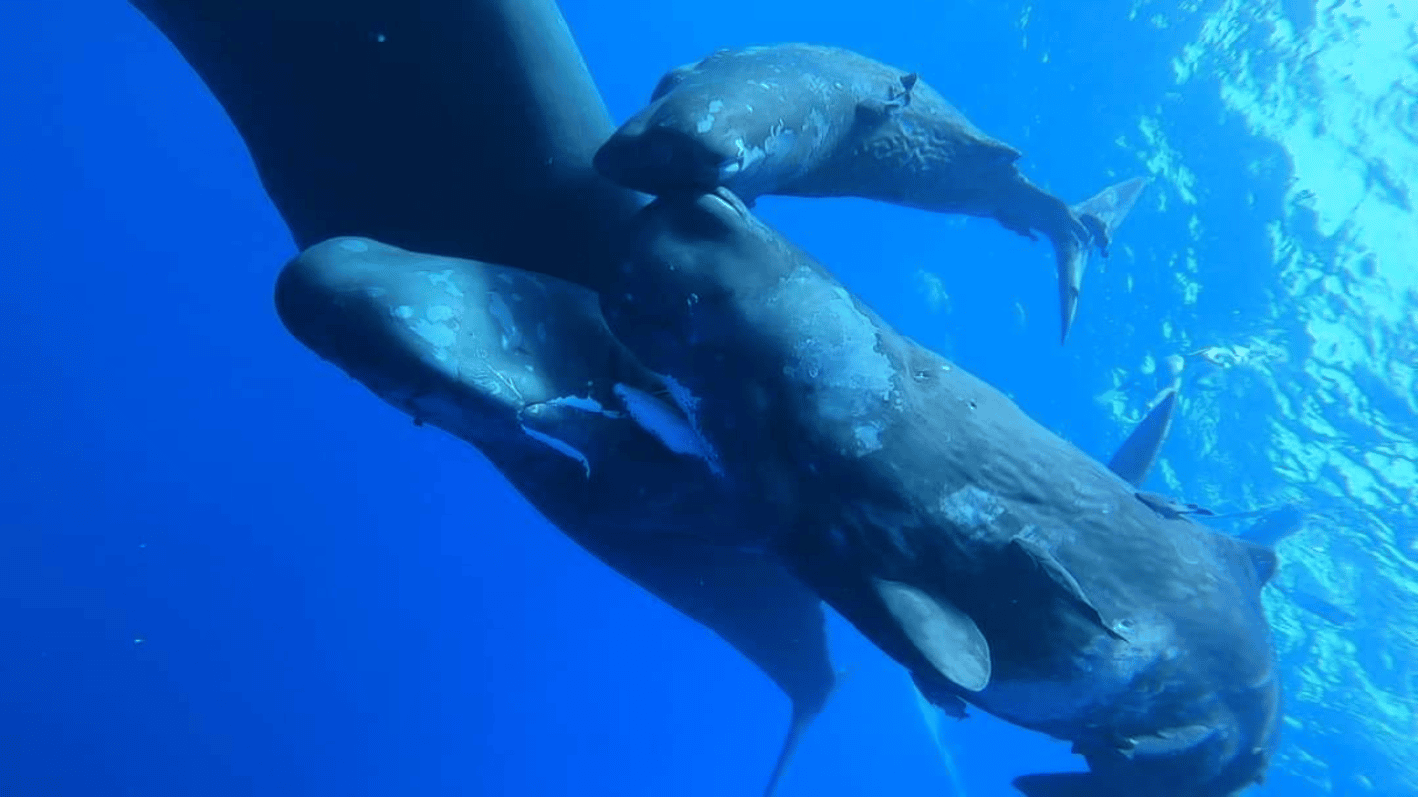
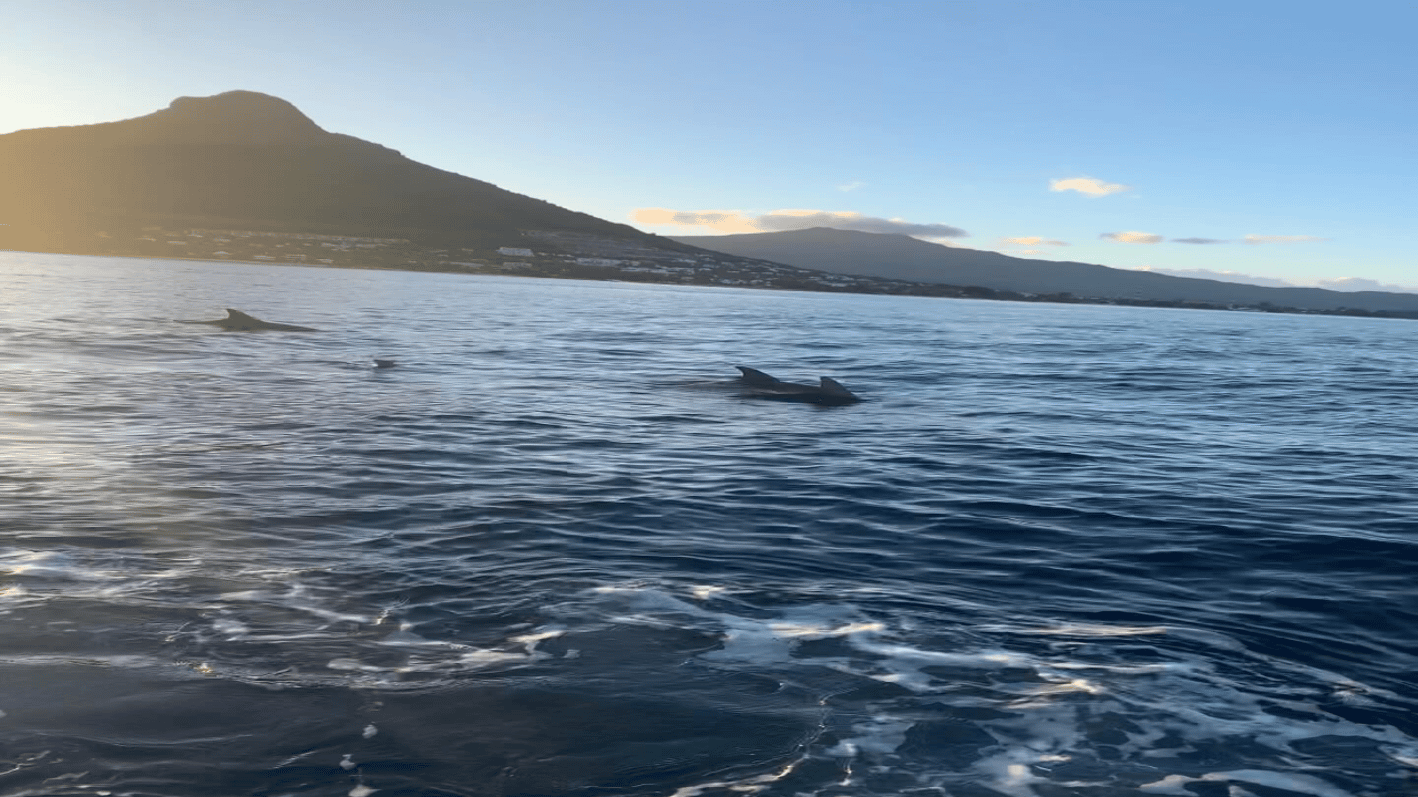
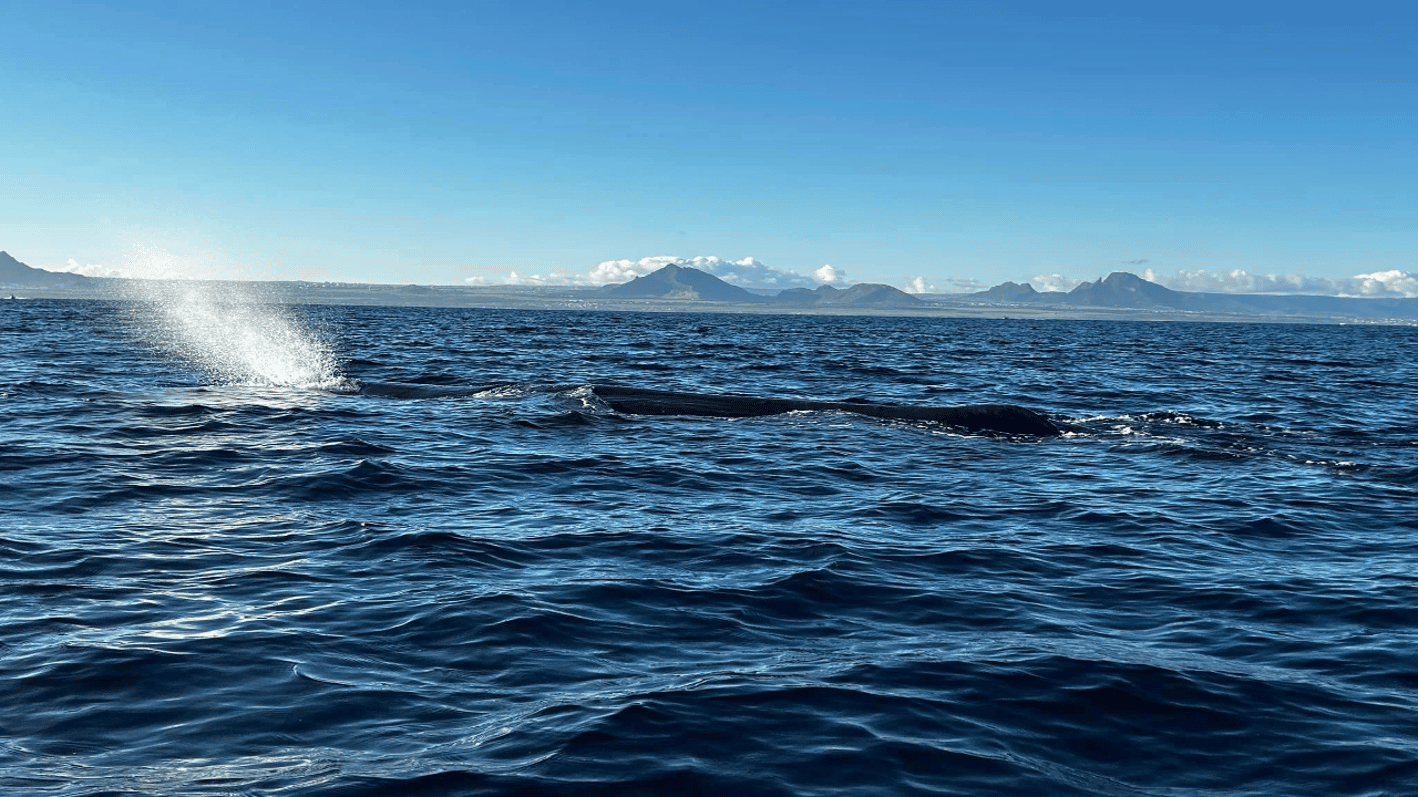
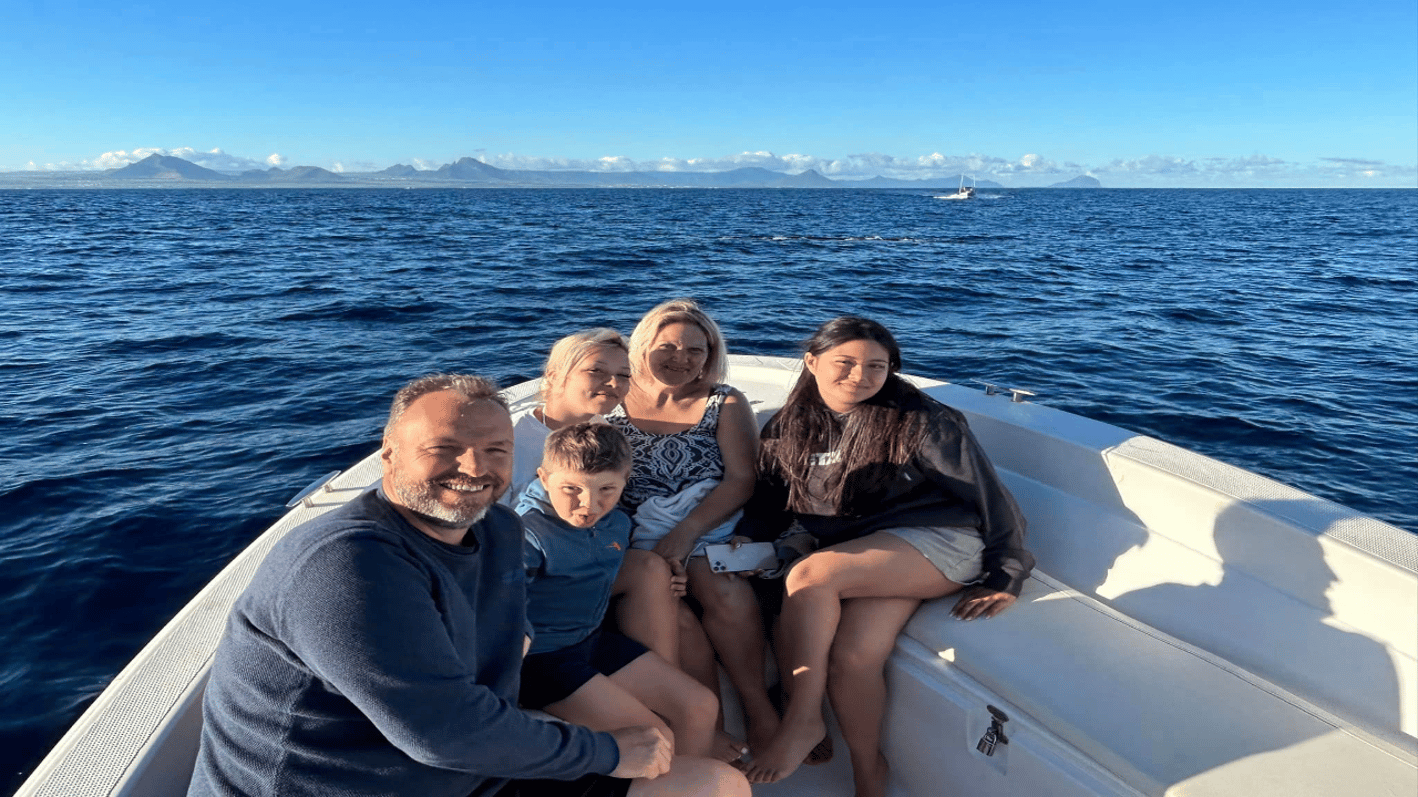
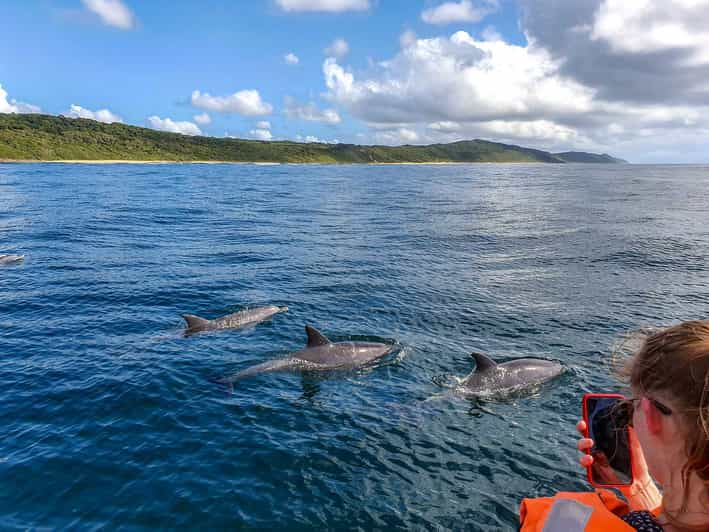
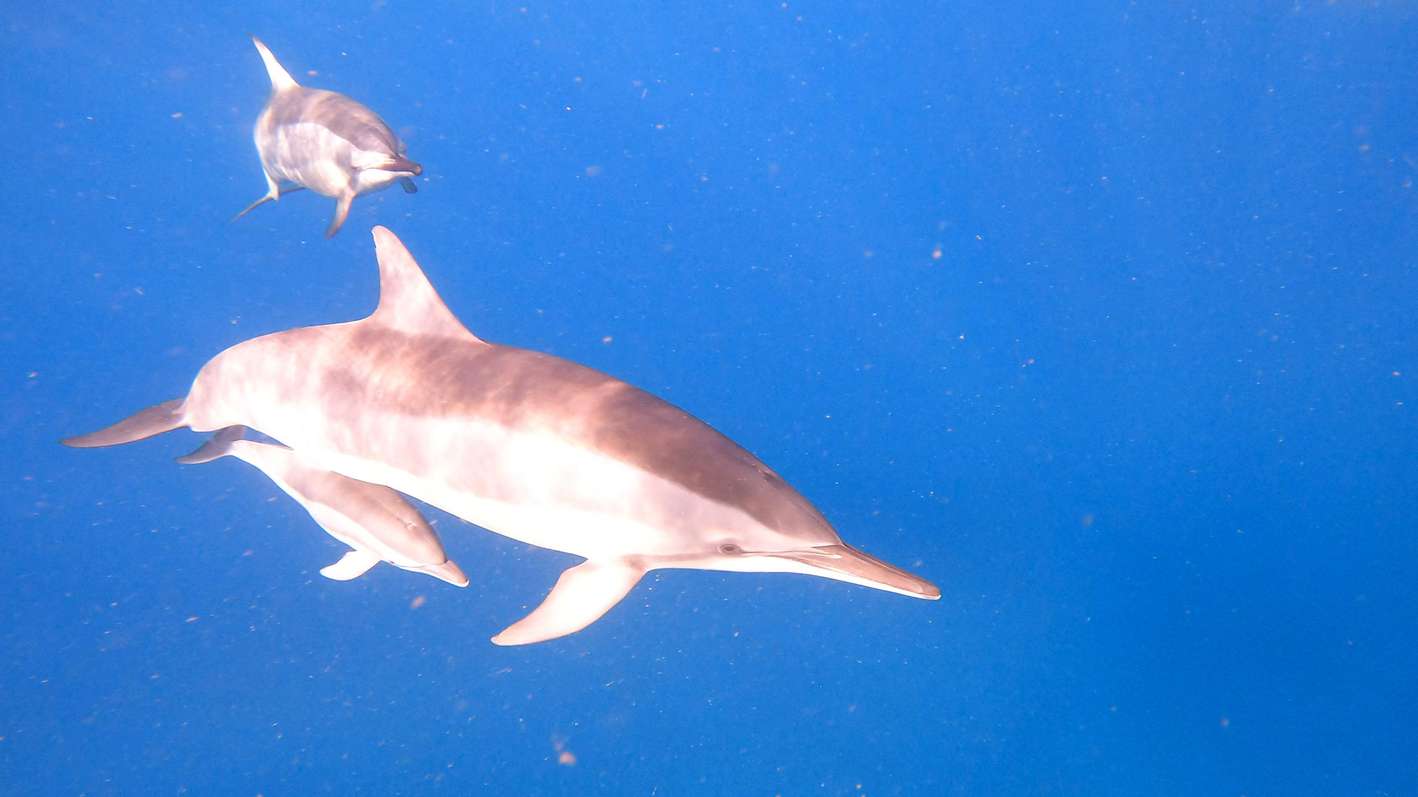
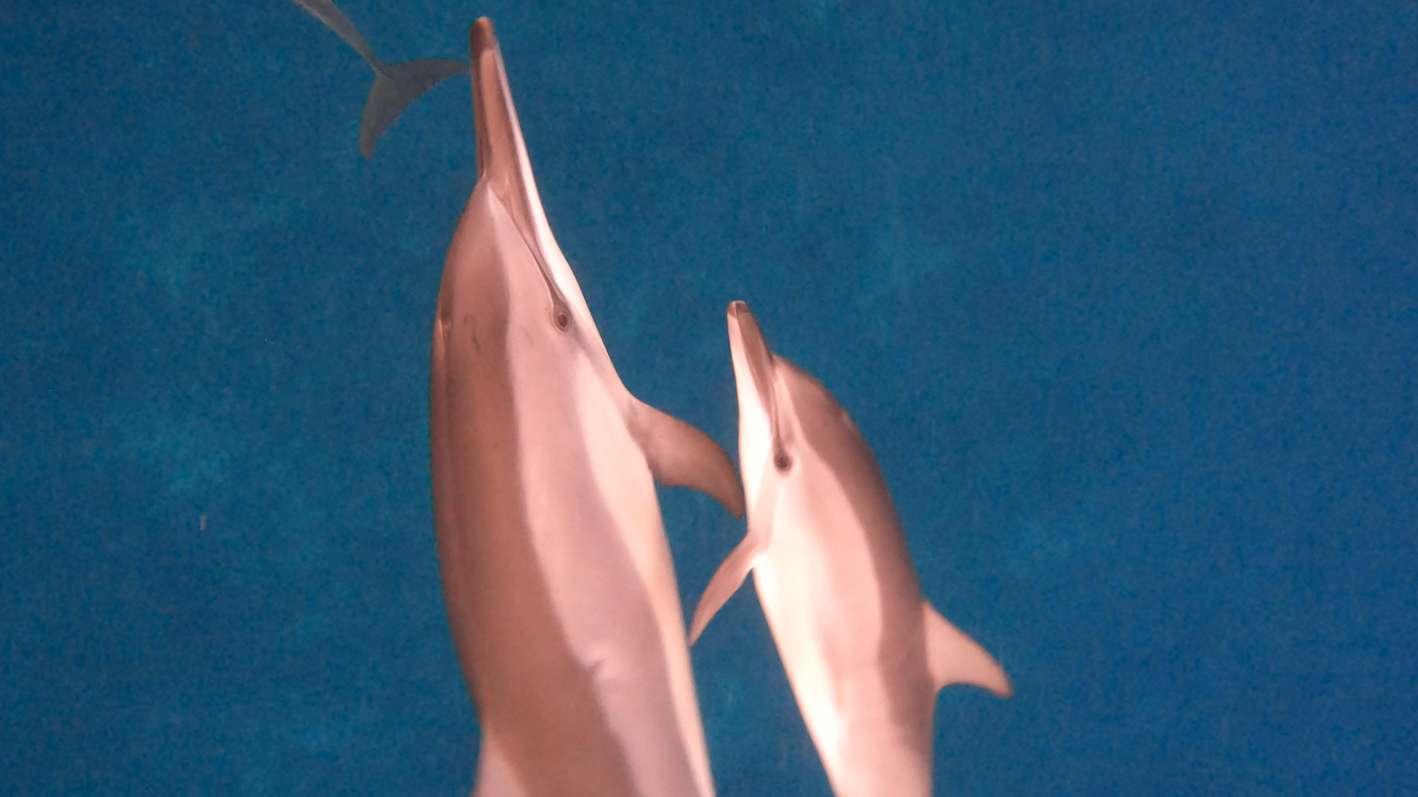
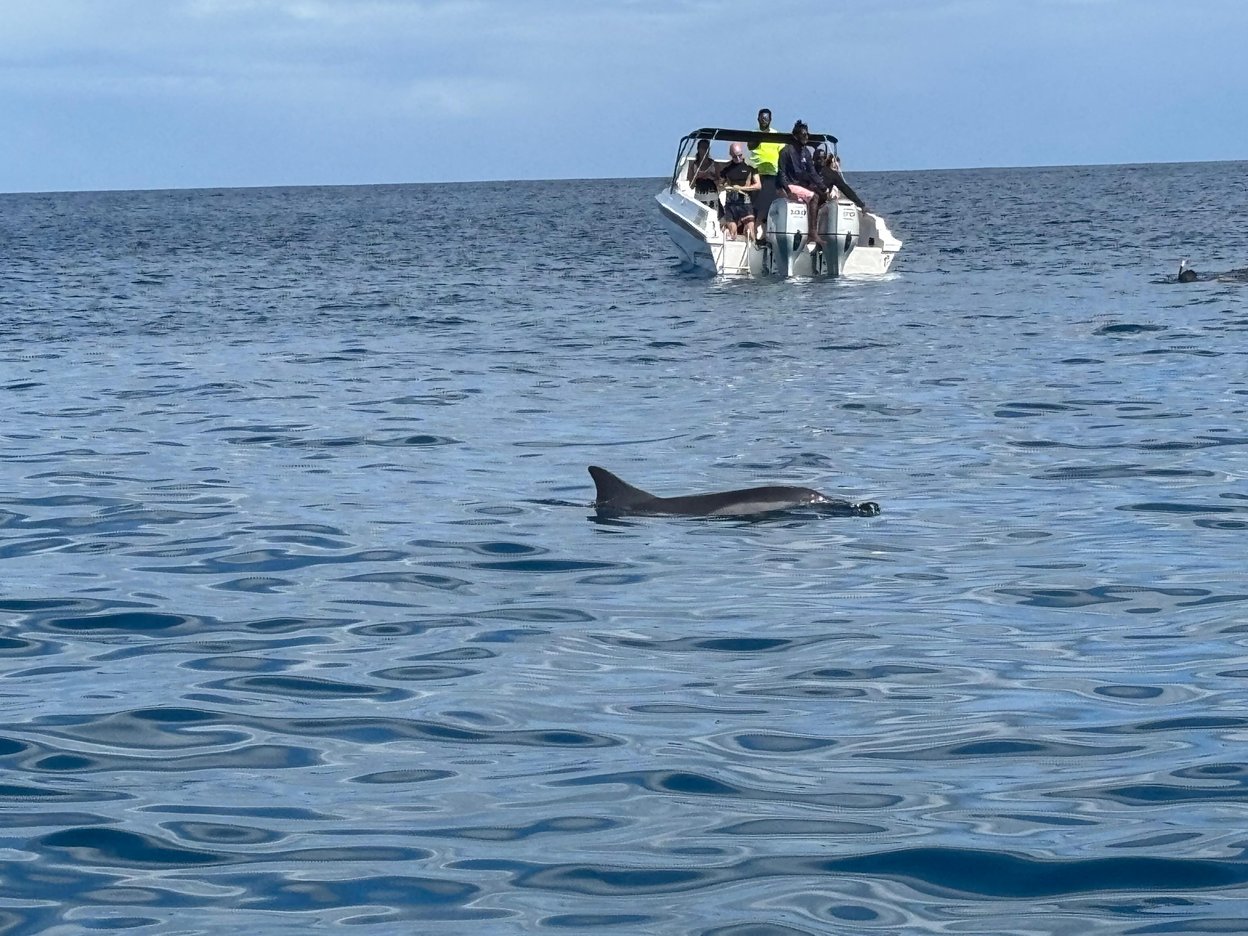
Spinner dolphins arrive in Tamarin Bay each morning to feed, in acrobatic pods of 15 to 30 or more, with bottlenose groups of 5 to 10 moving among them. That is the first scene on this private speedboat trip, and it happens before most of the island has eaten breakfast.
From the bay, the boat runs past the reef into deep water, where the seabed falls away to more than 1,000 metres within a few kilometres.
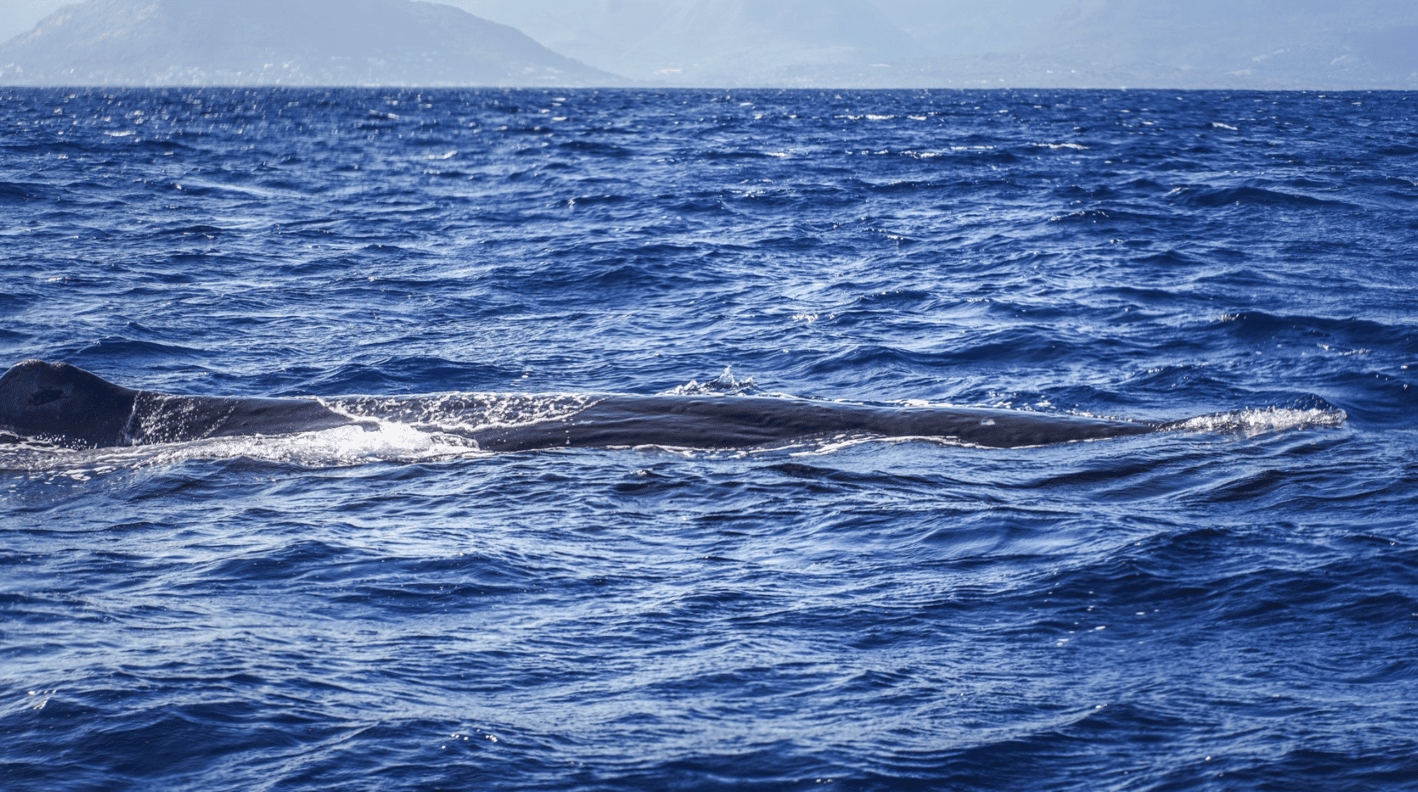
Sperm whales feed in those canyons year round, so the run to whale waters takes only about 15 to 20 minutes. The four hours also include a stop at Crystal Rock and snorkeling in the shallow natural aquarium, with juice, water and soft drinks on board.
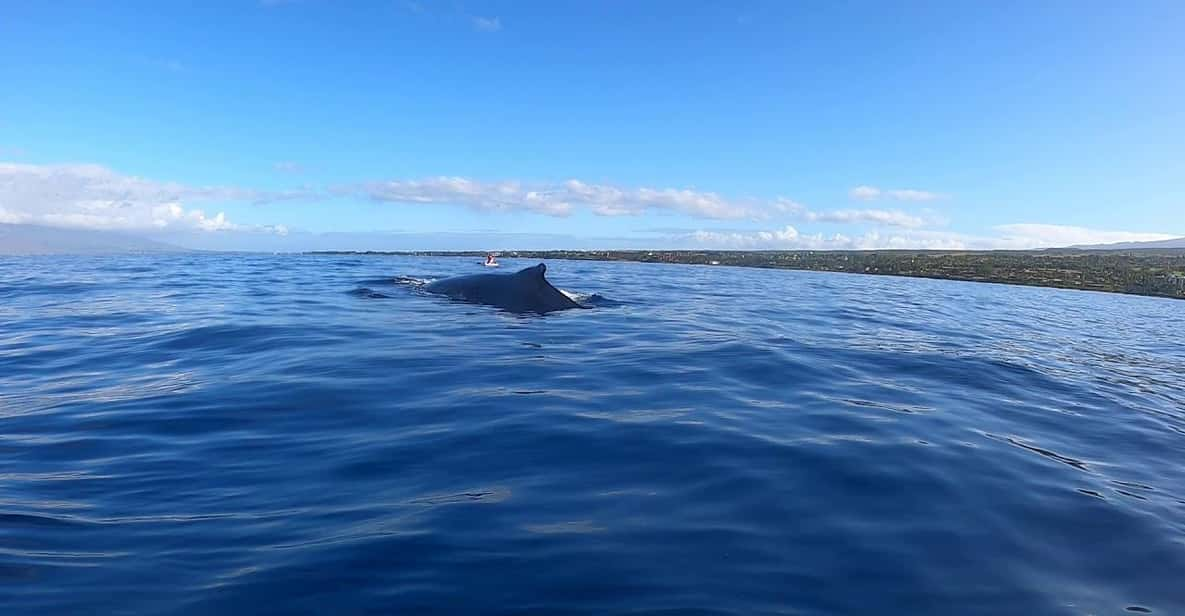

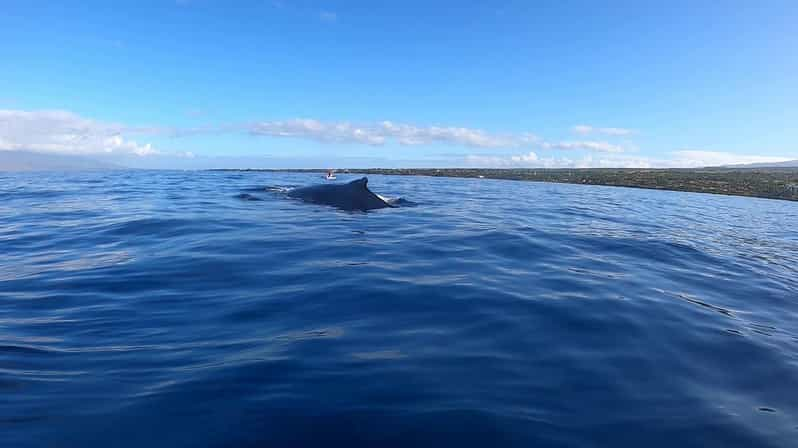
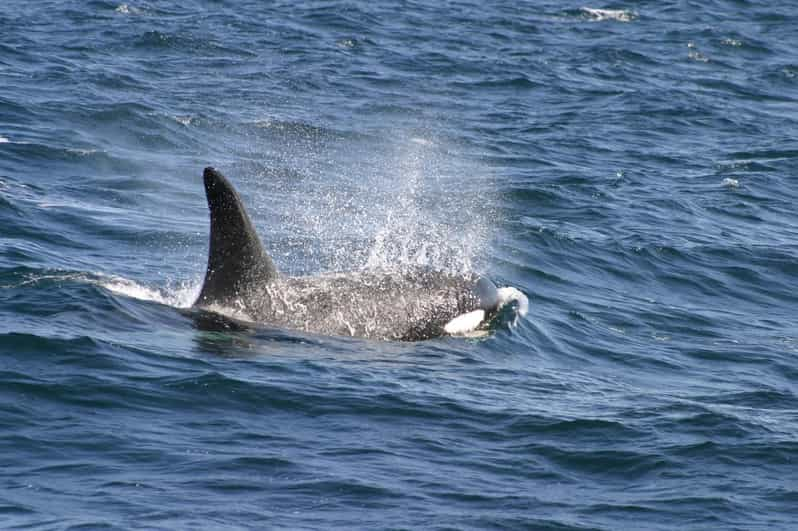
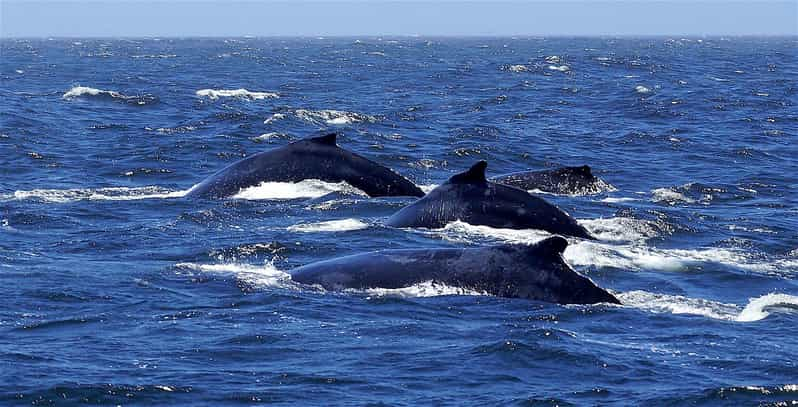
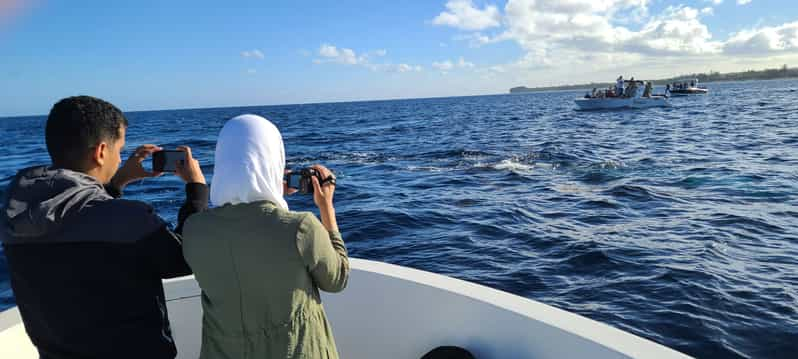
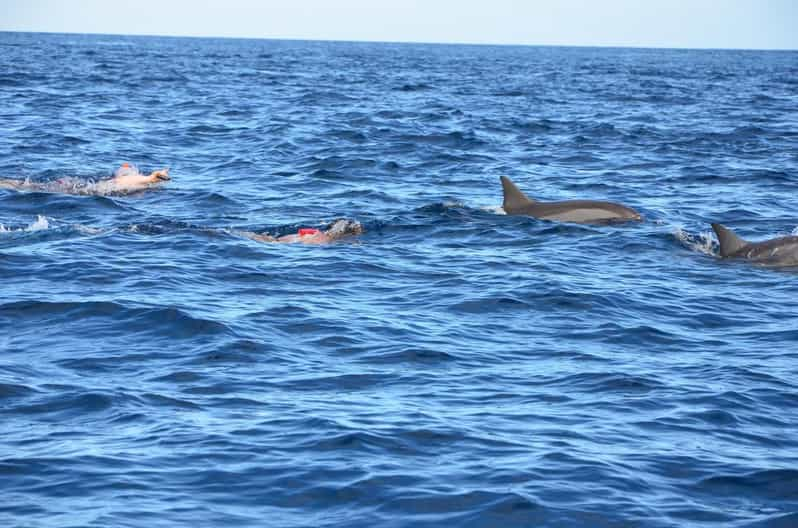
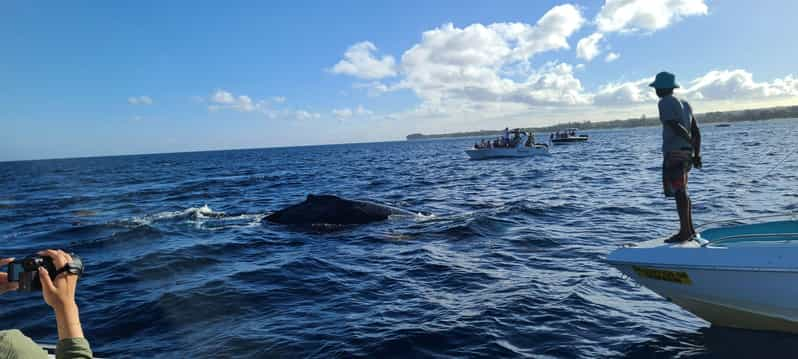
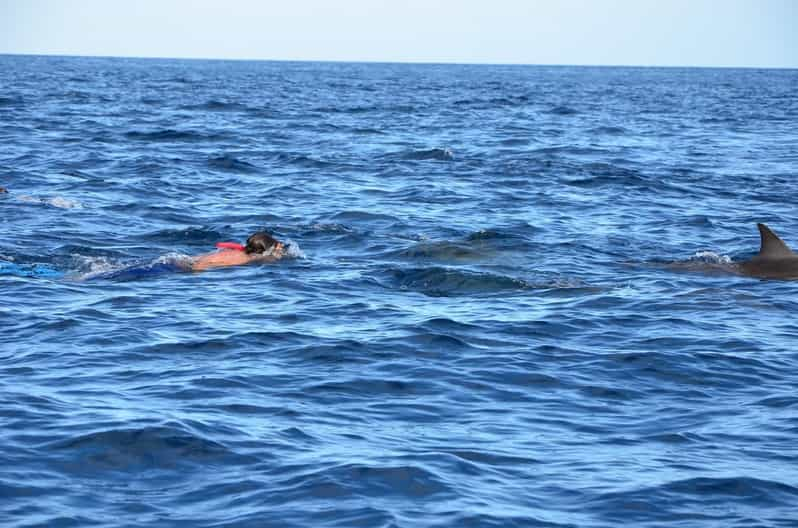
Green marks the lowest price. Each price says whether it is per person or per group.
Super family moment! Booking a private trip was the best choice, we saw whales, our.
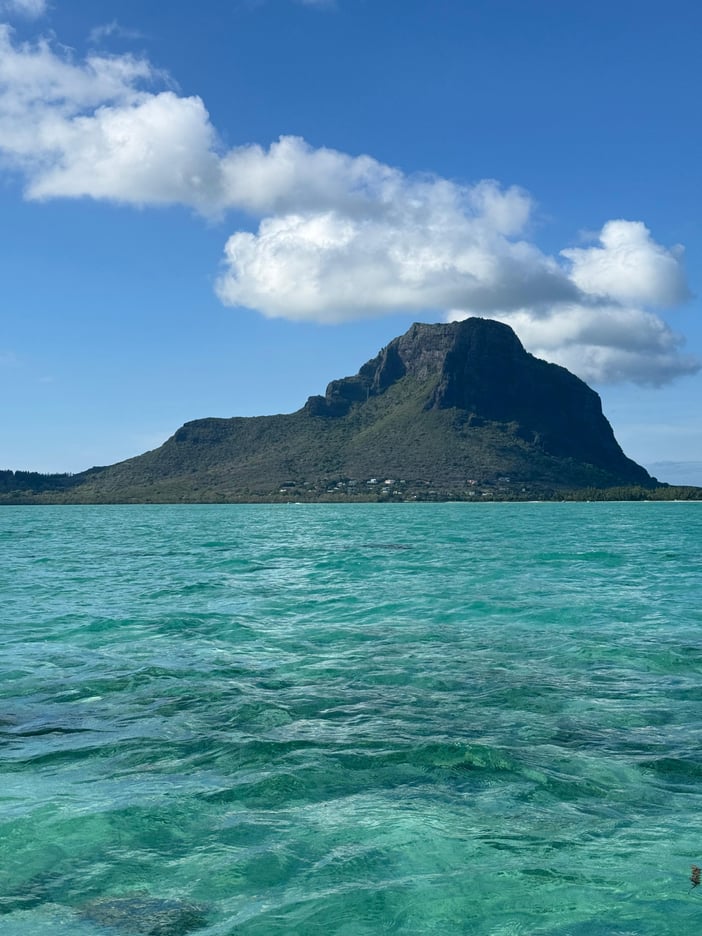
Wonderful experience! We saw whales, swam with dolphins and snorkeled on the coral reef! Skipper and helper were super skilled and helpful. Highly recommended!
Our captain Ali Baba and his boatswain Babi were great. They really cared about the animals' safety, unlike other boats letting people swim way too close. Best captain!
Great activity, dolphins and sperm whales showed up! The skipper team was super attentive. I recommend it!
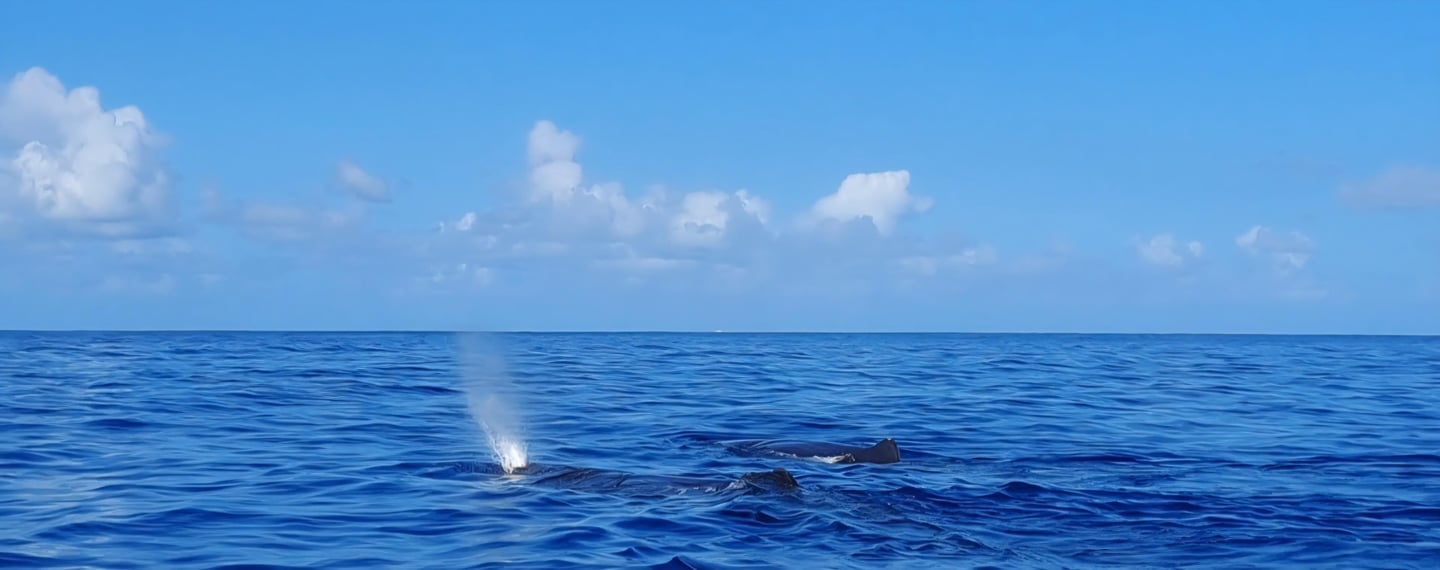
Excellent service, super polite guides who spotted the whales incredibly well and were respectful toward the animals.
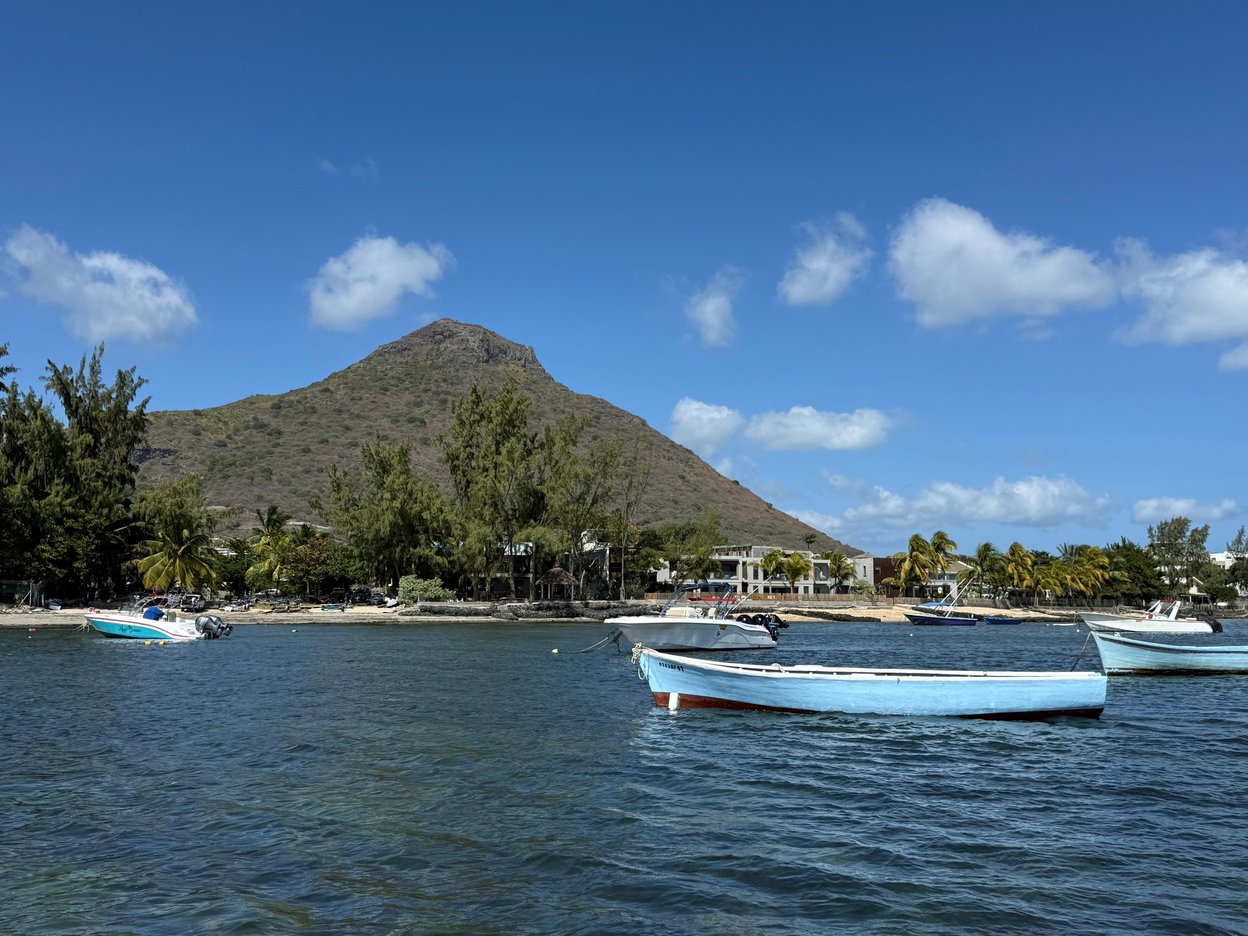
Loved our dolphin and whale trip with guide Ali. Our 6-year-old was nervous about the waves on the way back, so Ali drove slower to keep it smooth.
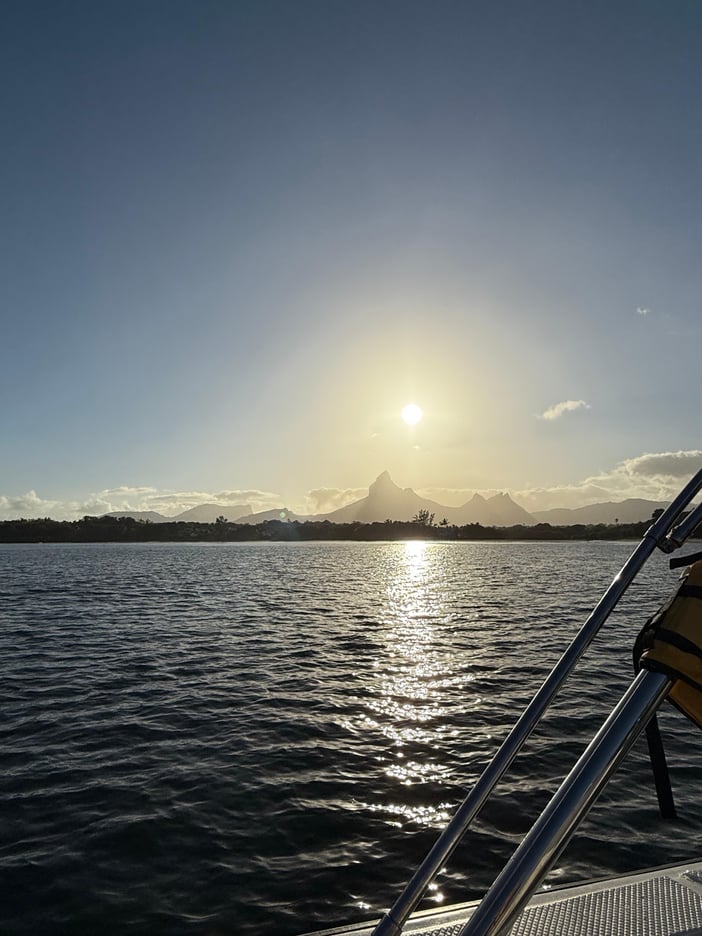
Great young guides. We saw several sperm whales and dolphins and even swam with them. Boat in top condition, we felt safe, and animals were treated respectfully. Easy, transparent rescheduling via WhatsApp. Recommended!
Most reviewers thank their skipper by name, with Ali praised over and over for finding whales and keeping the ride easy.
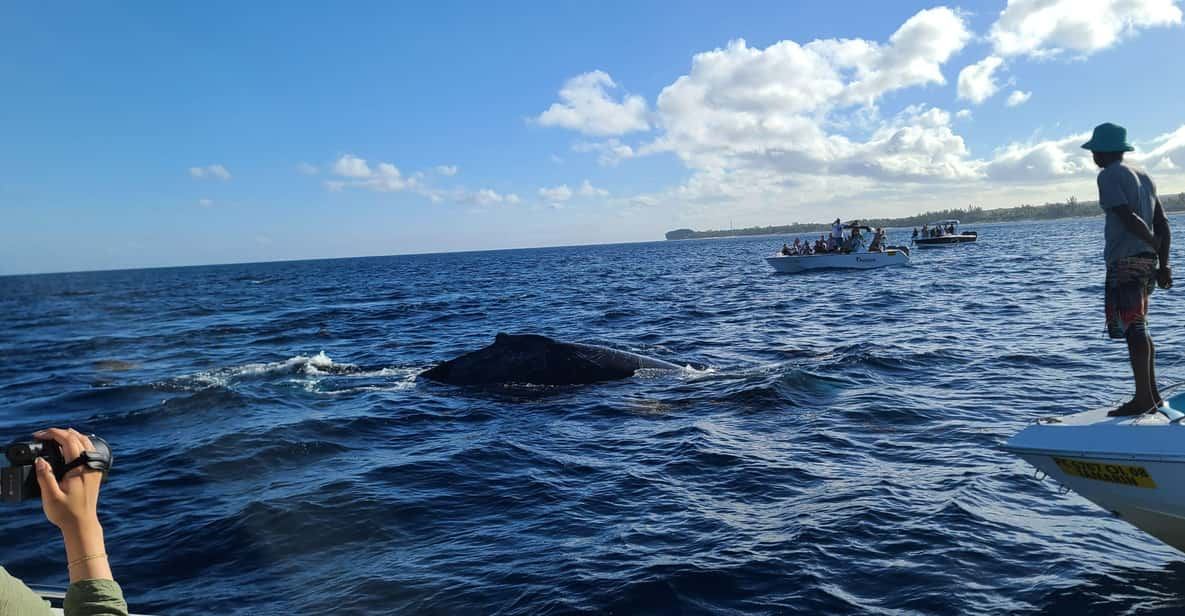
Many who came mainly for the dolphins went home having watched sperm whales surface close to the boat.
Several reviewers wished the promised length of the trip and the drinks on board had actually been delivered.
Choose a date first, then a start time. Tours here run early, most between 6 am and 7:30 am, because the sea is flattest at dawn and winds build from late morning.
RecommendedPaid dolphin and whale trips run only between 6 am and noon under Mauritian law, so a midday option is never on the table anyway
On the tour page, pick the option that matches your group. Shared speedboats carry about 6 to 12 people on a fixed slot, while private charters take up to 6 to 8 and let you set the timing.
Pro tipA private charter lets you leave as early as possible and reach Tamarin Bay before the other boats arrive
Read who the tour suits before confirming. Some trips are not suitable for pregnant women, non-swimmers or children under a given age, and a few prohibit pets. All tours on this page allow free cancellation up to 24 hours in advance.
Pro tipIf you are prone to seasickness, take your medication about an hour before departure rather than once you feel rough on the water
After payment you get a voucher by email with the meeting point and the operator's contact details. Tamarin departures meet at the bay or a nearby jetty, and the nearby Black River tours use a set meeting point on La Jetée Road in Grande Riviere Noire.
Arrive 15 minutes early in swimwear with a dry change of clothes. Boarding often means wading to the boat, so wear water shoes and pack a windbreaker for the fast open-water ride.
Pro tipSightings are never guaranteed, but crews use hydrophones and radio networks between boats to track sperm whales, so they search hard for you
Boats leave from Tamarin Bay itself, so you stay close if you are based here. Boarding often means wading through shallow water to reach the boat, so water shoes or secure sandals beat flip-flops. Once on deck, passengers usually go barefoot.
Most trips launch between 6 am and 7 am, and it pays off. The sea is at its flattest before the trade winds build around 11 am, and the dolphins are still in the bay after feeding offshore all night. By law, paid whale watching runs only from 6 am to noon.
The seabed drops fast off Tamarin, and within a few kilometres it is more than 1,000 metres deep. Speedboats reach sperm whale territory in about 15 to 20 minutes, so most of your morning goes to the animals themselves.
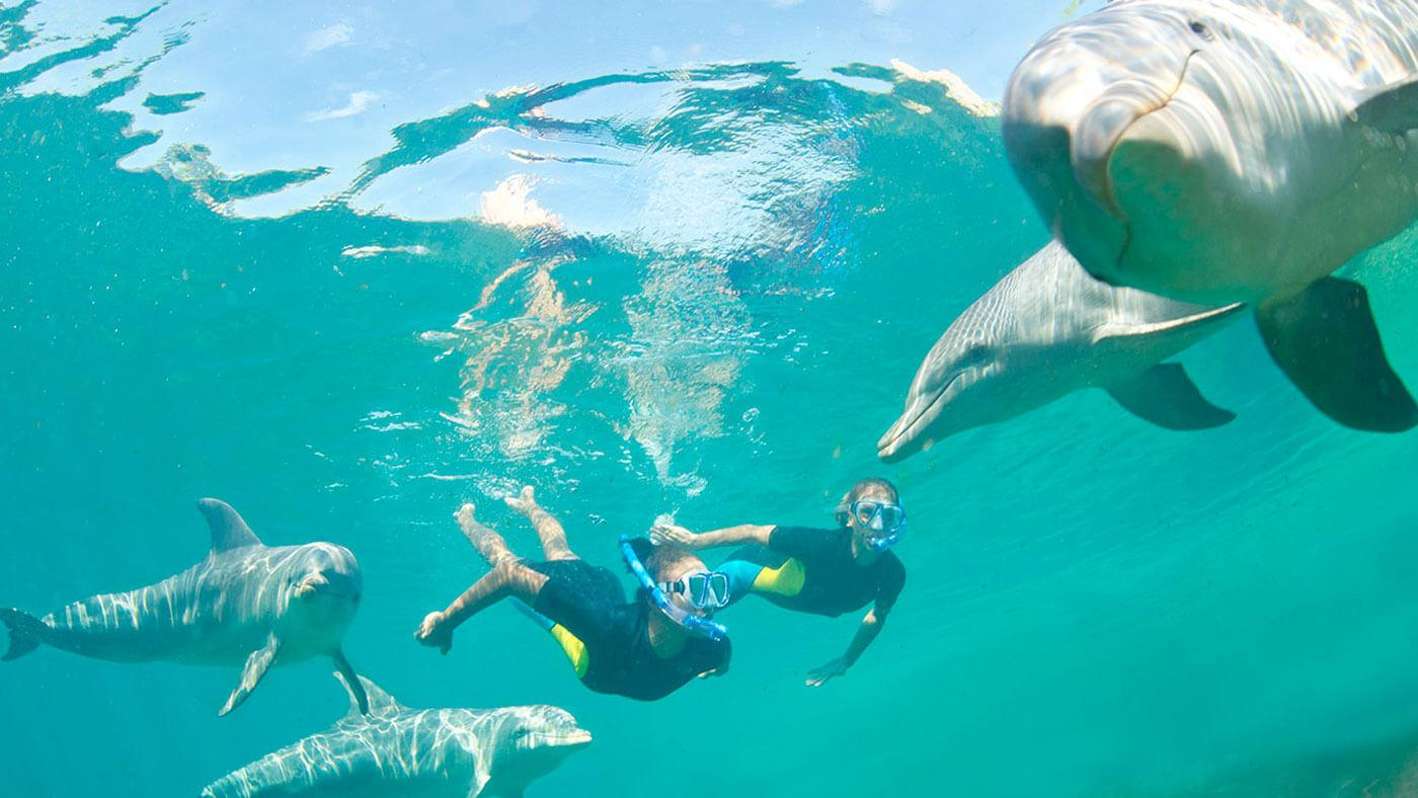
Mauritian law allows at most three people in the water at once, including a lifesaver, so in practice swimmers enter two at a time with a guide. On a shared boat you take turns; on a private charter with your own group, rotations are shorter.
A dolphin swim asks for basic comfort in open water. You jump in and out of the boat repeatedly to keep pace with the pod, and you cannot outswim the animals, so passes are brief. Younger or less confident guests can stay on board and watch.
Trips into open water get cancelled when winds top 25 knots or waves pass 2 metres, and heavy swell warnings of 4 metres or more legally keep all pleasure craft ashore. If the weather turns, tours can be rescheduled rather than lost.
Several tours do not take pregnant women, and some set age minimums, from under 1 year to under 6 depending on the boat. Check the rules for the tour you pick before you book, since these limits decide who can come along.
Wear swimwear under quick-drying clothes and bring a light windbreaker for the fast ride back, when spray and wind chill bite. Heavy cotton holds water. Pack sunscreen, a hat that stays on, and sunglasses with a strap.
Outside the reef the water turns choppy, with swells that can rock a speedboat hard. Take your motion sickness tablet about an hour before you sail, since it works far less well once symptoms start. Dimenhydrinate-based tablets need two hours to absorb.
The law protects the animals: boats stay at least 100 metres from whales and 50 from dolphins, approach from the side, and never circle a pod. Touching marine life is banned, and swimming with whales is prohibited outright. Good crews brief you before you enter the water.
Deep water sits 15 minutes past the reef, and sperm whales live in it all year. What a dawn boat trip from Tamarin really involves, what it asks of your sleep and your swimming, and which boat fits your group.
Book the 6:00 or 6:30 slot: paid whale watching legally ends at noon, and dawn has the calmest sea.
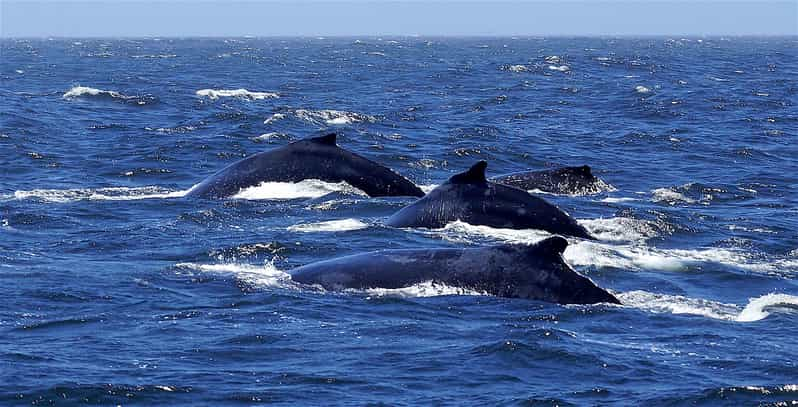
Whales show on roughly six or seven trips in ten; sperm whales all year, humpbacks June to October.
Take motion sickness tablets before boarding, about an hour ahead; the open ocean starts past the reef.
Twenty minutes past the reef, the seafloor disappears. Boats from Tamarin run over sand and coral, cross the drop-off, and hang over canyons that fall past 1,000 metres within a few kilometres and reach 3,000 metres eight kilometres from shore. That canyon is why this bay works.
Abyssal water this close to land draws squid, and squid draw sperm whales. The pods here are mostly females and calves that never make the polar migration; they hunt the deep water all year. A whale trip from Tamarin needs no long transit, so the morning stays intact.
The numbers above tell you how little transit this trip demands, so the morning stays yours. One honest number before you book: operators off the west coast report sightings on about six or seven trips in ten, and one Tamarin-area skipper puts it at a 60% chance.
Whales are wild animals, and the spout is a bonus. Book the trip for the whole morning at sea.
First light, and the bay already has company. Spinner dolphins arrive to rest and socialise after hunting offshore at night, in acrobatic pods of 15 to 30, while bottlenose travel in tighter groups of 5 to 10. Boats slip out between 6:00 and 7:00 to meet them before the fleet builds.
Then the throttle opens. The run past the reef takes 15 to 20 minutes, and the boat stops over water far too deep to anchor.
The skipper lowers a hydrophone probe and listens: sperm whales click while hunting, and those clicks carry from kilometres away, pointing the way. Skippers radio each other across the water, sharing positions as they change.
Dolphins rest in the shallows; wade out to the boat
A fast 15 to 20 minute crossing to the deep drop-off
The skipper listens for sperm whale clicks kilometres away
A swim in the natural aquarium on the way back
Paid whale watching ends at noon by law
Most combined outings run three and a half to four hours, dedicated whale trips two and a half to three, and full-day versions with a barbecue on Île aux Bénitiers stretch to eight and a half. Back on the sand, tipping the crew in Mauritian rupees is customary; keep a few notes aside.
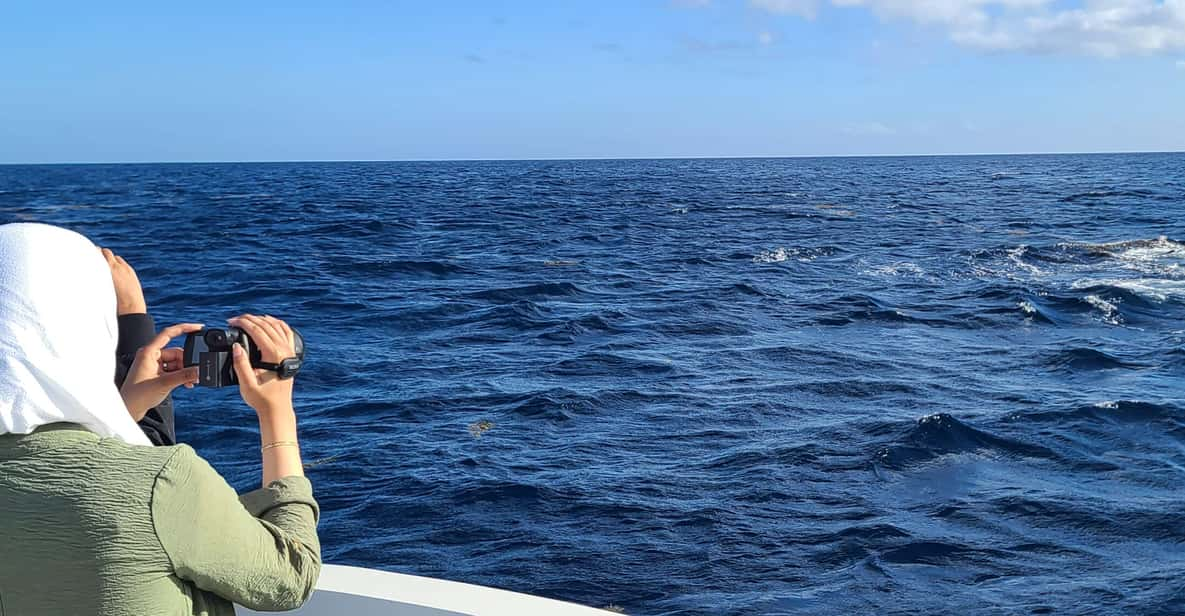
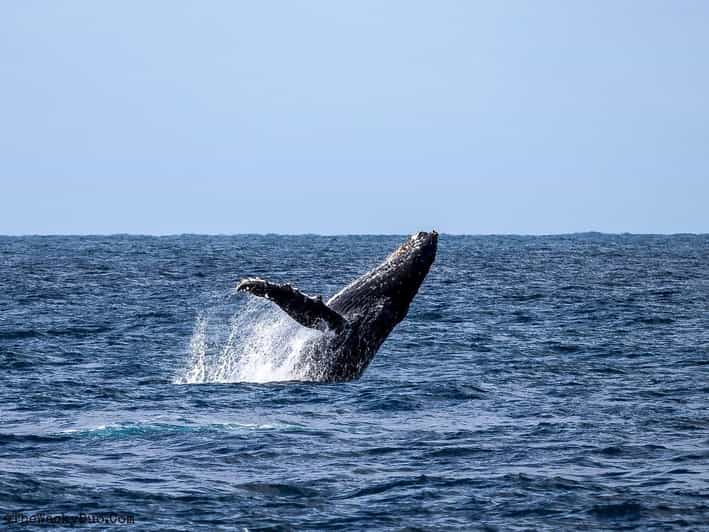
Sperm whales make every month a whale month; they live off this coast all year. Humpbacks are the travellers, passing Tamarin between June and October, with the run peaking from August to October. Book late winter and you may meet both species in one morning.
Winter changes the sea too. From June through September the trade winds blow harder, calm days drop to roughly half, and swells outside the reef build until the ride turns choppy and spray-soaked. That raises the seasickness stakes. May sits outside the humpback run entirely, though resident dolphins still show.
September: 5 out of 5 for how busy it gets. Peak season arrives with the highest tour demand, active humpback and sperm whale sightings, and brightening skies.
Tap a month to read it.
August: humpback whale seen 26 times. A popular month with prime humpback whale sightings and resident sperm whales, accompanied by brisk offshore winds.
Tap a month to read it.
July: sperm whale seen 14 times. Midwinter brings moderate crowds and chances to spot both migrating humpbacks and resident sperm whales on clearer days.
Tap a month to read it.
Match the species you want to the month, then pack for the wind.
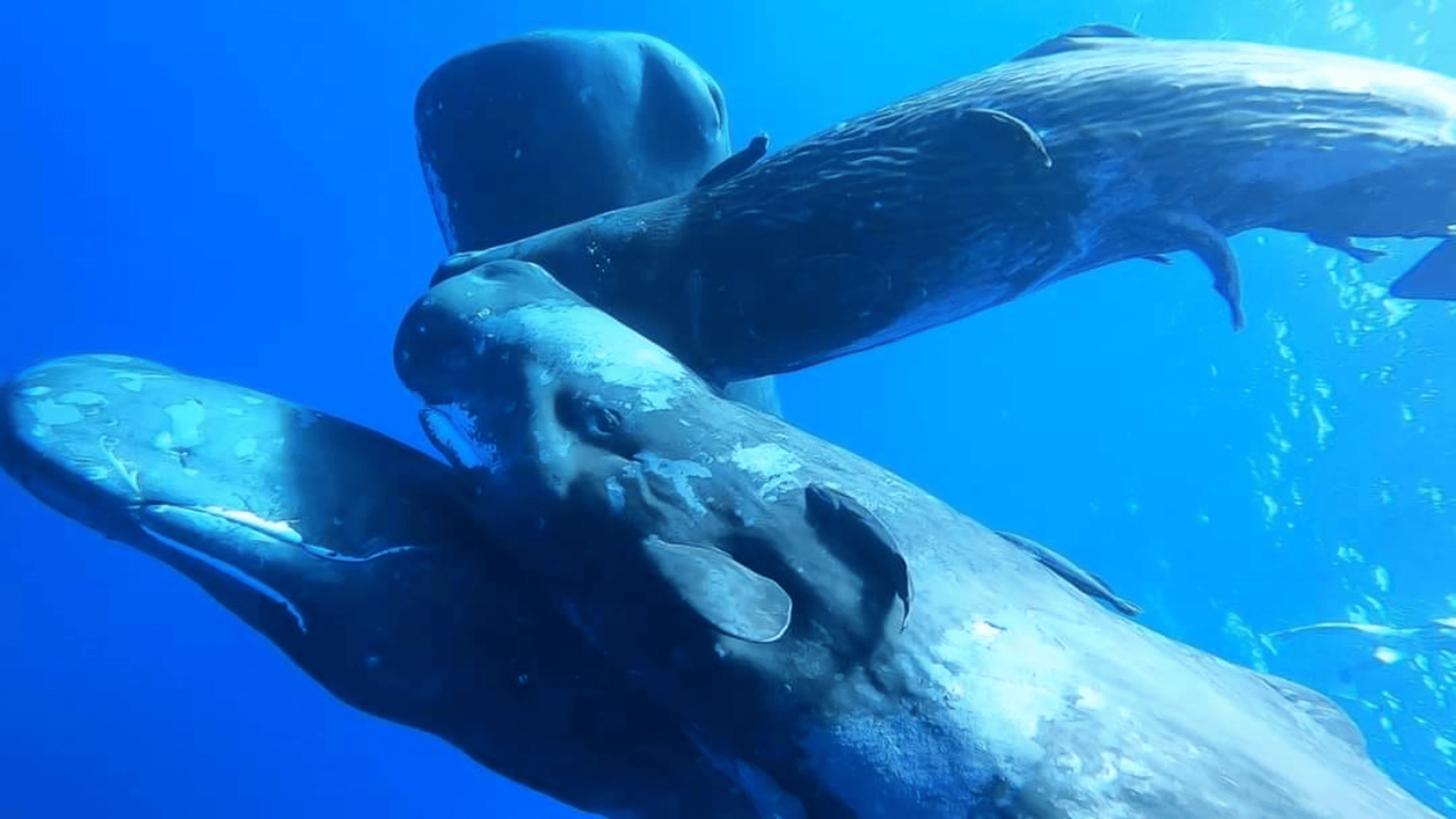
The whole schedule hangs on one line in Mauritian law: paid whale and dolphin watching may only run between 6 am and noon. A nine o'clock slot would leave the crew almost nothing to work with, so veteran operators launch between 6:00 and 7:00.
Dawn buys the rest. Seas are flattest then, spinner and bottlenose pods are back in the bay resting by six, and whale blows read clearly on glassy water before the trade wind rises around eight. Boats from other parts of the island arrive later, after the good water has gone.
Glassy calm seas as resting dolphin pods gather in the bay.
Boat traffic increases while pods head toward deeper waters.
Wind and chop increase, and commercial watching legally ends at noon.
The 6:30 wake-up is the price of a flat sea, resting dolphins and a legal timetable. Treat it as the entry fee, and the whole morning works.
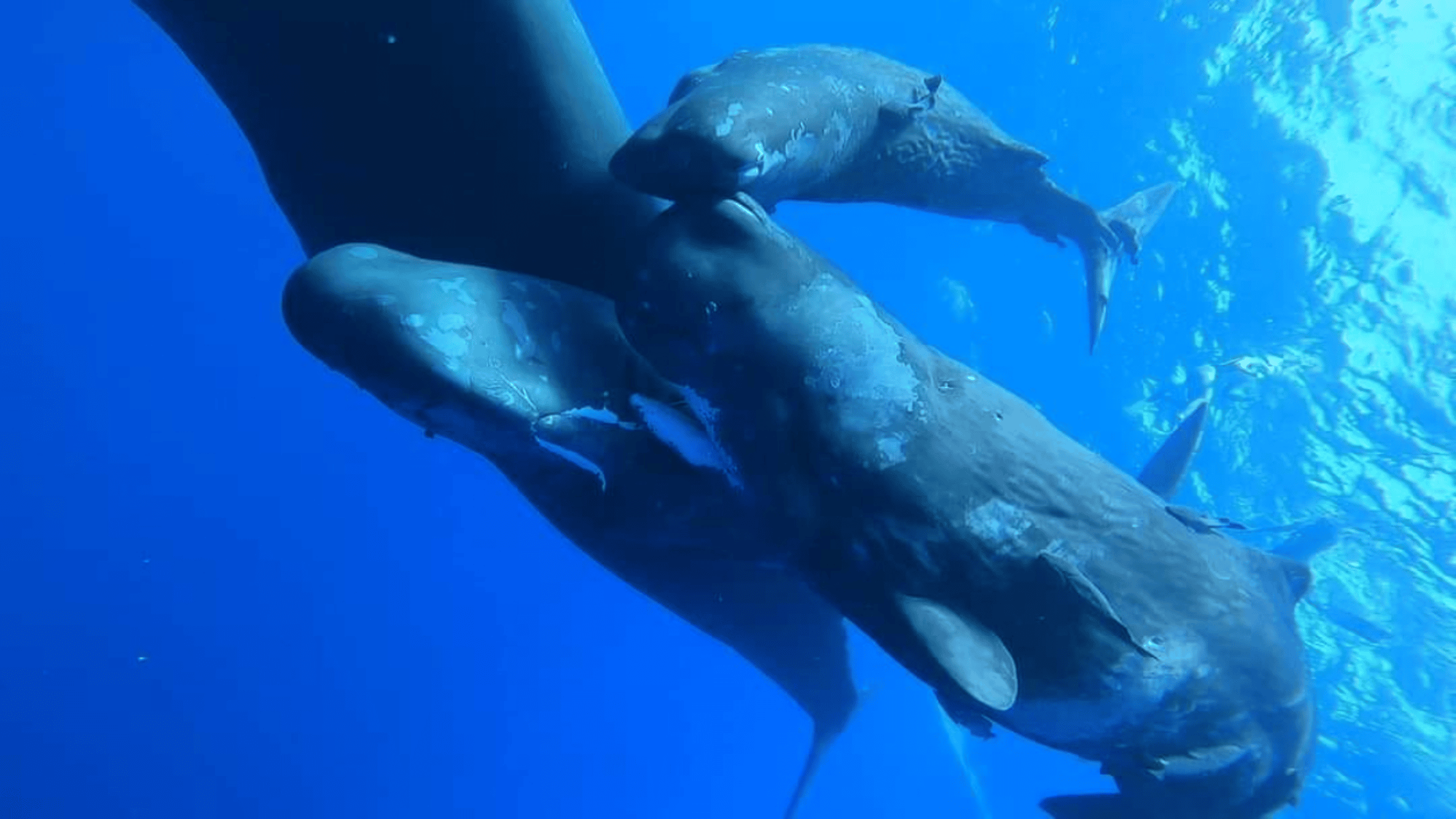
Two formats share the same water. A shared speedboat takes six to twelve people on a fixed slot; a private charter out of Tamarin carries up to six to eight and lets you set the departure.
With your own boat you can leave before the fleet arrives and find calm water, and the pace bends to your group's swimming.
The honest caveat: neither format buys solitude at the sighting. Even a private charter shares the zone with other speedboats once animals surface. What it does buy is deck space, no queue at the rail, and swim rotations that never wait behind strangers.
| Shared speedboat seat | Private charter | |
|---|---|---|
| Who it suits | Couples and solo travelers watching the budget | Families and small groups wanting their own boat |
| Group size on board | Six to twelve on a fixed slot | Up to six to eight |
| Departure time | Set by the operator | Negotiable, often earliest out |
| Deck and rail space | Shared with the whole group | Uncrowded, no queue at the rail |
| Swim rotations | Your turn comes after other passengers | Rotations run within your own group |
| Flexibility | Fixed route and timing | Pace, snorkel spots and timing bend to you |
For a taste of the shared format, the Mauritius: Dolphin Snorkeling & Whale-Watching Speedboat Tour runs three and a half hours with an experienced skipper, dolphin snorkelling and the whale run, plus a swim in the natural aquarium. Many travelers book once they land, so months of planning ahead are optional.
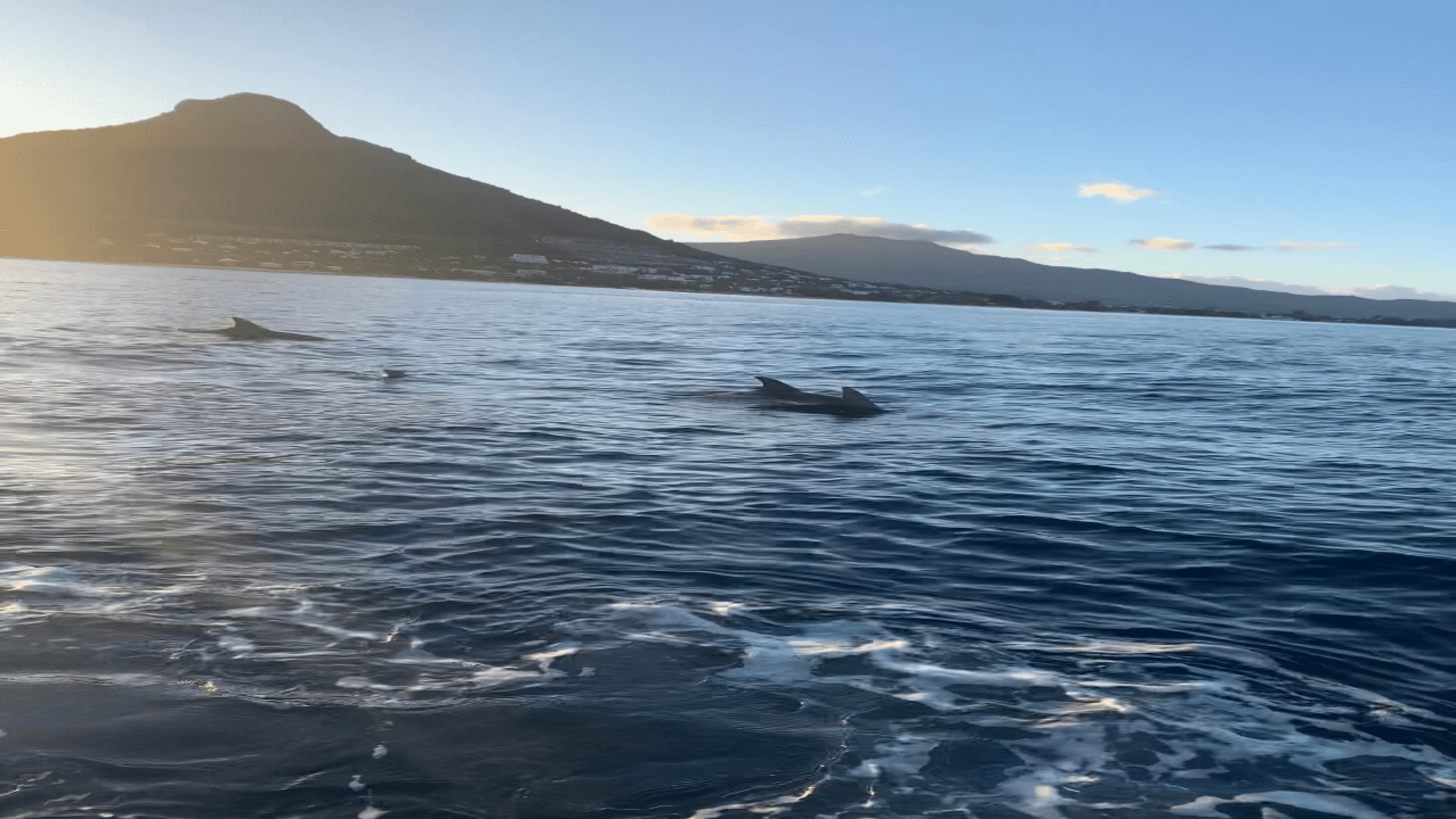
The law of the water is strict, and it protects the encounter as much as the animal. Boats keep at least 50 metres from dolphins and 100 from whales, with buffer zones stretching to 200.
Approaches come from the side at no-wake speed, never head-on, never through a pod, and engines sit in neutral at a standstill.
Two rules settle expectations. Swimming with whales is illegal, however an operator phrases it; observation happens from the boat. And touching marine life is prohibited outright. Skippers who crowd or chase pods risk fines and the loss of their licence.
Legitimate craft show an official Tourism Authority label, run certified skippers and carry approved propeller guards. If a boat promises a whale swim, that is your signal to walk to the next jetty.
Illegal in Mauritius; whales are watched from the boat only
Touching marine life is prohibited on every boat tour
Forbidden; skippers face fines and licence revocation
The table above is worth a minute before you pay anyone, because it sorts the licensed boats from the ones that bend the rules. If a bay looks crowded with dozens of vessels circling one pod, the skipper should idle the engines and keep you on board.
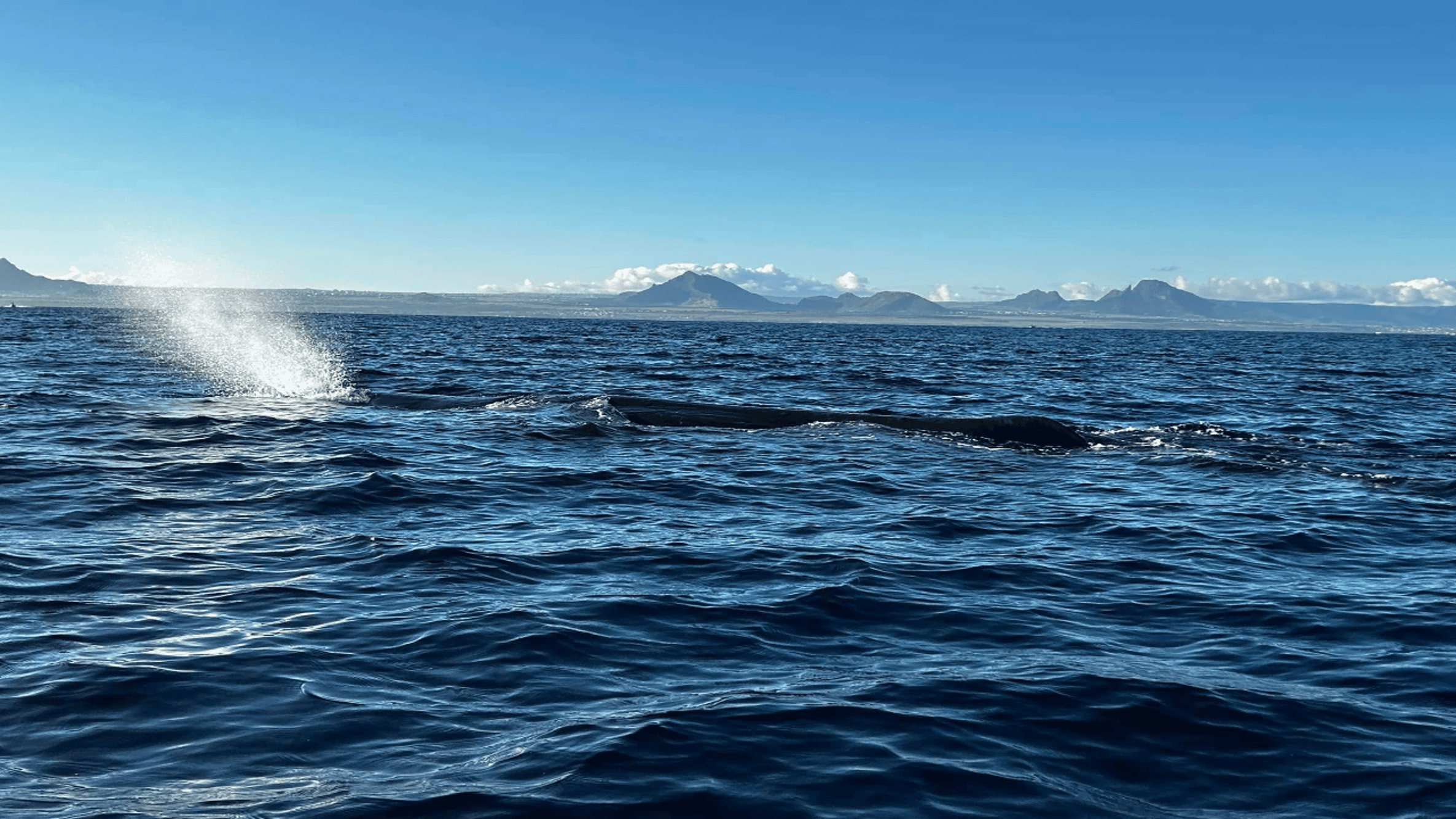
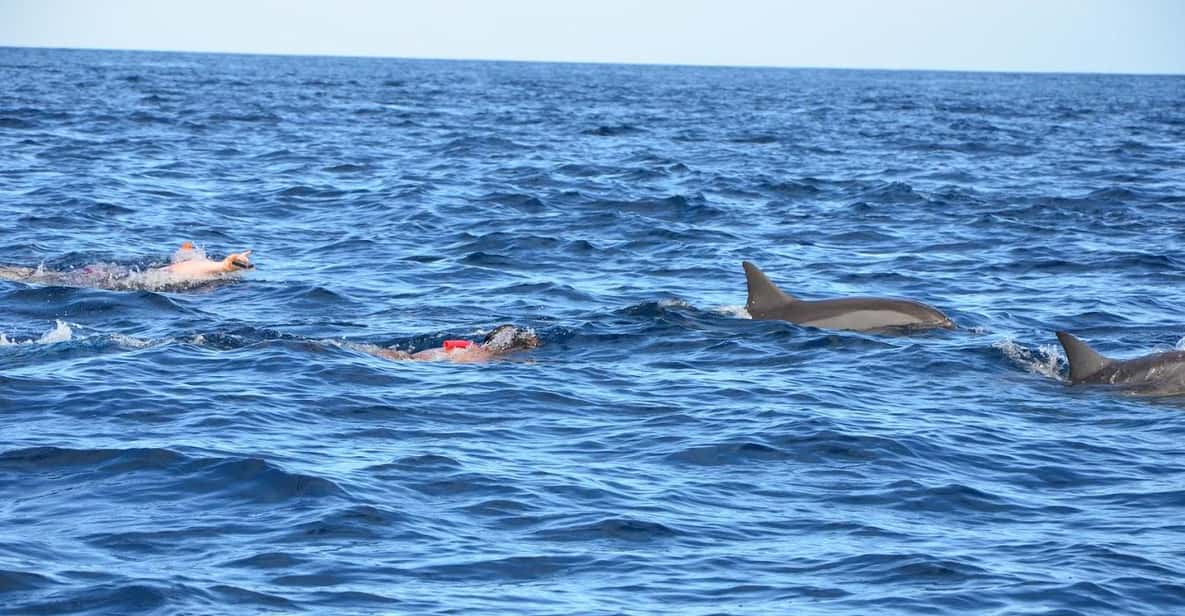
Nobody drifts. A dolphin swim means jumping in and out of the boat again and again, moving fast to reach the next dive spot before the pod descends. Pods cross open water faster than any swimmer, so encounters come as brief pass-bys with the pod setting the length of each one.
Regulation caps the water at three people including a lifesaver, so on most boats only two guests enter at once. On a full shared boat that means waiting your rotation. Basic comfort in deep open water matters more than speed; confidence counts, and unprepared swimmers tire fast.
Staying on board is a real choice too. Plenty of guests watch the whole swim from the rail and see just as much. Operators may also require a life vest in the water, whatever your ability.
You chase a moving pod, so it never feels like a float
Big groups wait through rotations
The dolphins decide the length, not the guide
Even confident swimmers wear one
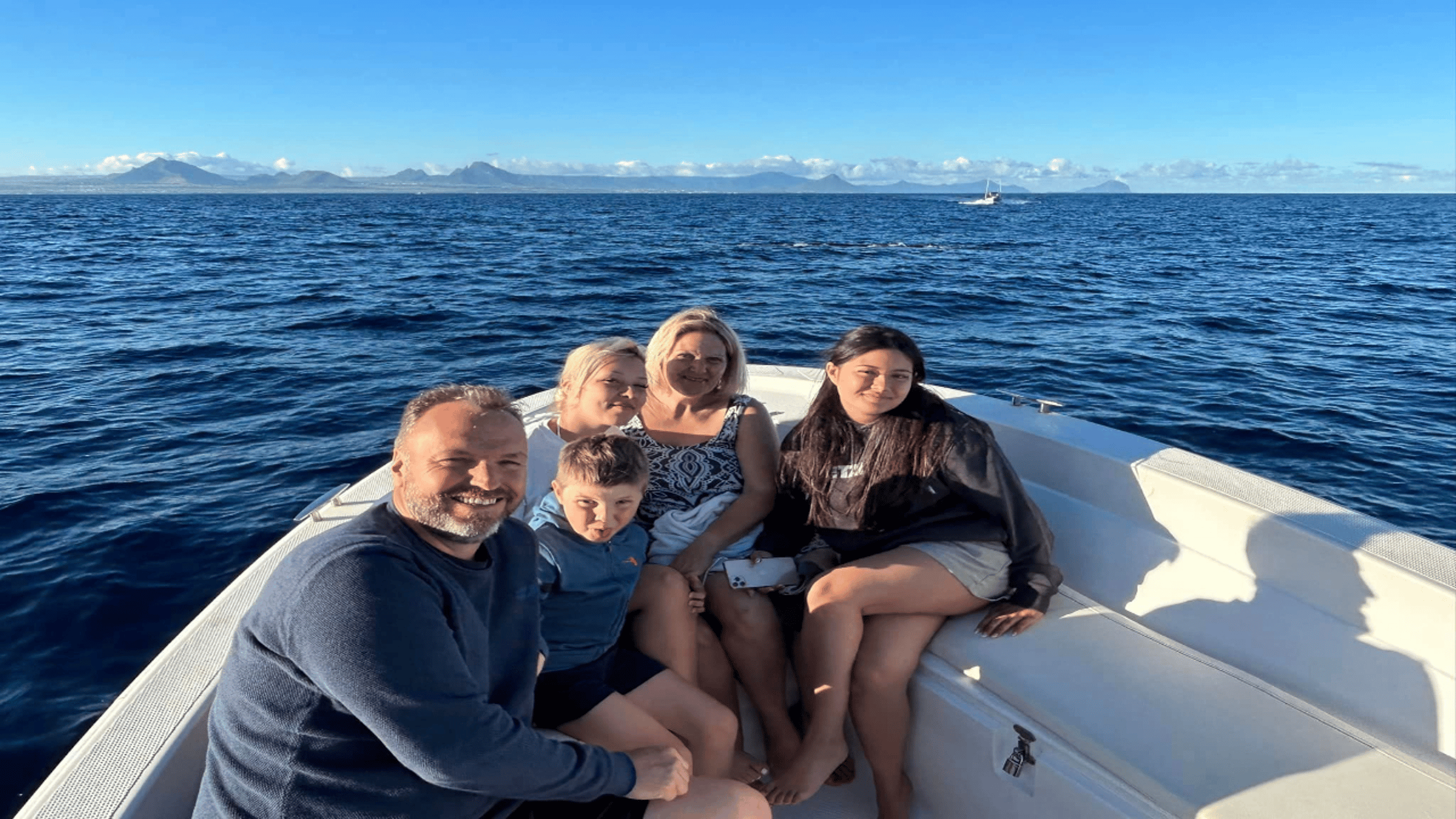
A 6:30 launch turns the transfer into the first logistics puzzle of the day. From Flic en Flac, a taxi or rental car covers the roughly 12 kilometres of coastal road in 19 to 25 minutes. From Le Morne, count 25 to 42 minutes north, depending on which end of the peninsula you sleep on.
Longer hauls need planning. Grand Baie sits 75 to 85 minutes away, and east coast resorts run 80 to 90 minutes across the island in normal traffic.
Public buses need transfers and start too late for dawn, so taxis and hire cars carry the morning. A private hire also sidesteps the steep fees some hotel transfer services charge, and your meeting time is confirmed a day or two ahead.
The table shows the realistic options at a glance: the bus never makes it in time, so a taxi or rental car decides whether you reach the jetty by 6:30. Boats launch from Tamarin itself or from the Black River jetty on La Jetée Road.
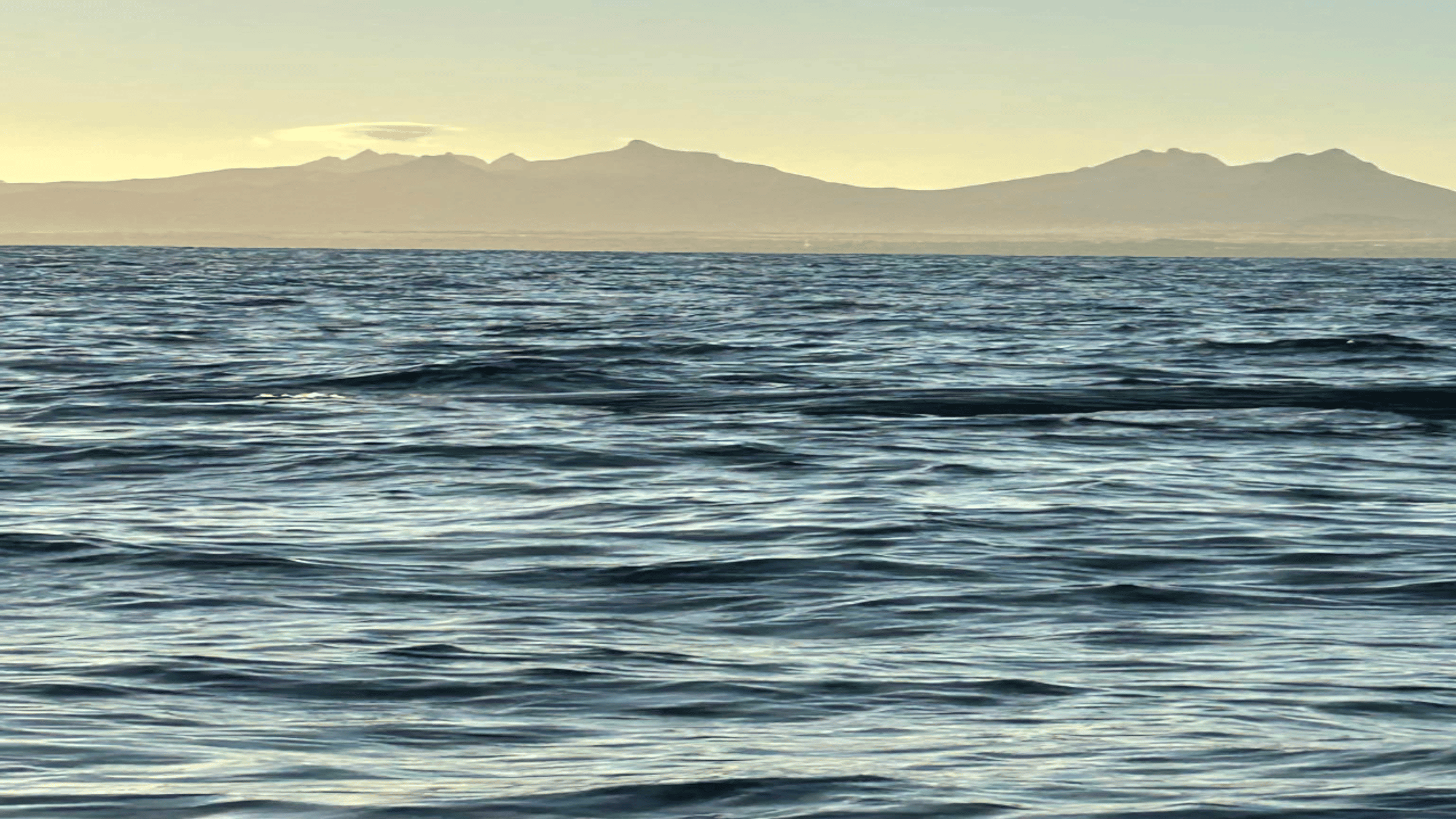
The bay flatters you. Beyond the reef the open ocean starts: swells, spray on the seats, glare with nowhere to hide. If you are prone to motion sickness, take tablets before boarding, about an hour ahead, or two hours for the slower-acting ones. Once nausea starts, medication barely catches up.
Pack for spray and sun together: swimwear under quick-drying clothes, a windbreaker for the cold wind on the fast ride back, reef-safe sunscreen, sunglasses with a strap and a hat that ties.
Water shoes help with the wade out to the boat; most people go barefoot on deck. A dry bag or phone pouch keeps the electronics alive.
The mask and snorkel you can leave at home. Private charters supply sanitised gear, and the snorkel stop usually comes after the whale run.
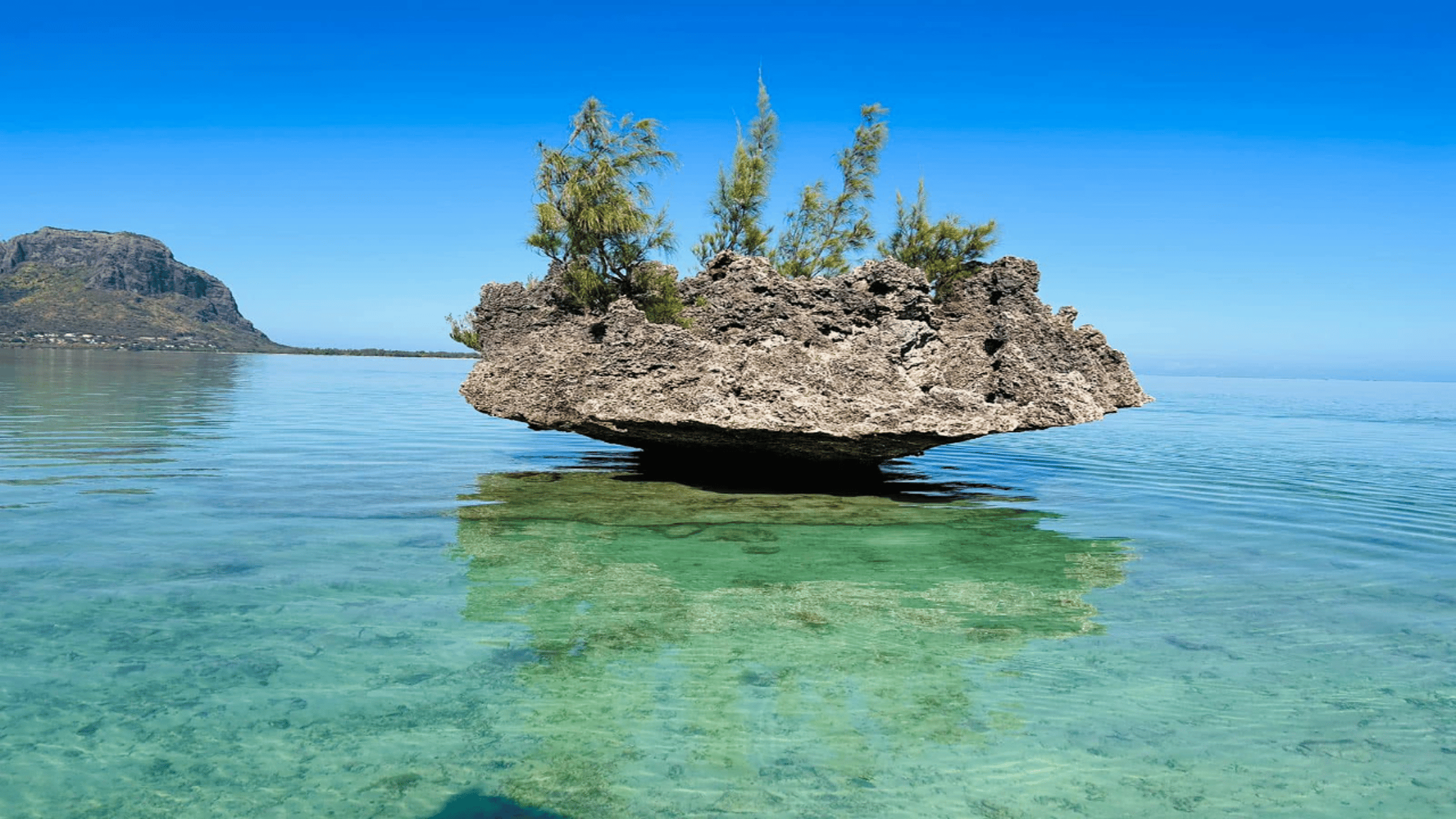
The sea outside the reef decides who belongs on board. Open-ocean speedboats generally don't suit babies under one or toddlers, between rough water, fierce sun and little shade, and several trips draw their age lines anywhere between three and six years.
Most tours exclude pregnant women, several advise against the dolphin swim in pregnancy, and low-fitness travellers are excluded on some boats too.
The workaround is a private boat, where the pace bends to your group. The Dolphins & Whales: Private Snorkeling Tour runs four hours from Tamarin with a private skipper, dolphin snorkelling, whale watching and drinks on board. Families with very small children do better with a calmer inshore option that morning.
Offshore speedboats exclude babies under 1, children under about 4 to 6, pregnant women and low-fitness travellers Choose a private charter that adapts the pace, or a calmer inshore alternative that morning
That single row covers the cases that stop a booking at the desk, so check your own group against it before you pay.
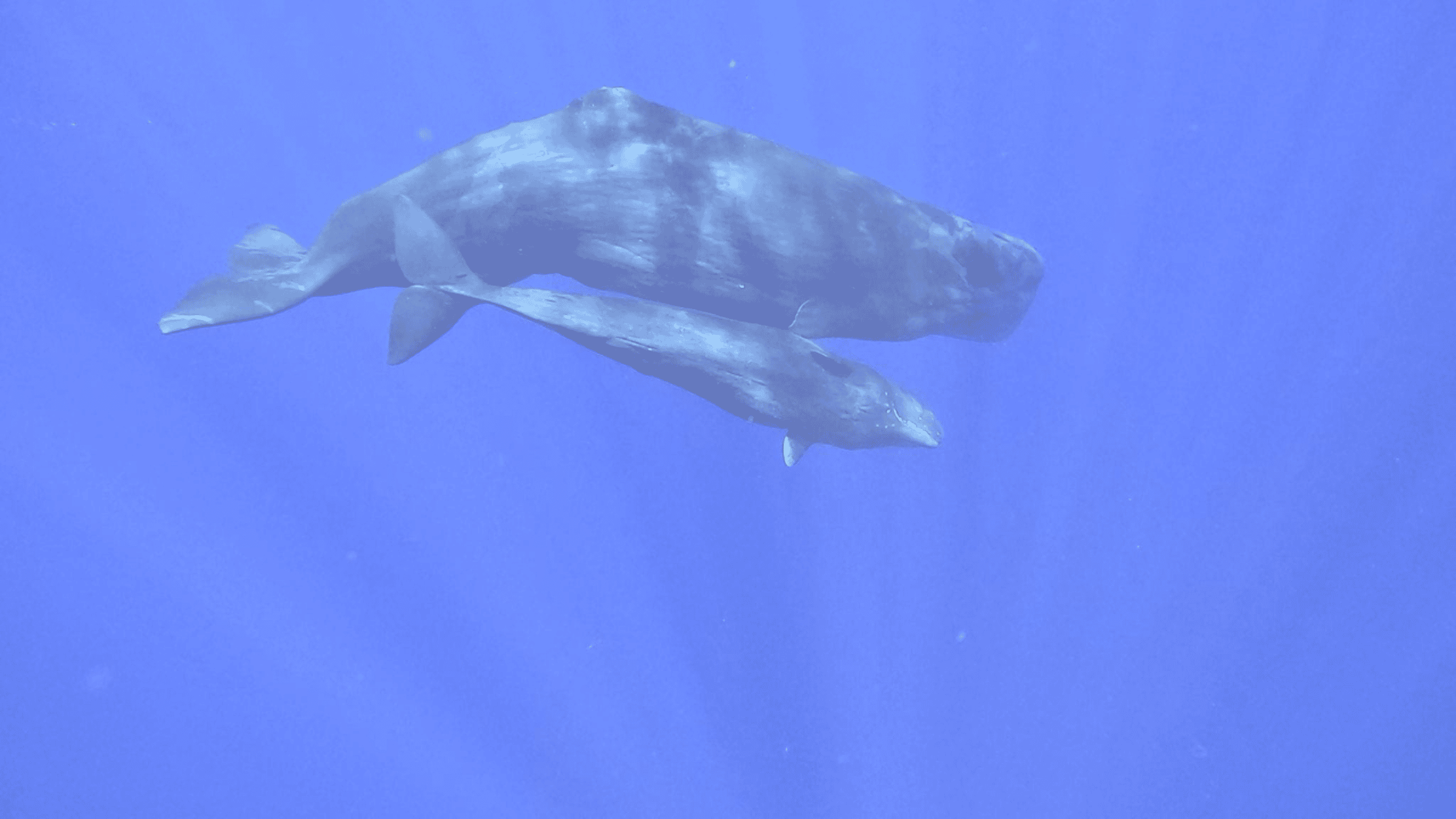
Weather holds the veto. When the authorities issue a heavy swell warning, swells of 4 metres or more, or winds top 25 knots with waves over 2 metres, boats stay ashore and trips move to another day. Authorised maritime officers can also order vessels in whenever conditions look unsafe.
Whales answer to nobody. Sightings are never guaranteed, and a trip can come home with zero, with no recourse. Crews fight for it: hydrophones, radio networks, extended searching across the deep water. Book with a flexible morning held in reserve, so a reschedule or a blank day costs you a plan, not a holiday.
| If this happens | What happens then |
|---|---|
| Heavy swell warning or winds over 25 knots | The trip is cancelled and rescheduled to another day |
| You need to change plans | Cancel up to 24 hours ahead for a full refund |
| No whales surface | Sightings are never guaranteed; there is no refund or recourse |
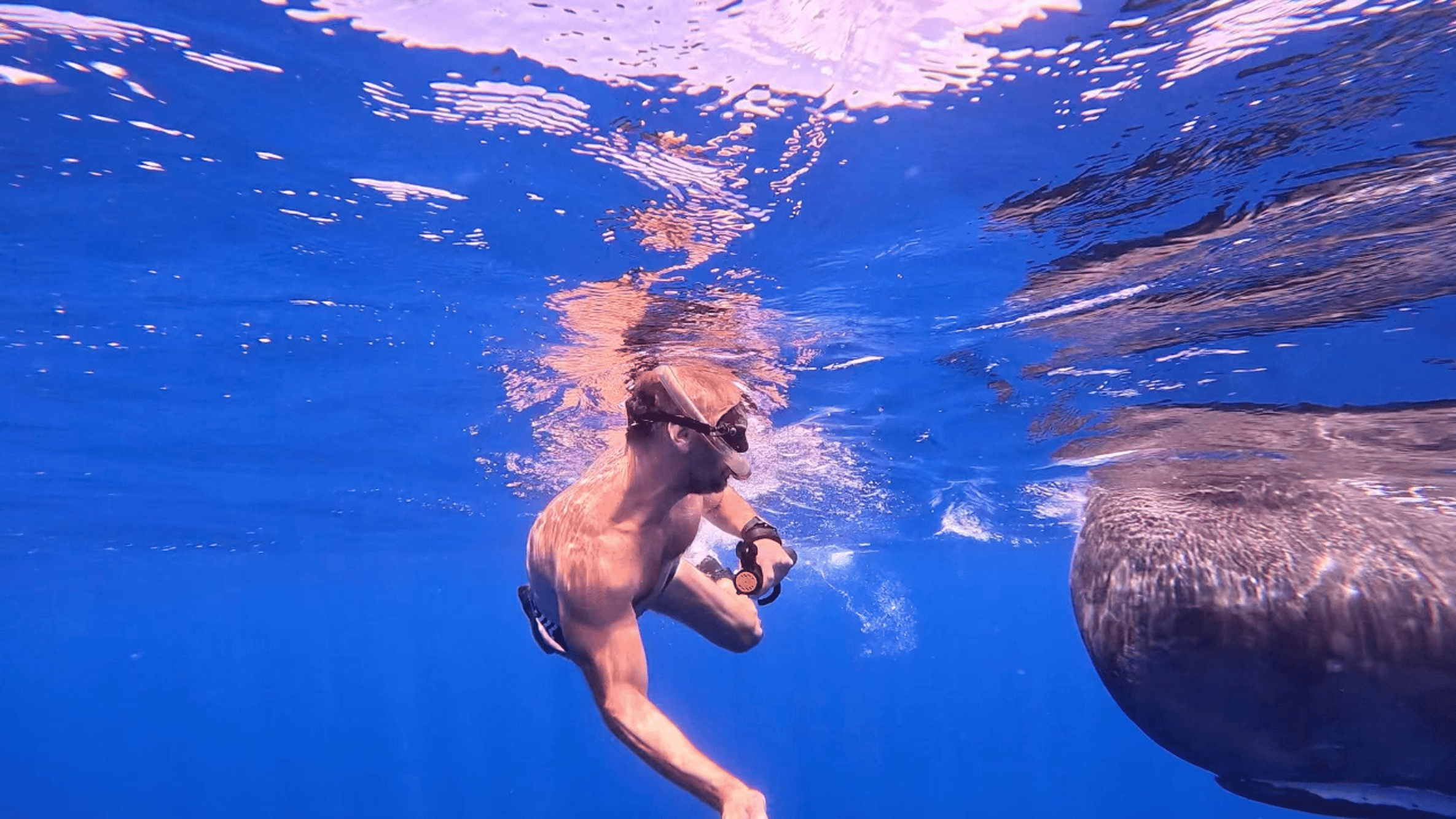
Feet back on the sand around eleven, and Tamarin starts serving. Chez Françoise opens at the public beach at 11:00, Tuesday to Sunday, for noodles and dumplings on beachside benches; Crazy Fish in the village unlocks between 10:30 and 11:00 for fresh seafood.
The salt pans rake through late morning just off the coastal road, and surfboard hire or a beginner lesson runs right on the bay.
Keep your eyes on the water at lunch. Dolphins feed close enough to spot from the shoreline here and in Flic en Flac, and a deep channel runs near the coast, so whales sometimes pass within sight of the reef. One rule for the lagoon: swimming with or feeding sea turtles is illegal.
The sights above fill an afternoon if you want to keep moving, though the beach and the lunch spots alone carry the day.
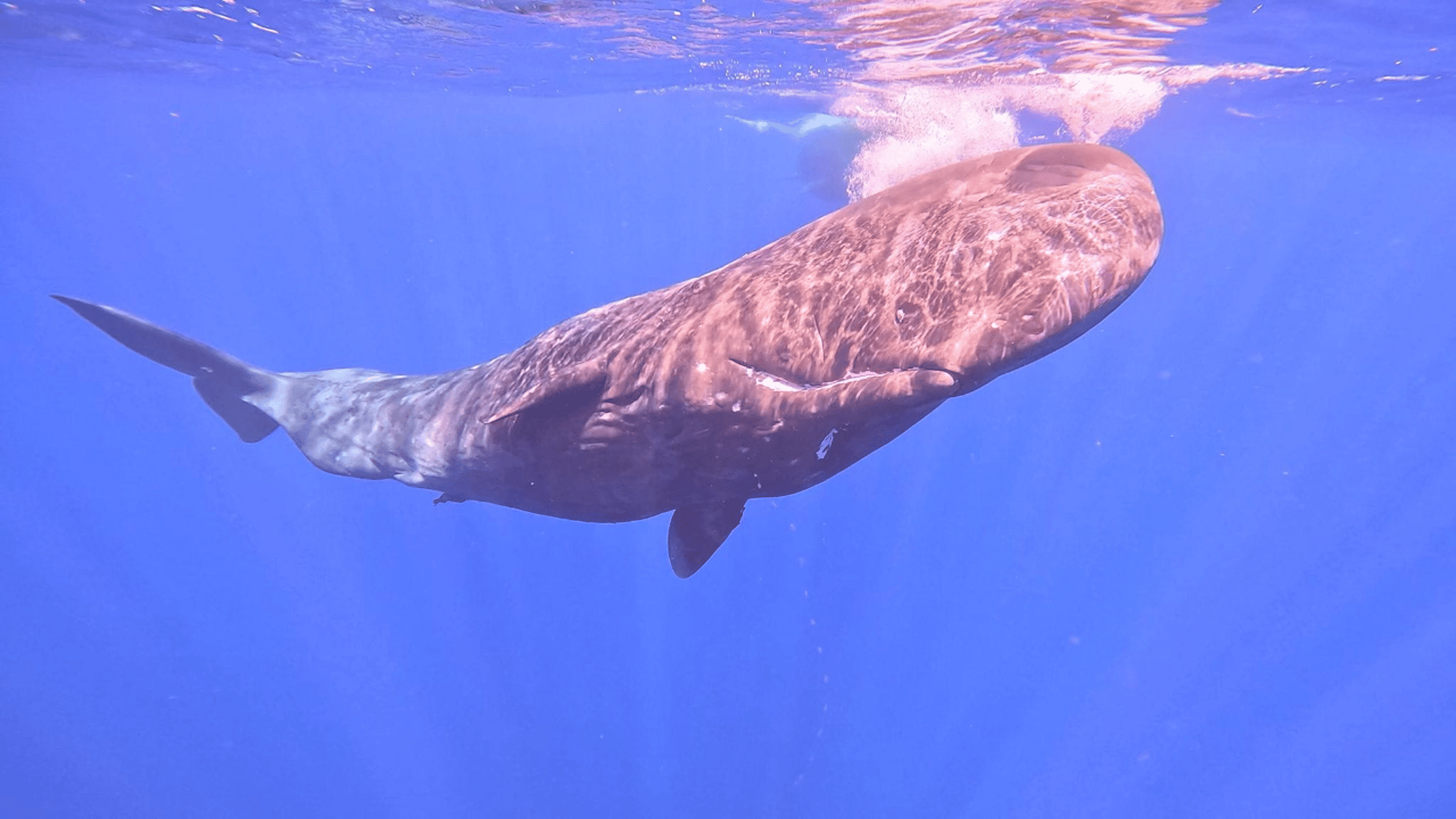
Great young guides. We saw several sperm whales and dolphins and even swam with them. Boat in top condition, we felt safe, and animals were treated respectfully. Easy, transparent rescheduling via WhatsApp. Recommended!
Tamarin earns its morning with geography, not marketing: resident sperm whales a short run offshore, dolphins resting in the bay at first light, and the law keeping the whole operation honest. Go early, take the tablets before boarding, and book the trip for the morning at sea, with the spout as the bonus.
Quick answers to the questions travelers ask before they book a Tamarin boat.
Tamarin2026No. Swimming with whales is strictly prohibited by law in Mauritian waters, so you watch them from the boat while the crew holds a respectful distance.
Mauritian law sets a minimum of 50 meters from dolphins and 100 meters from whales. Skippers approach from the side at no-wake speed, keep the engine in neutral when stopped, and never drive through a pod.
Many operators require a life vest or buoyancy aid when you swim outside the reef. On one shared speedboat tour it is compulsory in the water and on deck beyond the lagoon, so treat a vest as part of the day.
Migrating humpback whales pass Tamarin between June and October. Sperm whales live in the deep water off the coast year-round, so a winter trip gives you the chance at both.
Sightings in open water are never guaranteed, and a trip can end with zero sightings and no recourse. Crews spend extended time searching and use hydrophones and radio networks to track whales, which raises the odds, but nature decides.
The water turns choppy once the boat clears the barrier reef. Take oral motion sickness medication about an hour before sailing so it is absorbed in time, since tablets work best before the swells start.
No. Touching, feeding, or chasing marine life is prohibited on boat tours, and swimmers must enter the water smoothly without splashing. The dolphins decide how close they come.
Sometimes. Spinner and bottlenose dolphins gather in the bay early in the morning to rest after feeding offshore, and people do spot them feeding from the shoreline. A boat gets you far closer to both the dolphins and the offshore whales.
The water turns choppy once you pass the barrier reef, so take motion sickness medication before you board. Over-the-counter tablets work best about an hour before departure, not after the swells start.
Dolphins sometimes feed close enough to spot from the shoreline in Tamarin Bay without a boat. Whales offshore are a different matter, and a trip is the reliable way to look for them.
Boats stay ashore when authorities issue heavy swell warnings, and tours can be rescheduled in bad weather. Keep a spare morning in your plans if you can.
Paid whale watching runs between 6 am and noon by law, and the sea is flattest at dawn. An early start gets you calm water and the dolphins before the rest of the fleet arrives.
Compare the west coast departure villages and find where each port puts you relative to the whales.
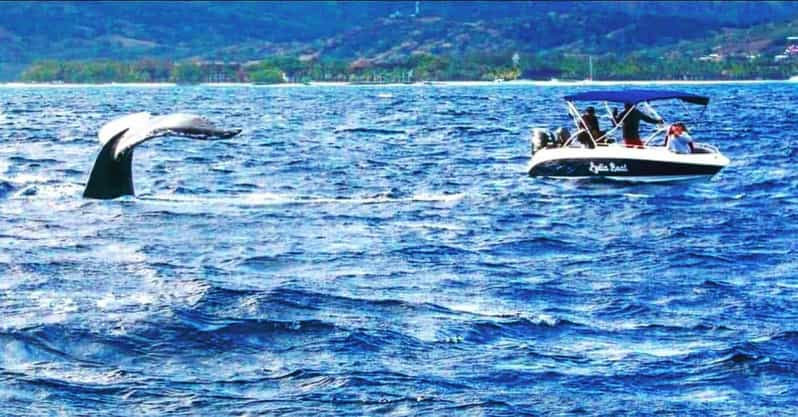
Staying on the Le Morne peninsula? See which boats launch closest to you and how their trips run.
Based in Flic en Flac? Find out which tours leave straight from your beach, no early taxi needed.
Check which months bring humpbacks past the coast and when sperm whale sightings are at their best.
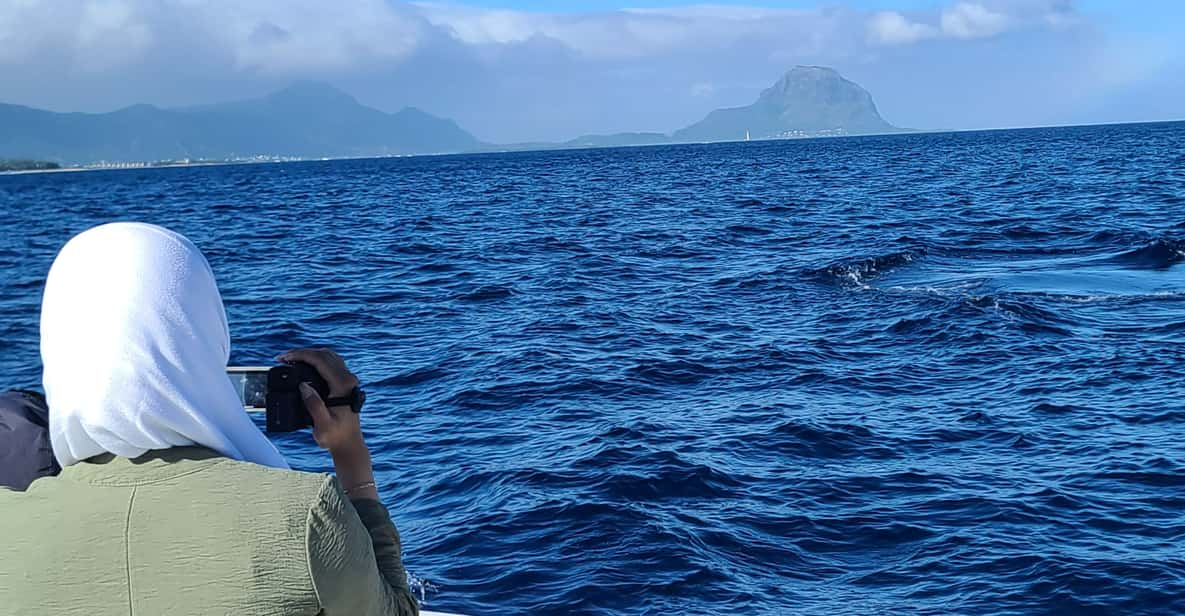
A speedboat of your own for the morning: dolphins in the bay, whales offshore, snorkeling at Crystal Rock, free cancellation up to 24 hours ahead.