

5 hours·English, French
4.6(760)

Black River: Dolphin Swim and Whale Watching by Speedboat
Free cancellationSpeedboat excursionProfessional skipper and guide

Book a whale watching trip that fits your dates. Resident sperm whales cruise the deep waters off Black River all year, and licensed crews know how to find them. Come between June and October and the migrating humpbacks join them, so every month gives you a real chance on the water.
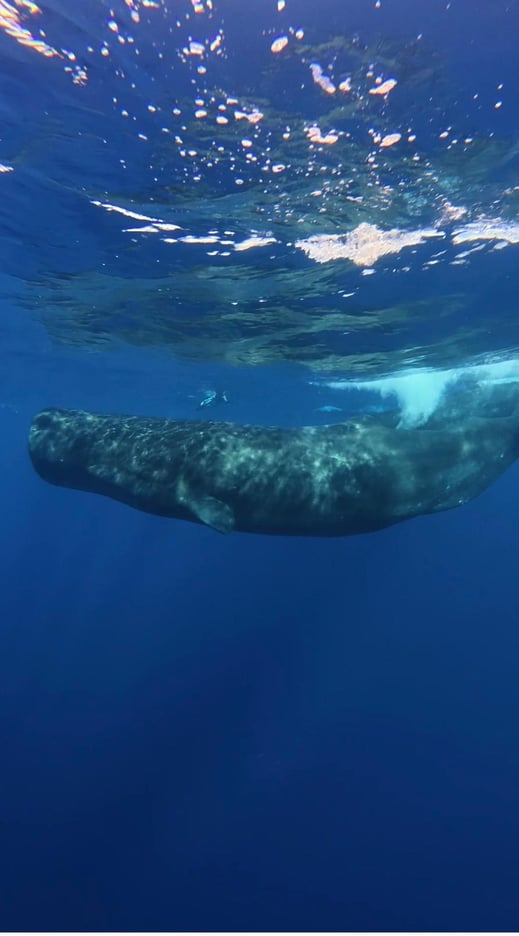
"What a wonderful day. First the dolphins, then we saw the whale family twice... with babies. Unbelievably beautiful. We'd do this trip again anytime."
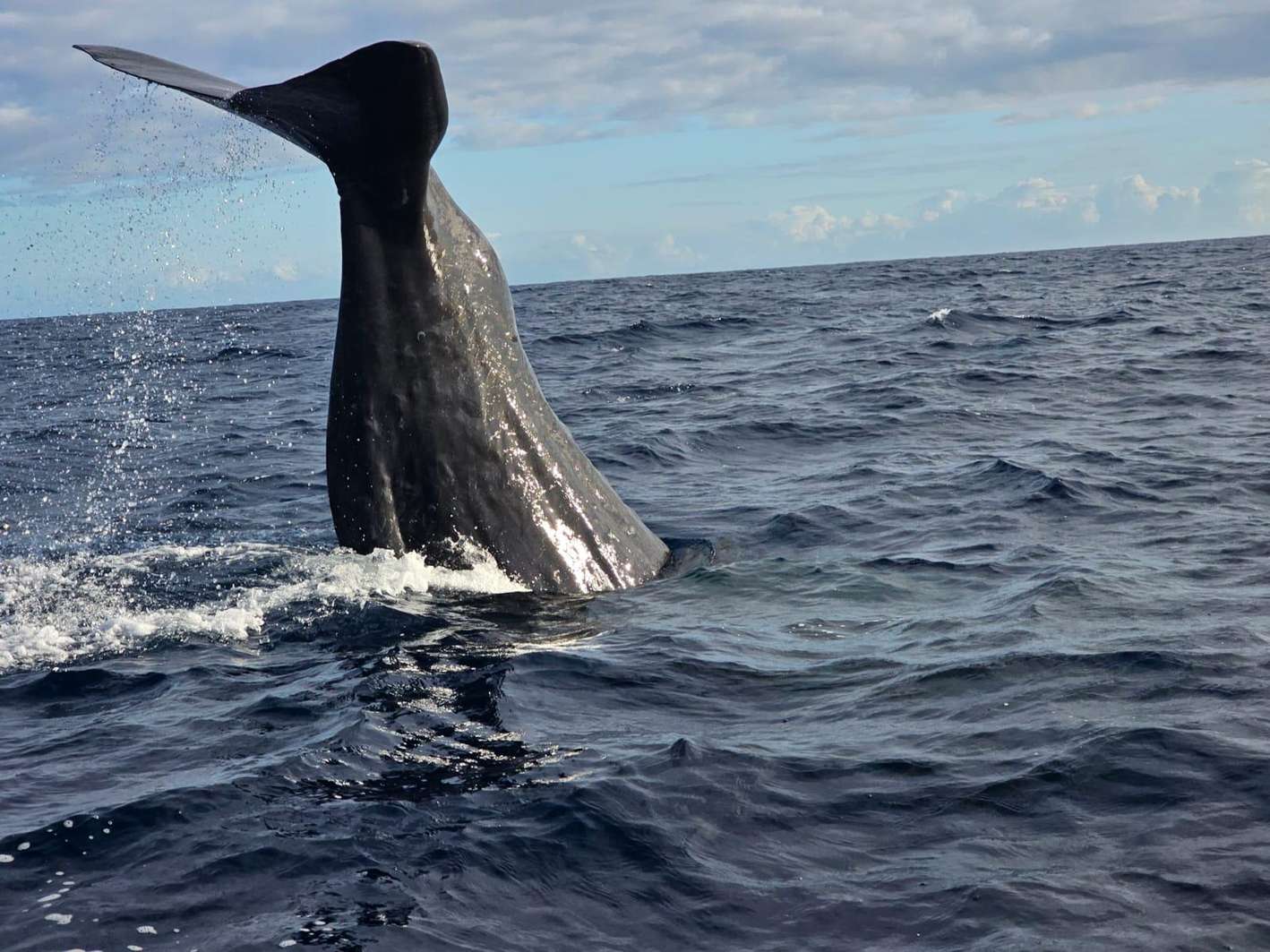
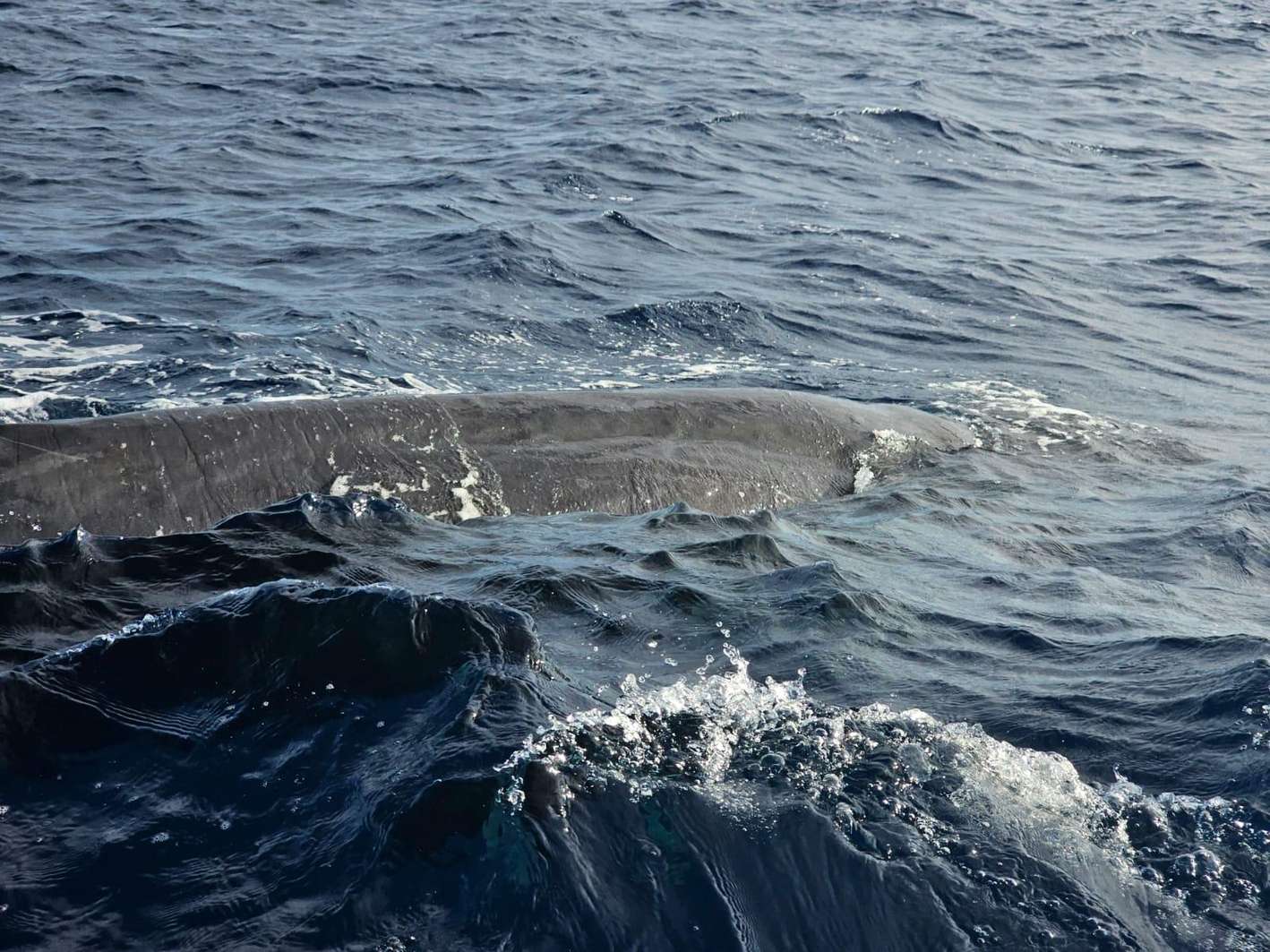
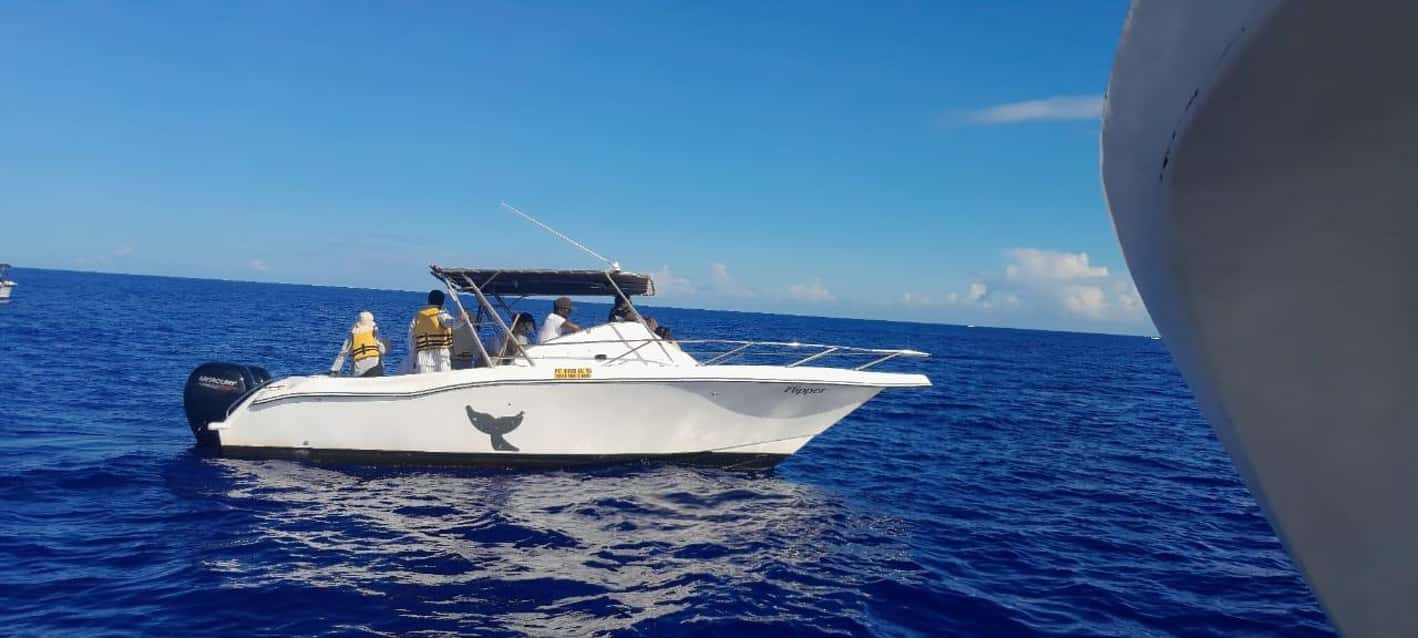
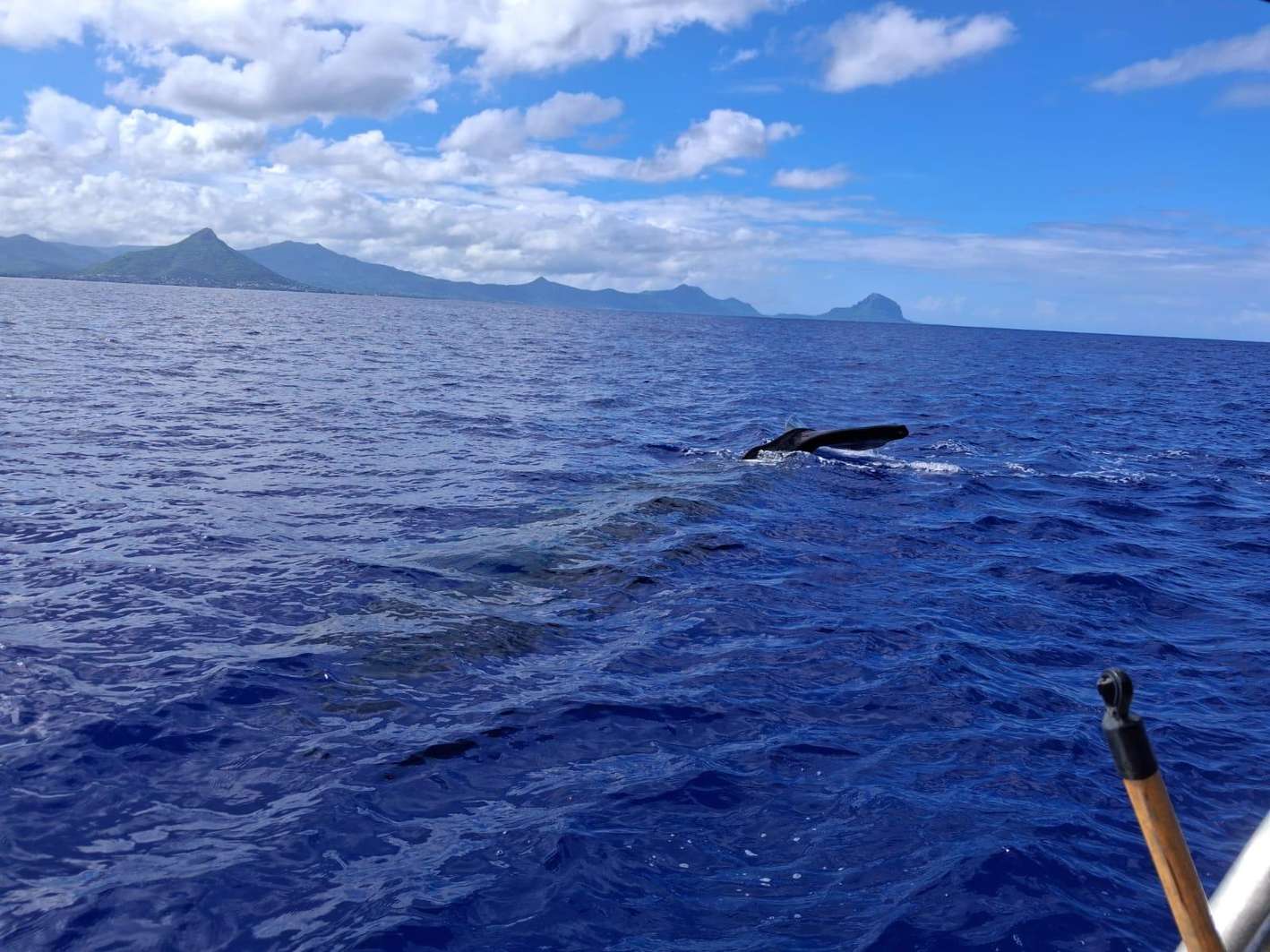
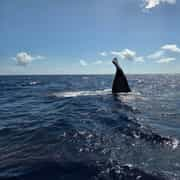
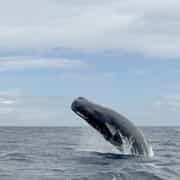
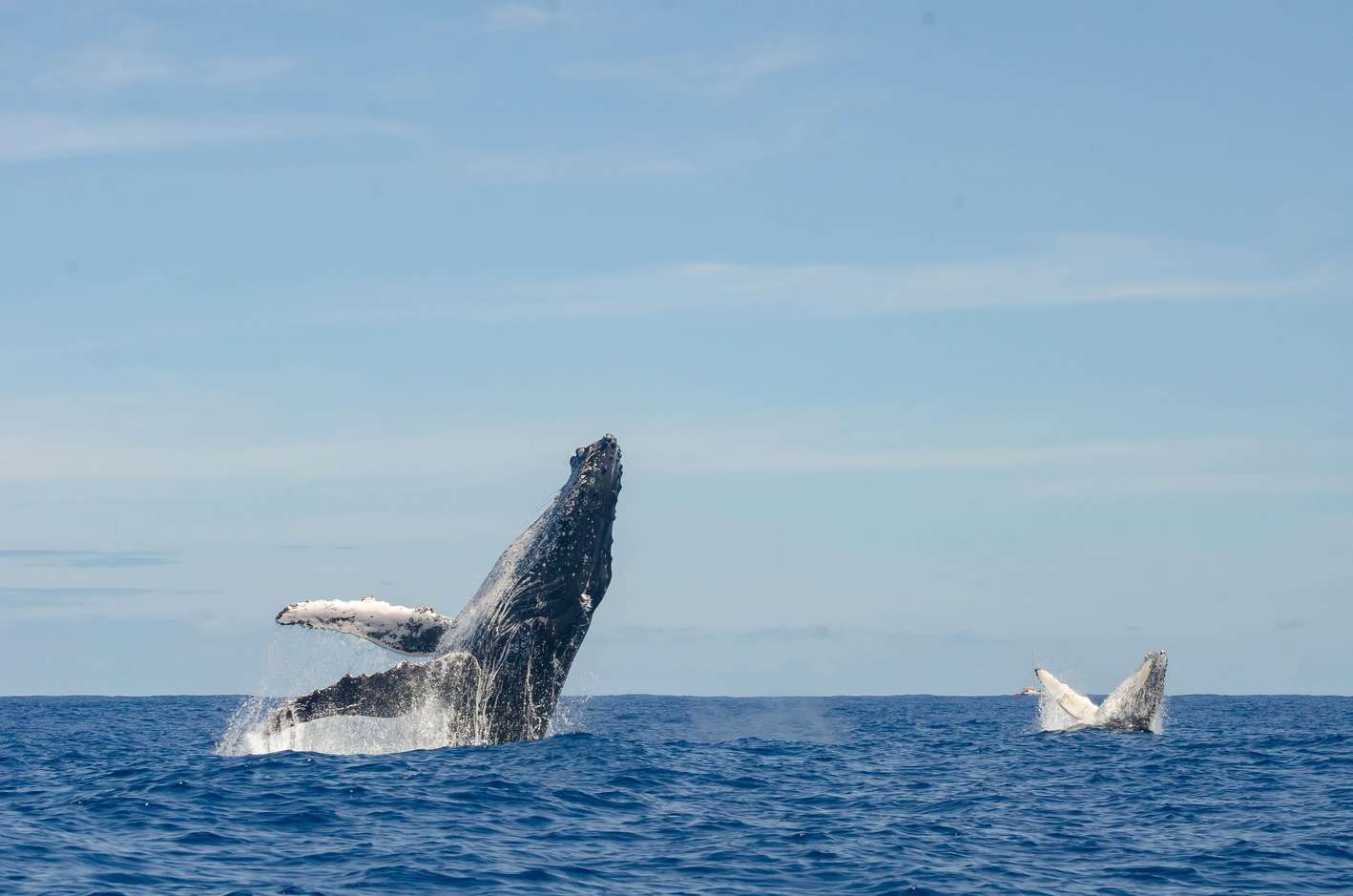
Sperm whales live off the west coast in every month of the year, so your dates are never wrong. What your month decides is which whales you meet, how calm the water is, and whether a cyclone morning can ground the boats.
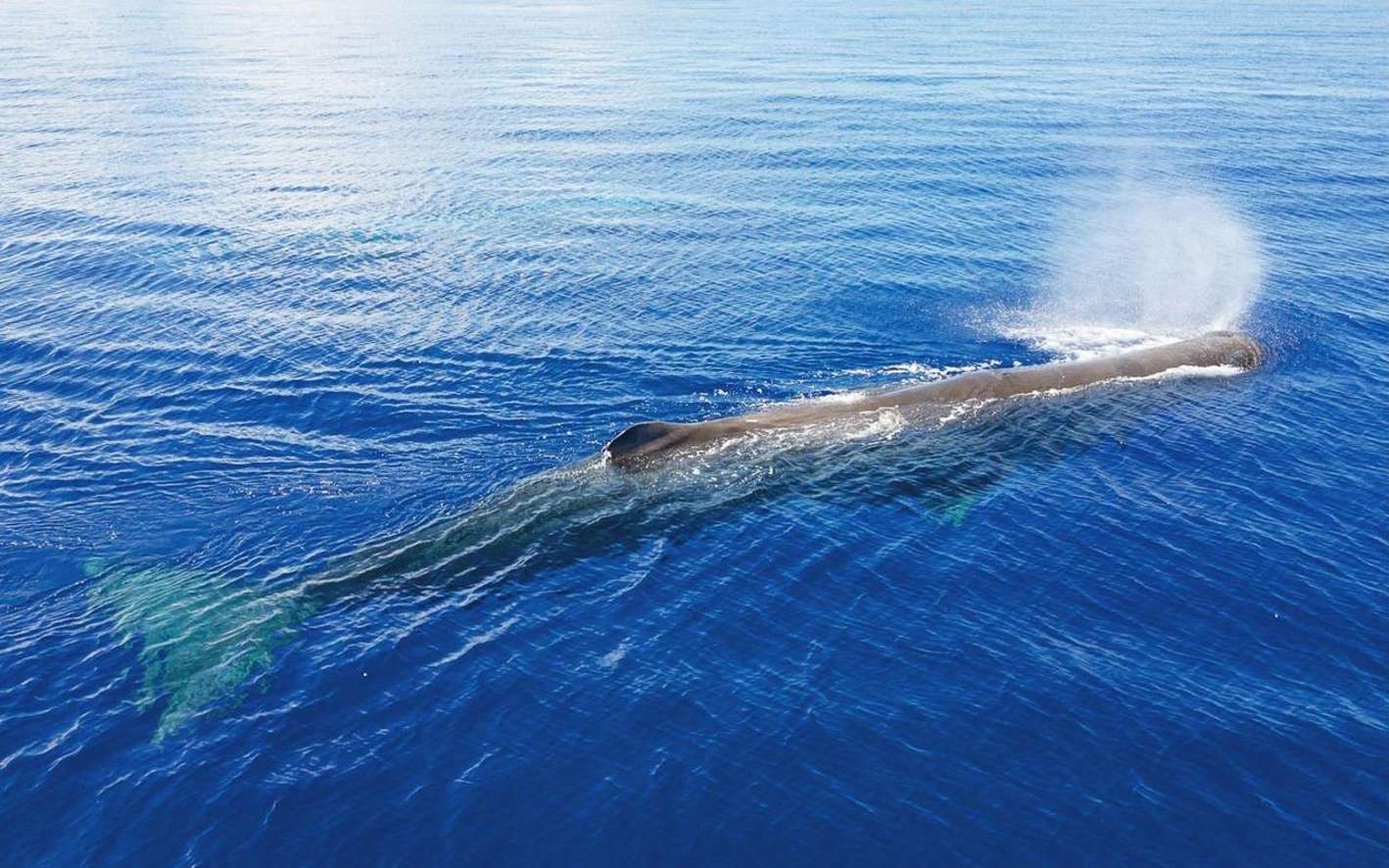
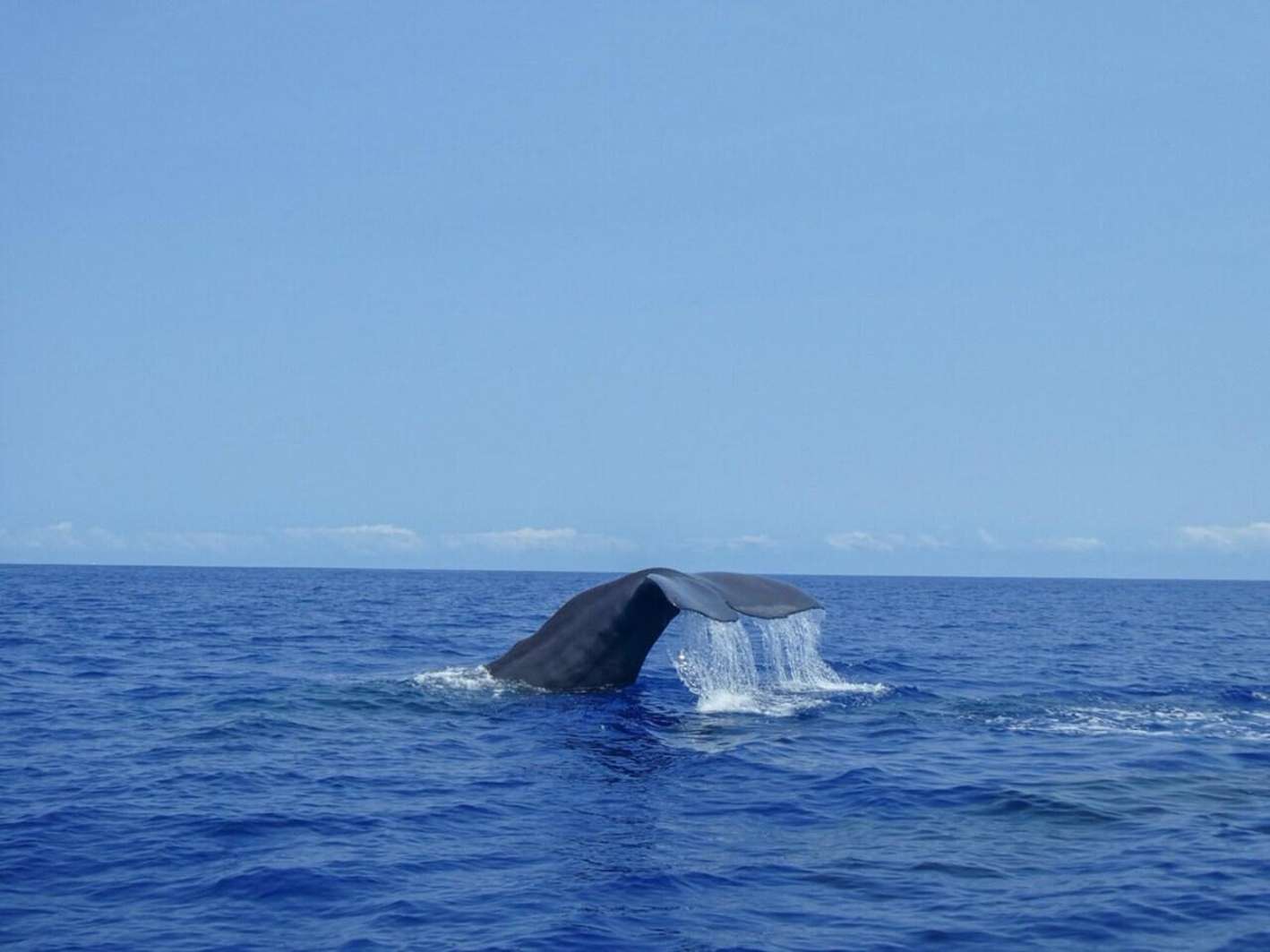
Sperm whales, spinner dolphins and bottlenose dolphins are resident all year, in any month you visit.
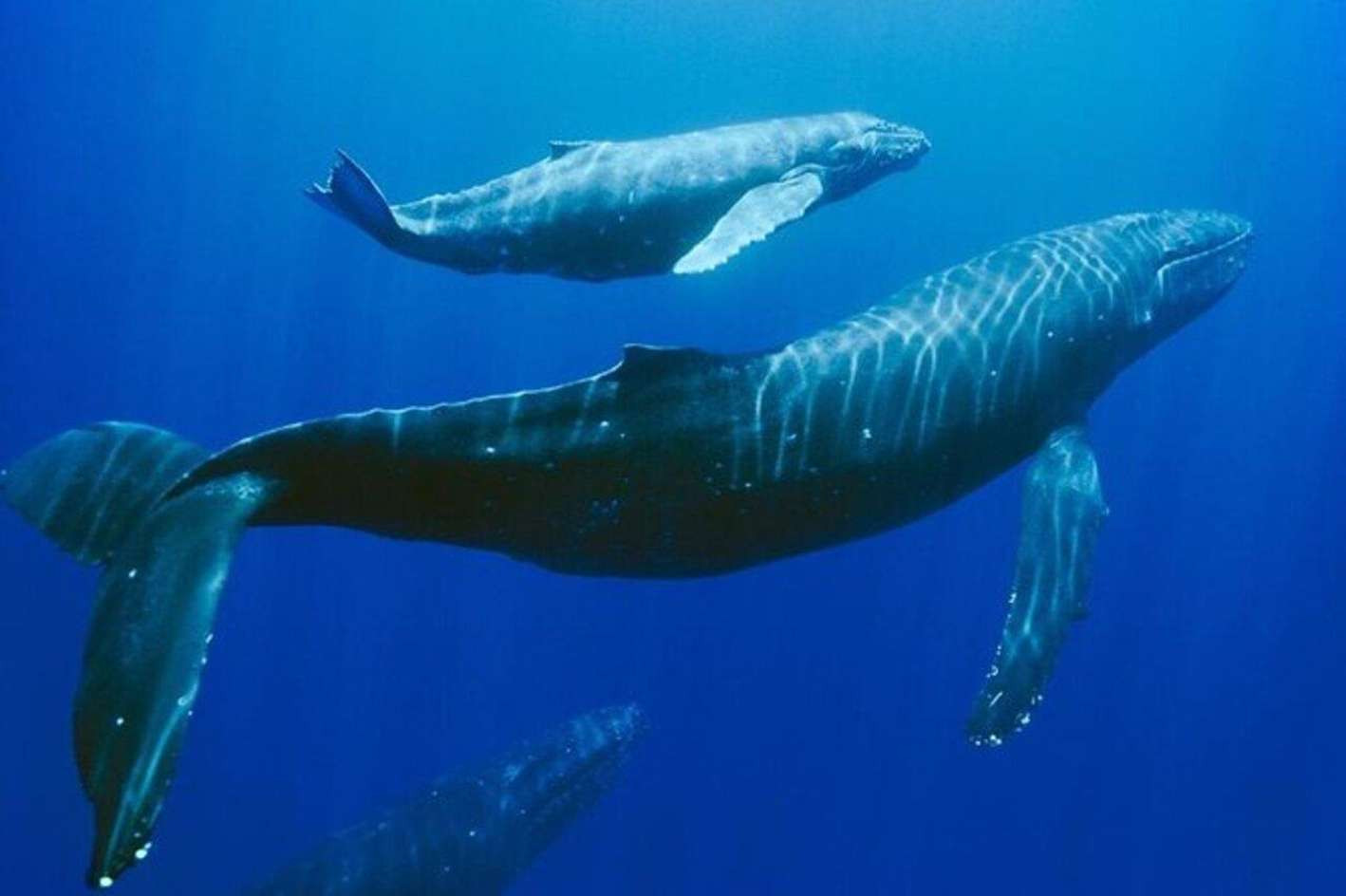
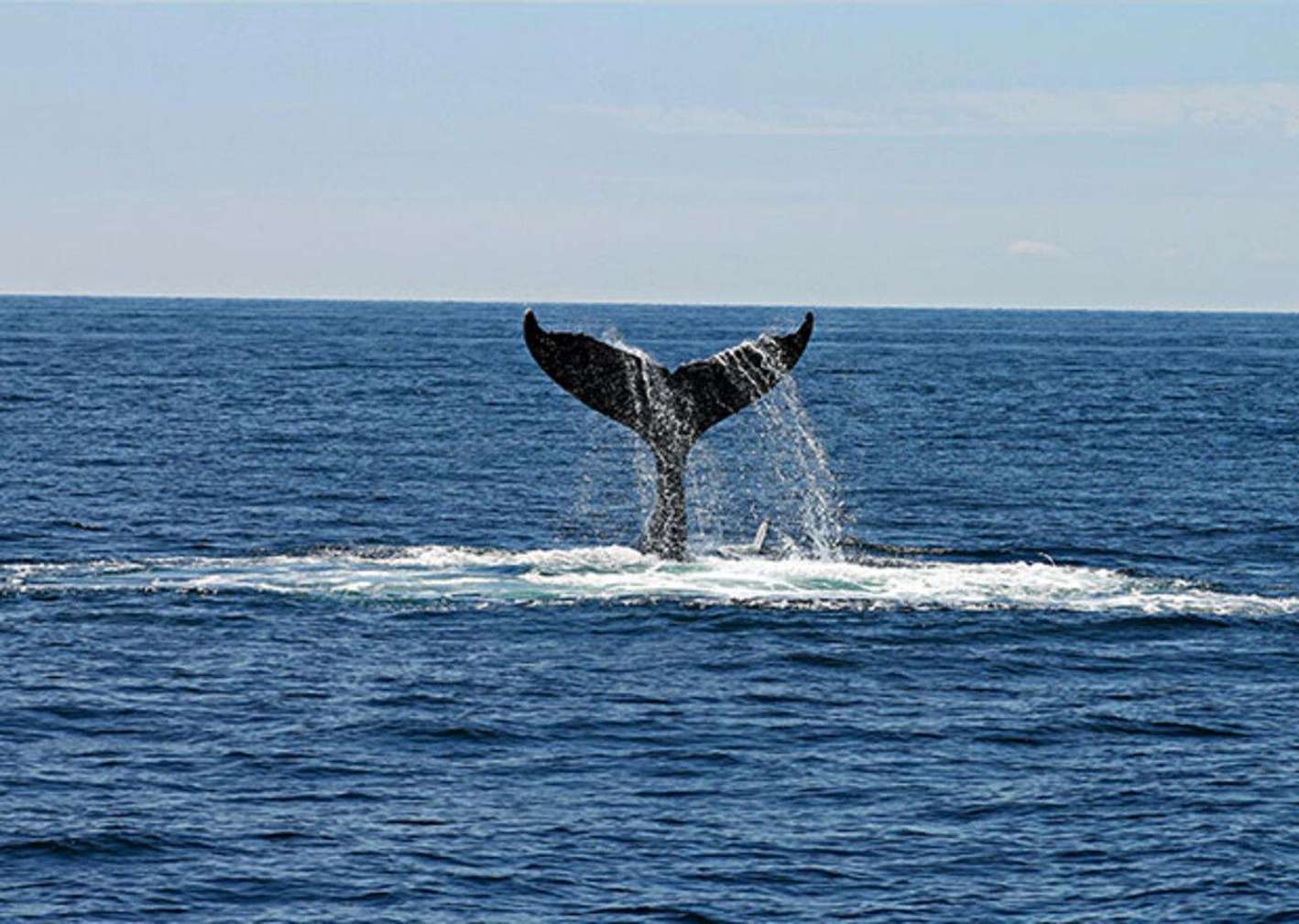
Humpback whales arrive only from June to October, with sightings peaking between August and October.
Winter seas are choppier: calm water occurs on under half the days in July, so book a morning departure.
Paid whale watching is legal only between 6 am and noon, and the best water is before 8 am.
Sightings are never guaranteed and bad weather means a reschedule, so book your trip for early in your stay.
Plan your whale watching outing early in your stay, book a tour with free cancellation up to 24 hours before, and keep a land or lagoon day in reserve so a rough-sea day does not cost you your only chance.
The worry that brings most people here is simple: what if my dates fall outside the season? They don't. Sperm whales live off the west coast all year, drawn to the deep drop-offs where currents push squid-rich water up the volcanic slopes.
The same goes for the spinner and bottlenose dolphins that rest in Tamarin Bay every morning. There is no month with zero whales.
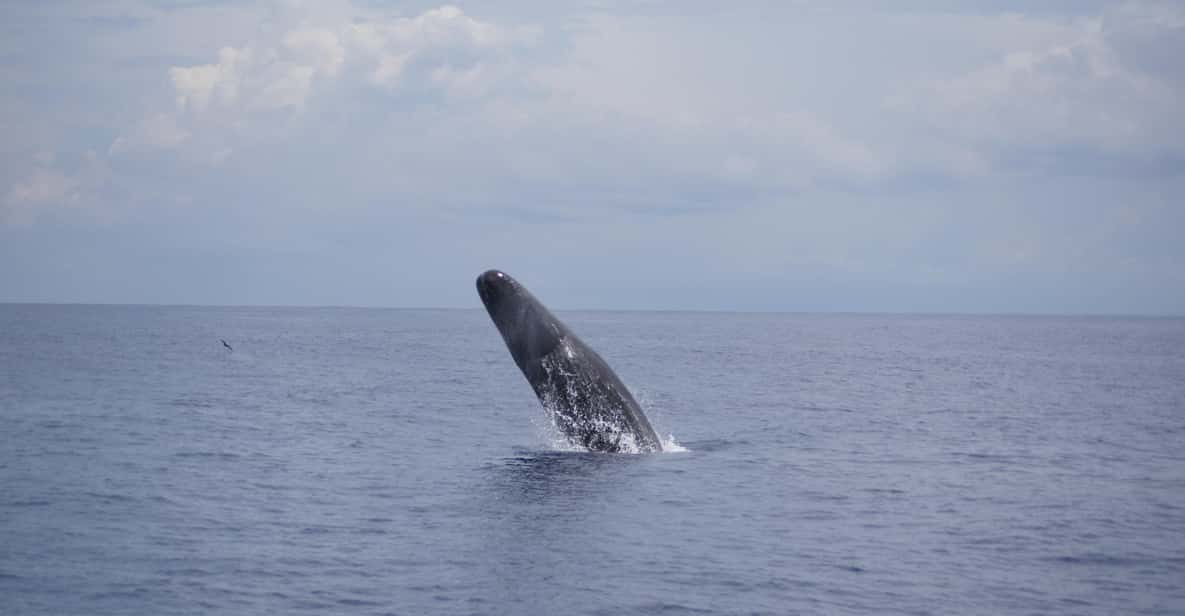
What changes through the year is the cast. From June to October, migrating humpbacks join the residents, and from August the two species travel together: that is when a single outing can deliver sperm whales and a breaching humpback on the same trip.
One operator puts its own record at a 60% chance of seeing whales on any departure, and that figure holds across the calendar because the sperm whales never leave.
September: 5 out of 5 for how busy it gets. This is the busiest month of the year, driven by peak humpback whale sightings alongside resident sperm whales and dolphins.
Tap a month to read it.
July: sperm whale seen 14 times. Humpback whale sightings pick up across winter waters alongside resident dolphins and sperm whales amid moderate tour crowds.
Tap a month to read it.
August: humpback whale seen 26 times. Tour activity climbs during peak humpback whale migration, though open-ocean winter swells can make boat rides choppy.
Tap a month to read it.
October: spinner dolphin seen 12 times. Tour crowds remain near their annual peak as the humpback migration season winds down and resident pods remain active.
Tap a month to read it.
March: common bottlenose dolphin seen 4 times. Tours remain uncrowded and resident pods of spinner dolphins, bottlenose dolphins, and sperm whales are active in calm waters.
Tap a month to read it.
March and October show strong sperm whale activity; July through October is when the humpbacks take over. August to October lifts overall sighting odds above 80% for every boat working the coast, because both species share the same water.
That 80% is the all-boats rate in the peak months; the 60% is one company's own year-round record, and the two figures sit side by side happily.
Every one of these figures describes the odds on the day, and wildlife keeps its own schedule. The Black River whale watching boat tour runs through all of it, 2.5 hours out along the west coast with a crew that knows where to look. Whatever your month, the whales that are there can be found.
July on the open water goes like this: a humpback throws itself clear of the swell, the whole boat cheers, and then the next swell soaks the seat you left your towel on.
The migration and the chop arrive together. The southeast trade winds blow 15 to 25 km/h through the winter months, and outside the reef they raise open swells of 1.5 to 2.5 metres.
Calm days still happen, but calm water covers fewer than half the July days (41%), rising to 45% in August and 51% in September.
Operators cancel departures when waves run past that, and the afternoon is rougher than the morning. Inside the lagoon it stays flat and glassy the whole season; the change hits the moment the boat crosses the pass.
| Sperm whales plus migrating humpbacks, peaking August to October | Sperm whales and resident dolphins only | |
|---|---|---|
| Sea state outside the reef | Choppy swells of 1.5 to 2.5 metres, calm water on 39% to 51% of days | Weaker winds, the calmest seas of the year |
| Seasickness risk | Real, especially after mid-morning | Low on a morning departure |
| Cancellation odds | Higher, winds build from mid-morning | Lower in fair weather, higher in cyclone season |
So the trade is straightforward: winter buys the humpbacks at the price of a wet, bouncy ride. If a rough crossing would ruin your morning, take the summer trip and enjoy the flatter sea. If a breach is what you came for, pack the windbreaker.
From November to April the winds weaken and the sea settles into its calmest stretch of the year, which makes the resident sperm whales easier and comfier to reach than at any other time.
Sperm whale pods with calves hold to the deep shelf waters, and dolphins gather in the sheltered bays each morning before moving offshore.
Then there is the one thing summer adds: cyclone season, from December to March and peaking between January and March. Operators watch the swell, wind and visibility and cancel early when a system approaches; a storm commonly shuts departures down for 24 to 48 hours.
When the Met Service issues a Class III or IV warning, the law itself grounds every boat. A heavy swell warning triggers the same shutdown once open-sea swells reach four metres.
Official Class III or IV cyclone warnings legally suspend all boat operations, usually for 24 to 48 hours around a storm Schedule your whale trip for the first days of your stay so a grounded day costs nothing
None of this makes summer a gamble, it just makes the calendar matter. Book the boat early in your holiday and a cyclone day becomes an extra pool afternoon instead of a lost experience. Most stays in those months never see a warning at all.
The sea has a rhythm and the whole island lives by it. From first light until around 8 am the water off the west coast lies flat and quiet, and whale blows show up plainly against a calm surface.
Departures between 6 am and 8 am get the best water of the day. By 8 am the trade wind is up, and the open sea grows choppier from there.
Law reinforces the hour: paid whale watching may only operate between 6 am and noon, so every serious trip is a morning trip.
Crews push it further, launching between 6 am and 7 am to catch the flattest sea, reach the deep-water drop-offs while conditions hold, and beat the powerboats that arrive from other parts of the island later in the morning.
Calmest sea and flattest water before trade winds pick up.
Breeze strengthens and open water begins to develop chop.
Trade winds create noticeably choppier water and rolling swells offshore.
Sunrise itself shifts with the month, from 5:23 am in November to 6:44 am in July, so your departure time moves with it. A 6:30 am start in July leaves the hotel in the dark; in November the sun is already up as you board.
Either way the logic holds: the boats that leave first meet the animals in water like glass, and the ones that linger meet a rolling swell and a day that has already been picked over.
The practical upshot is small and firm. Take the earliest departure your hotel can realistically reach, and let the later starts go to people who don't know better.
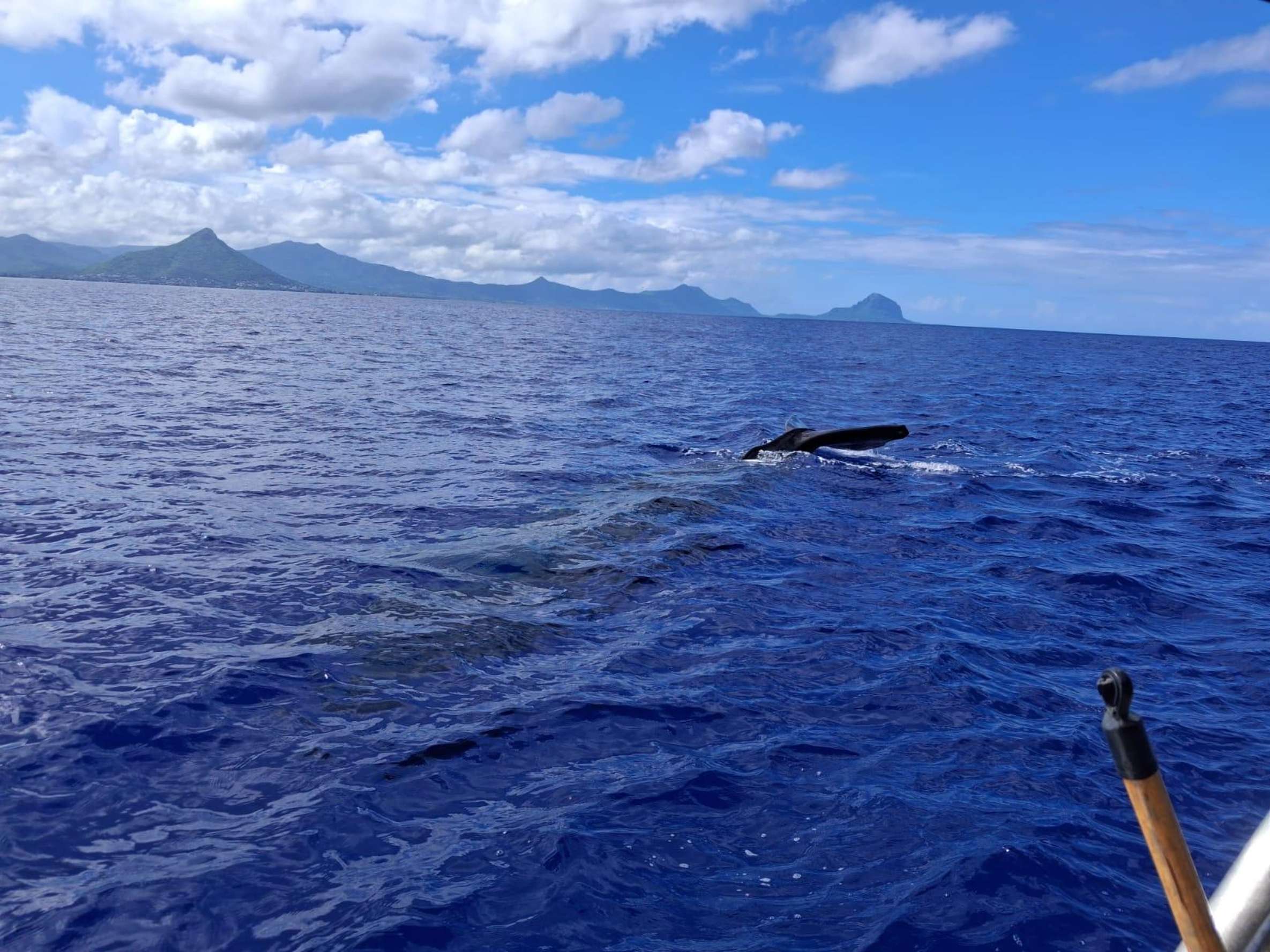
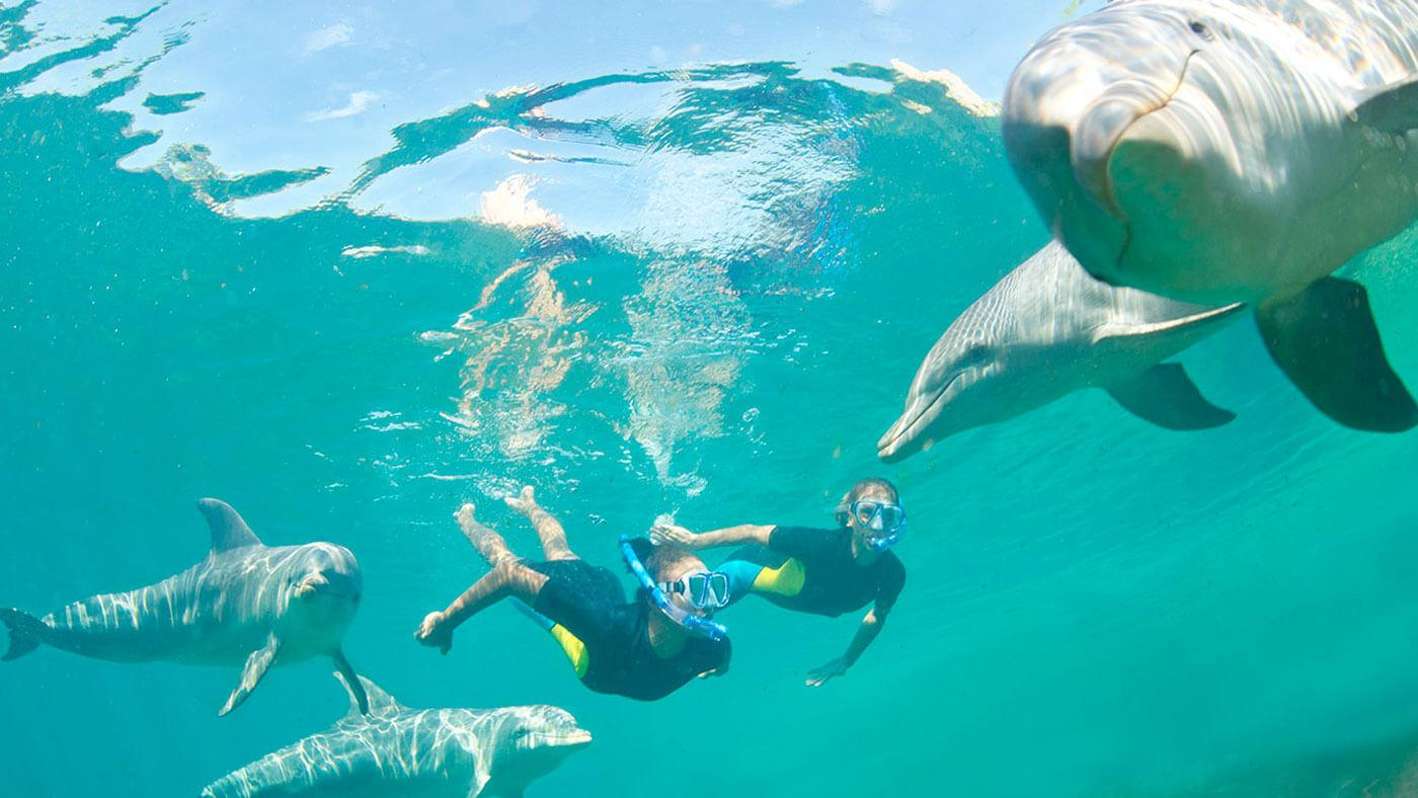
Whatever the season chart says, the dolphins ignore it. Spinner and bottlenose dolphins live in Tamarin Bay and Black River all year, feeding offshore at night and slipping into the sheltered bays between 6 am and 9 am every morning to rest and socialise before heading back out.
You can swim with dolphins in any month of the year. The seasons change the water temperature and the swell, never the pods.
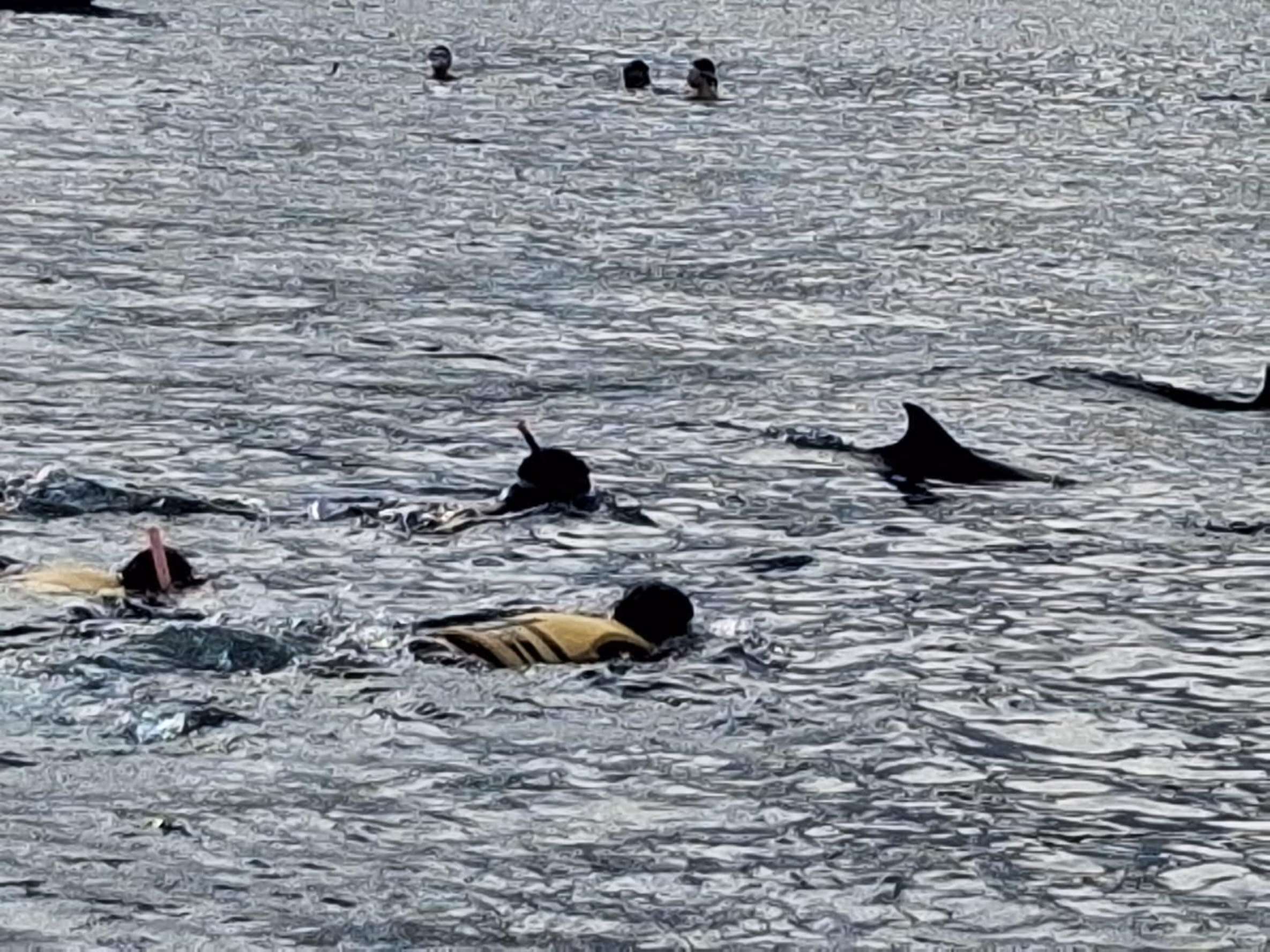
What a swim actually asks of you surprises people. It is no float. Pods move fast through open water, so you jump in and out of the boat in quick succession to keep up, and each encounter is a brief pass-by because no swimmer outswims a dolphin.
You need basic comfort in deep open water, sometimes with a current, more than you need speed. Younger or less confident swimmers can stay on deck and see everything from the rail.
If you want dolphins and whales in a single morning, the Black River dolphin swim and whale watching speedboat tour runs exactly that, five hours combining the Tamarin Bay pods with a search for sperm whales offshore, plus a snorkel stop on the reef.
It runs all year, and in winter the humpbacks are part of the same route.
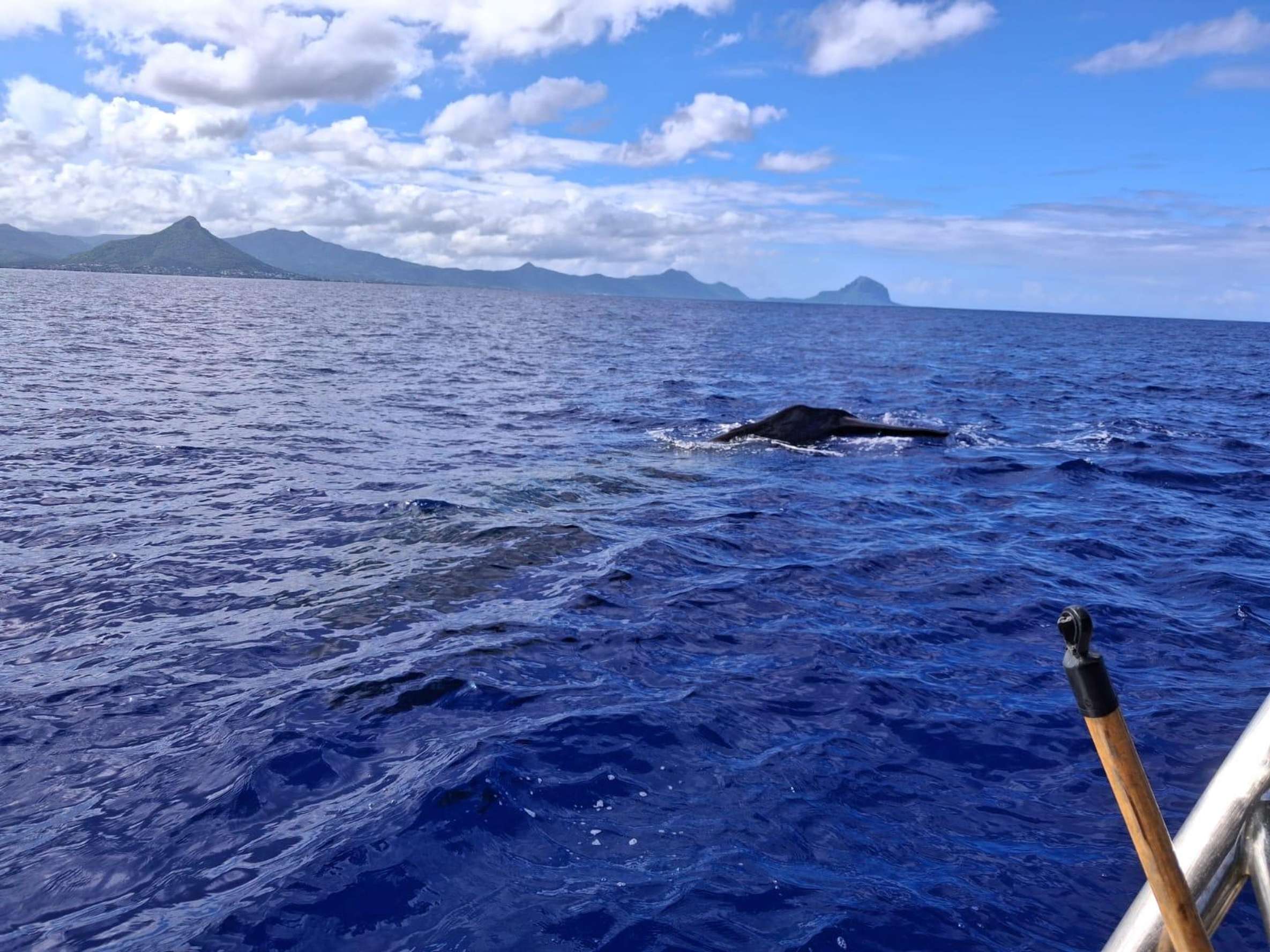
The best boats on this coast are small, and in the busy arrival months they sell out weeks ahead.
Waiting until your second hotel day to enquire is how travelers end up on whatever departure is left, with whichever crew had space. Reserve your boat when you book your flight, especially for June to October or the Christmas weeks.
Pick your trip by its shape as much as its date.
A dedicated whale outing runs about 2.5 to 3 hours door to door, a combined dolphin and whale morning lasts 3.5 to 4 hours on the water, and the full-day versions with a snorkel stop and a barbecue lunch on Île aux Bénitiers run up to 8.5 hours.
Half-day trips suit a first visit; the long day suits families with a relaxed schedule.
Choose the departure point the way the crews do: go by the sighting record. The boats working out of Black River and Tamarin sit minutes from the deep drop-offs where the resident sperm whales feed, which is why they find animals that boats launched elsewhere sometimes miss.
Even so, hold the honest number: one operator's own year-round record sits at a 60% chance of whales per departure, and in the August-to-October peak every boat's odds climb above 80%.
The gap is the humpbacks, and the rest is the luck any wild morning carries.
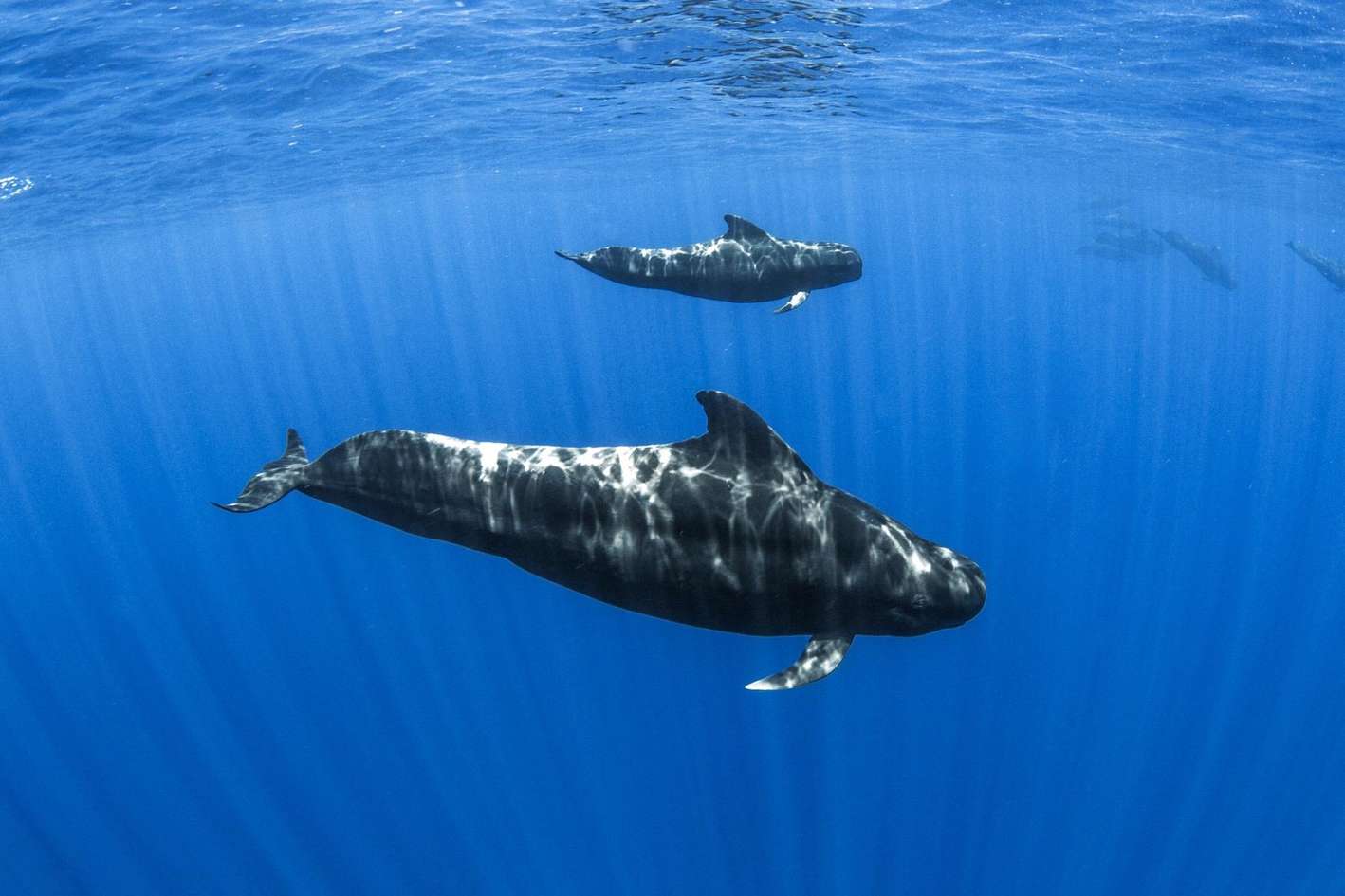
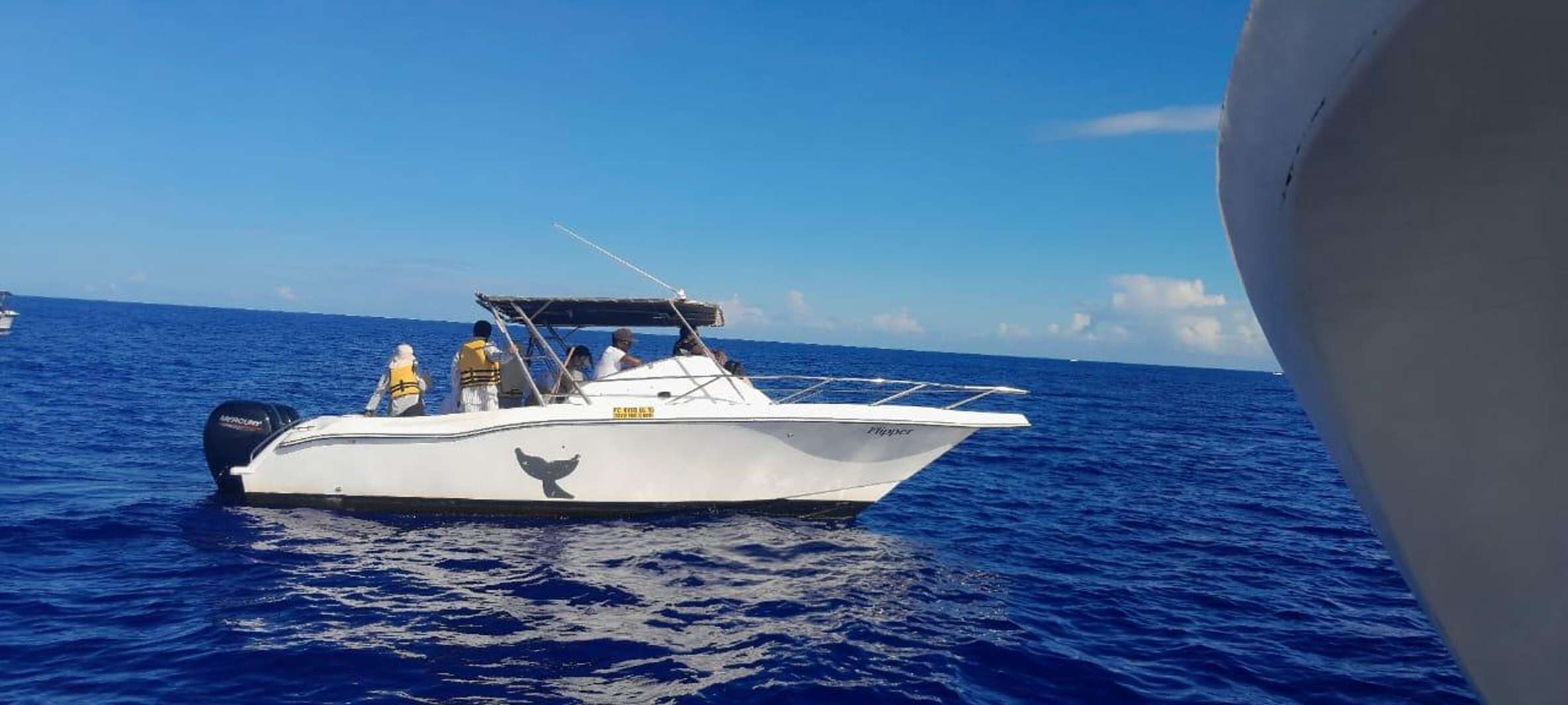
On a shared speedboat you are part of a full deck: less railing space, a fixed schedule, and the company of whoever else booked that morning.
On a private charter the day bends to your group, the pace is yours, and an earlier launch puts you in Tamarin Bay before the tour boats from elsewhere arrive.
A private boat buys you comfort and flexibility; solitude is the one thing it cannot promise. Once an animal surfaces, every boat within radio range converges on the same patch of sea.
The crews themselves share information. Skippers talk across the water all morning, and to find a submerged sperm whale they lower a hydrophone and listen for its clicks, which carry for kilometres and point the way. That gear, and the discipline to use it well, separates the boats worth booking.
The private charter from Flic en Flac answers the checklist point by point: a licensed Mauritian skipper and crew, four hours through the lagoon into deep offshore water, and space enough that nobody fights for a view.
| Check | Why it matters | Our pick |
|---|---|---|
| Licensed skipper and Tourism Authority label | Only licensed craft may carry paying guests to whales and dolphins | Yes, a licensed Mauritian skipper and crew |
| Group size on deck | Fewer people means rail space and a calmer encounter | Private boat, your group only |
| Departure hour | Before 8 am is the calm window, by law trips end at noon | Early morning departure into deep offshore water |
| Hydrophone and radio gear | Skippers locate submerged sperm whales by their clicks and share positions | Crew works the drop-offs where resident whales feed |
Whichever boat you pick, watch the skipper, not just the whales. The good ones hold their distance and idle their engines, and their trips are better for it.
A 6:30 am start makes the transfer a planning question the night before. From Flic en Flac it is an easy one: about 20 to 30 minutes by taxi or rental car down the coastal road to Tamarin and Black River.
Some boats depart Flic en Flac itself, so check whether your trip even needs a drive.
From Le Morne the run north to Tamarin Bay takes 25 to 42 minutes depending on where your resort sits on the peninsula.
Coming from Grand Baie in the north, budget 75 to 85 minutes, and from the east coast resorts around 80 to 90 minutes in normal traffic. That is a very early alarm, and reason enough to spend the night before on the west side if your dates allow.
Buses do not solve this. Routes require transfers and simply do not run early enough for a marine departure, so it is a taxi or a hire car.
The meeting points are straightforward. In Black River, boats leave from the jetty and local marinas, including a meeting point on La Jetée Road in Grande Riviere Noire.
At Le Morne, skippers anchor just inside the reef across from the casuarina trees and picnic areas, and the large free car parks behind the public beach make the handover simple. Some trips start with a wade, which is the packing chapter's business.
Boarding sets the tone. Most launches mean wading through shallow water to the boat, so water shoes or secure sandals earn their place, and everyone goes barefoot on deck. Once outside the reef, spray finds every seat cushion, so swimwear under quick-drying synthetics beats cotton, which stays wet and cold for hours.
The open drop-off adds three things at once: tropical glare off the water, a chilly wind on the fast runs, and the swell. A light windbreaker or packable jacket covers the ride home.
High-SPF sunscreen, sunglasses on a strap and a hat that fits securely handle the sun, and a dry bag or phone pouch keeps the electronics alive. Toss in a towel and a spare set of dry clothes for after.
That last point catches more people than the cold ever does. Medication taken at the jetty is too late: the body needs time to absorb it, and once nausea sets in, tablets stop working. If you are prone, set a second alarm and take it with breakfast, a full hour before you leave the hotel.
Mauritian law writes the shape of every encounter. Boats must stay at least 50 metres from dolphins and 100 metres from whales, approach only from the side on a parallel course, and idle in neutral when stopped.
No circling, no driving through a pod, no sudden changes of speed. What that means from the rail is a calm, engine-off boat sitting quietly while a whale surfaces on its own terms.
One rule decides more than any other: swimming with whales is prohibited outright.
Dolphins are fair game under strict conditions, including swim rotations limited to a handful of people in the water at once, and paid swims running only between 6 am and 9 am. An operator offering a whale swim is telling you something about themselves.
Any operator promising a whale swim is breaking the rules, and their licence is the least of your worries
Fewer than a handful of swimmers enter at a time with a guide, so pods are not mobbed
Keep hands in the boat even when an animal passes close
Everyone on board wears one, swimmers included
Know who can go before the morning arrives. Several tours rule out children under 3 to 6, and most advise pregnant women against the swim or the open-water leg.
The rough sea beyond the reef, the sun and the lack of shade make these trips a poor match for toddlers. Check the age and health limits for your specific boat when you book, not at the jetty.
Here is the honest ending, and it is worth reading twice: no trip guarantees a sighting. Wild animals move, and even a dedicated private charter can spend a morning on beautiful open water without a whale in it.
A zero-sighting trip carries no recourse, which is the trade for meeting animals on their own terms rather than in a pen.
Weather works differently. If the sea turns, the trip is rescheduled rather than run in unsafe conditions, and cancellations for rough water are common and sensible. That is why the timing advice keeps repeating itself: put the trip early in your stay so a reschedule has somewhere to land.
| If this happens | What happens then |
|---|---|
| Rough seas or unsafe conditions | The tour is rescheduled to another day, not run |
| A cyclone warning grounds all boats | Rebook for a later day early in your stay, or plan around the 24 to 48 hour shutdown |
| No whales found on the trip | The outing stands, with no refund or recourse, so treat the sighting as a bonus |
| Another boat crowds a sighting | Stay on board and wait, the good skippers hold position and their patience is usually repaid |
Regulars plan for the odds the same way the crews do: they build other outdoor days into the trip, and they book a second morning when the first is worth repeating.
Go with that mindset and the odds stop being a risk. They become the reason the sighting, when it comes, lands the way it does.
Mauritius has no off-season for whales: resident sperm whales and dolphins make every month workable, and the water is at its best before 8 am. If you can choose, aim for August to October, when humpbacks lift the odds above 80%.
Book early in your stay, take the earliest departure, and treat any sighting as the luck it is.
Once you know when the whales are around, the next question is which stretch of coast to sail from. This page compares the west coast bases.

Tamarin boards you close to deep water, so a short season trip still fits in a morning. See what runs from this bay.
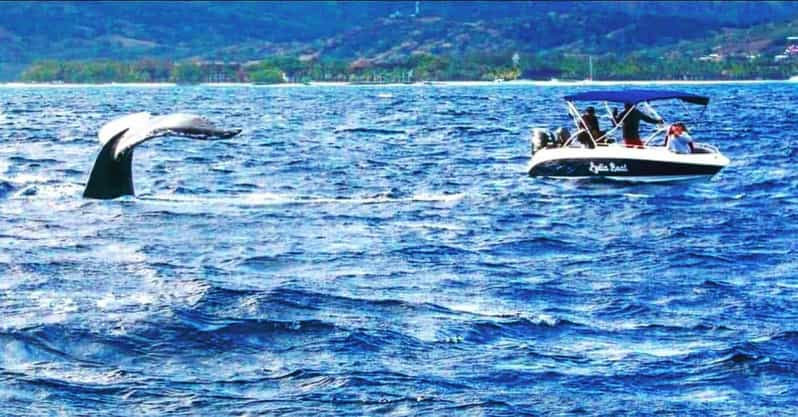
Staying on the Le Morne peninsula? Here is how its boat trips time their departures with the seasons and the morning calm.
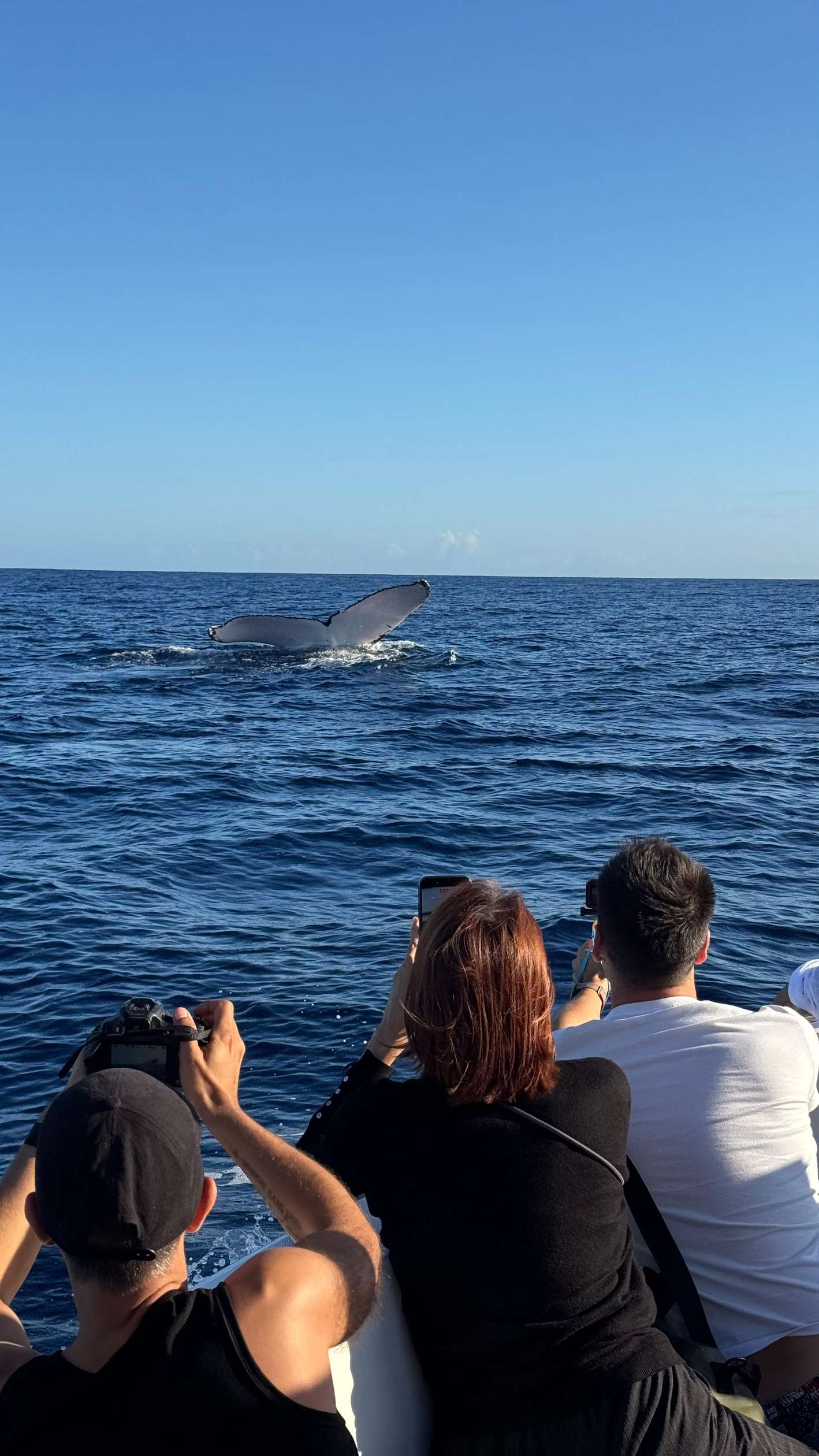
From Flic en Flac you can reach the whales without a long pre-dawn transfer. This page sets out the excursions that leave from there.
Straight answers on timing, seas, and what you can realistically see each month.
Grande Riviere Noire2026There is no closed season. Resident sperm whales stay off the west coast all year, so you can go whale watching in any month. What changes is the extra species: humpback whales only pass through between June and October.
August to October gives you the highest odds. The resident sperm whales are joined by migrating humpbacks, and sighting success rates climb above 80% during that late-winter peak.
Humpback whales migrate through Mauritian waters from June to October, with peak sightings between July and September. Outside that window they are absent entirely, and sperm whales carry the season on their own.
Yes. Sperm whales are residents and feed off the west coast in every month, so winter and summer trips both go out. Expect sperm whales and dolphins year-round; humpbacks simply will not be there.
Go early. Departures between 6 am and 8 am get the calmest water of the day, before the trade wind picks up around 8 am and the sea grows choppier. Paid trips also run only between 6 am and noon by law.
The west coast sits in the lee of the island's mountains, so it is the sheltered side, but winter still brings trade winds of 15 to 25 km/h and southern swells. Outside the reef the crossing gets bumpy, especially in the afternoon, which is another reason morning trips win.
Not certain, at any time of year. One tour operator puts the odds at around 60% on its excursions, and open-water sightings are never guaranteed even on a private boat. August to October raises the numbers well above that.
Yes. Spinner and bottlenose dolphins live in Tamarin Bay and Black River in every season, feeding offshore at night and returning to the sheltered bays between 6 am and 9 am. The seasons change the sea conditions, not the dolphins.
No. Swimming with whales is strictly prohibited by law in Mauritius, so you watch them from the boat. Swimming with dolphins is legal, and trips run under rules that limit how boats approach and how many swimmers enter the water.
Operators cancel or reschedule trips when conditions are unsafe, so a rough day usually becomes a different day rather than a lost one. If the sea stays calm and no whale appears, the trip simply comes back without a sighting; there is no guarantee either way.
Once the boat passes the outer reef, swells and chop can unsettle anyone. Take motion sickness medication before you feel it, roughly an hour before departure, because remedies work far better as prevention than as a cure.
December to March brings storm activity, peaking between January and March. Approaching systems commonly shut boat departures down for 24 to 48 hours, and official cyclone warnings suspend all operations by law.
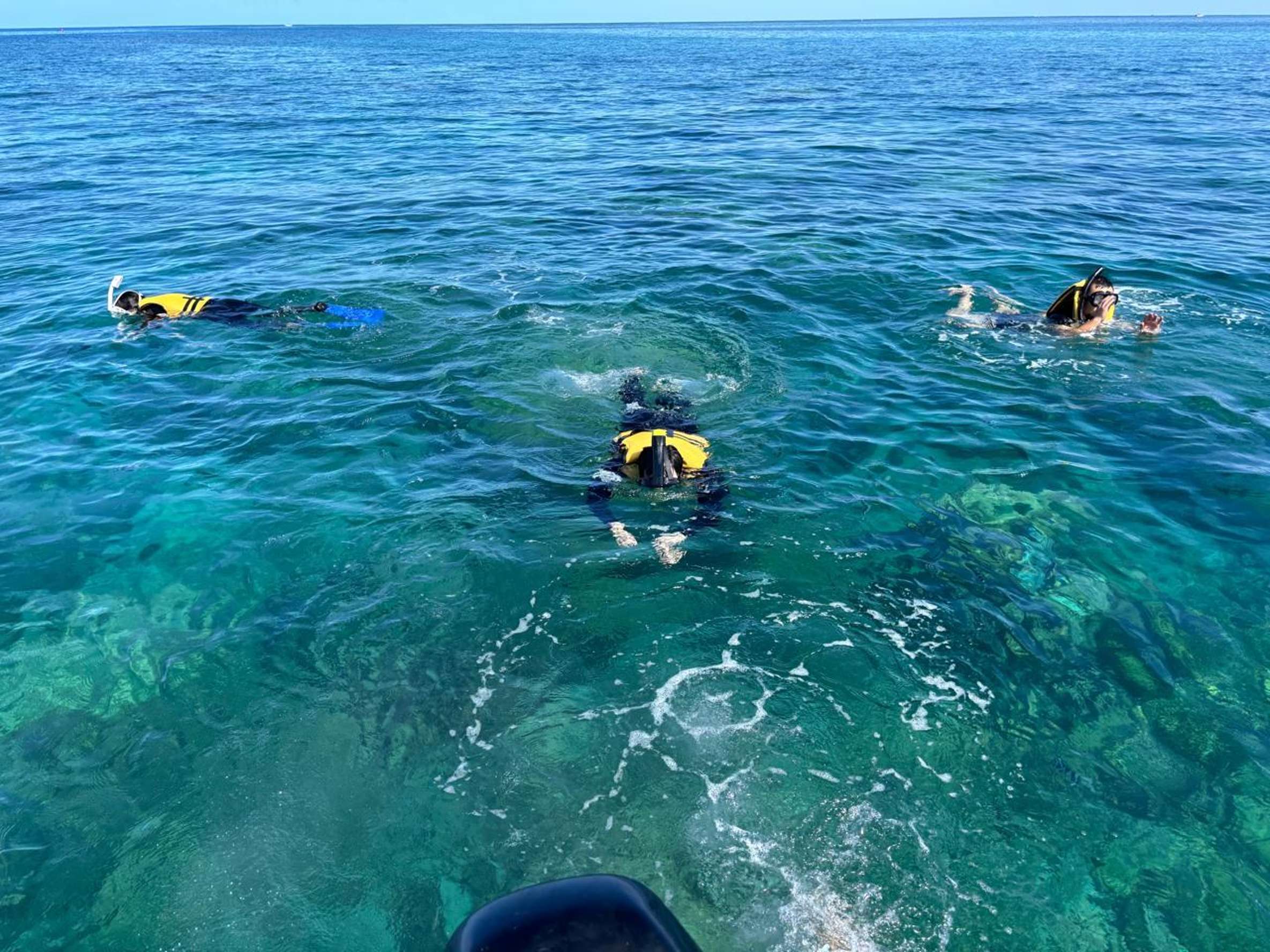
Resident sperm whales all year, humpbacks from June to October, and free cancellation up to 24 hours before you sail.